
Audi Q3 Alternator: Specs, Fitment & Common Faults
On the Q3, a broomstick technique can genuinely help isolate whether a noise comes from the alternator, before assuming a battery replacement will fix it.
 Illustration for editorial purposes
OEM Part Number: 04L903023L
| MQB platform, shared reference | Genuine VAG reference: 04L903023L |
|---|
Often Blamed on the Battery Instead
A weak battery and a failing alternator produce almost identical symptoms at first — dim lights, slow starts, a car that won't hold charge — which is exactly why so many people replace the battery, only to be back at the garage a few weeks later with the real culprit untouched.
What It Does
The alternator generates electricity while the engine runs, charging the battery and powering the car's electrical systems directly. A healthy alternator means the battery is mostly there for starting the engine and covering brief demand spikes — not for actually running the car's electronics on its own.
Shop for This Part on eBay
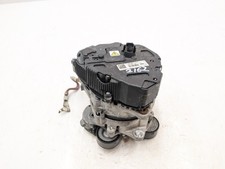 AUDI Q3 F3 ALTERNATOR 1.5 TFSI / DFYA PETROL 05E903018F 2022
GBP 479.99
AUDI Q3 F3 ALTERNATOR 1.5 TFSI / DFYA PETROL 05E903018F 2022
GBP 479.99
 GENUINE OEM ALTERNATOR AUDI A1 A3 Q2 Q3 VW 1.0 1.4 1.5 TFSI 2015-2022 04E903015P
GBP 199.00
GENUINE OEM ALTERNATOR AUDI A1 A3 Q2 Q3 VW 1.0 1.4 1.5 TFSI 2015-2022 04E903015P
GBP 199.00
 Audi Q3 MK1 FL (8U) (Q3) 2017 1.4 Petrol Valeo Alternator 140amp 14v 04C903023M
GBP 42.50
Audi Q3 MK1 FL (8U) (Q3) 2017 1.4 Petrol Valeo Alternator 140amp 14v 04C903023M
GBP 42.50
 AUDI Q3 MK2 F3 ALTERNATOR 2.0 TFSI PETROL 06K903026C 2021
GBP 43.99
AUDI Q3 MK2 F3 ALTERNATOR 2.0 TFSI PETROL 06K903026C 2021
GBP 43.99
 140 Amp Alternator for Audi A3 A4 A5 Q3 2.0 TDI 2007-2017 03G903016EX
GBP 113.76
140 Amp Alternator for Audi A3 A4 A5 Q3 2.0 TDI 2007-2017 03G903016EX
GBP 113.76
 for AUDI A1 A3 Q2 Q3 1.0 1.4 1.5 PETROL TFSI 2015-2022 BRAND NEW 140A ALTERNATOR
GBP 140.00
for AUDI A1 A3 Q2 Q3 1.0 1.4 1.5 PETROL TFSI 2015-2022 BRAND NEW 140A ALTERNATOR
GBP 140.00
 1A4151 ALTERNATOR For AUDI A3 Q2 Q3 1.6 2.0 TDi Quattro 140 AMP
GBP 125.99
1A4151 ALTERNATOR For AUDI A3 Q2 Q3 1.6 2.0 TDi Quattro 140 AMP
GBP 125.99
 Audi Q3 MK1 FL (8U) (Q3) 2017 1.4 Petrol Valeo Alternator 140amp 14v 04C903023M
GBP 40.00
Audi Q3 MK1 FL (8U) (Q3) 2017 1.4 Petrol Valeo Alternator 140amp 14v 04C903023M
GBP 40.00
As an eBay Partner, Car United may earn commission from qualifying purchases shown above. Listings and pricing are pulled live from eBay and may vary.
A Genuinely Useful Piece of Context Worth Knowing About Alternator Diagnosis
If you're trying to confirm whether a noise is genuinely coming from the alternator, this is genuinely worth trying: touching one end of a wooden broomstick to the alternator housing, with the other end held close to your ear, can help you hear the noise much more clearly.
It's also genuinely worth knowing that related Audi models fitted with the 48V mild hybrid system have documented alternator failures specifically tied to this system, with a confirmed US extended warranty covering the issue.
Warning Signs, DIY Difficulty & Aftermarket Advice
These are the same regardless of make or model — see our full Alternator Guide for symptoms to watch for (plus a genuinely useful two-minute test to confirm it's not the battery instead), confirming the right amperage and fitment against your VIN, and which brands are worth trusting.
More Audi Alternator
The same part, covered across other Audi models.