
BMW 3 Series Timing Belt: Intervals, Fitment & Warning Signs
On the 3 Series, if you hear the well-documented cold-start rattle, genuinely don't rev the engine, since you risk the chain jumping timing immediately — plus an honest £3,000-£5,000 cost gap between catching this early and waiting too long.
 Illustration for editorial purposes
OEM Part Number: 13-52-8-648-731
Confirmed: Every G20 Petrol Engine Uses a Chain, Not a Belt
| B46/B48 timing chain | BMW OEM: 13-52-8-648-731 (or superseded 13-52-7-636-184) |
|---|---|
| Tensioner | BMW OEM: 13-52-7-797-905 |
| Tension guides | BMW OEM: 13-52-7-636-185 |
Don't confuse this with the older F30-generation N20 engine: that earlier engine had a well-documented issue with its plastic timing chain guides cracking between 60,000–90,000 miles, a problem specific to the N20/N26 engines fitted to 2012–2015 BMWs. The G20's B46/B48/B58 engines are a genuinely different, later design without that specific known issue — if you've read about BMW timing chain guide failures online, make sure you're clear on which generation and engine that applies to before assuming it affects your G20.
The Part Where Missing a Deadline Gets Expensive
Few maintenance items carry as much downside risk for skipping them. On the engines where this component fails, the consequences typically extend well beyond the part itself, which is exactly why sticking to the schedule matters more here than almost anywhere else on the car.
What It Does
The timing belt or chain keeps the engine's camshafts and crankshaft rotating in precise synchronisation, ensuring valves open and close at exactly the right moment relative to piston position. On many engines, this is what's known as an "interference" design — if the belt fails, the pistons and valves can collide, causing serious internal engine damage.
Fitment & Compatibility
Belt versus chain, and the exact replacement interval, depends entirely on which specific engine is fitted to your 3 Series — this varies by both generation and engine size, not just model year. Always confirm your exact engine code before assuming a standard interval applies. Whether you're sourcing a replacement timing belt for your BMW 3 Series from a dealer, specialist, or online marketplace, always check compatibility against your registration or VIN before buying.
Shop for This Part on eBay
 Timing Belt Kit+Water Pump for BMW 3 Series 320d 318d 320dxDrive 325d 2004-2016
GBP 75.99
Timing Belt Kit+Water Pump for BMW 3 Series 320d 318d 320dxDrive 325d 2004-2016
GBP 75.99
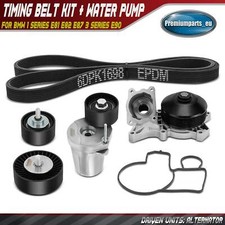 Timing Belt Kit+Water Pump for BMW 1 Series E81 E82 E87 3 Series E90 E91 E92 E93
GBP 110.39
Timing Belt Kit+Water Pump for BMW 1 Series E81 E82 E87 3 Series E90 E91 E92 E93
GBP 110.39
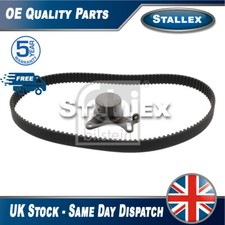 Fits BMW 3 Series 1977-1993 2.0 2.5 2.7 Timing Cam Belt Kit Stallex
GBP 50.36
Fits BMW 3 Series 1977-1993 2.0 2.5 2.7 Timing Cam Belt Kit Stallex
GBP 50.36
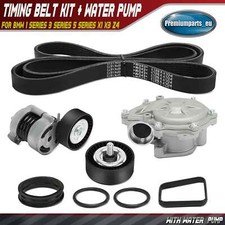 Timing Belt Kit + Water Pump for BMW 1 Series 3 Series 5 Series X1 X3 Z4 00-15
GBP 106.71
Timing Belt Kit + Water Pump for BMW 1 Series 3 Series 5 Series X1 X3 Z4 00-15
GBP 106.71
 FEBI BILSTEIN 11027 Timing Belt Replacement Fits BMW 3 Series 5 Series Z1
GBP 19.49
FEBI BILSTEIN 11027 Timing Belt Replacement Fits BMW 3 Series 5 Series Z1
GBP 19.49
 INA 530000710 Timing Belt Kit Fits BMW 3 Series E30
GBP 65.99
INA 530000710 Timing Belt Kit Fits BMW 3 Series E30
GBP 65.99
 Febi Timing Cam Belt Kit Fits BMW 3 Series 1977-1993 2.0 2.5 2.7
GBP 45.78
Febi Timing Cam Belt Kit Fits BMW 3 Series 1977-1993 2.0 2.5 2.7
GBP 45.78
 Timing Belt Guide Pulley fits BMW 3 SERIES 1990-1991-1992-1993 3.16i
GBP 12.75
Timing Belt Guide Pulley fits BMW 3 SERIES 1990-1991-1992-1993 3.16i
GBP 12.75
As an eBay Partner, Car United may earn commission from qualifying purchases shown above. Listings and pricing are pulled live from eBay and may vary.
A Genuinely Important Safety Warning Worth Knowing
If you're hearing a loud, metallic rattle from the engine on cold start-up, this is genuinely important to know: this engine family has a well-documented timing chain issue caused by substandard plastic guides and tensioners degrading over time. If you hear this rattle, you should not rev the engine, since doing so risks the chain jumping timing immediately, causing catastrophic engine damage. Specific diagnostic fault codes, including P0011, P0016, and P0017, relate to camshaft and crankshaft correlation faults commonly associated with this exact issue.
It's also genuinely worth knowing that even a revised chain and tensioner design has, in documented cases, had the same rattle return within just 30,000 miles of the revised parts being fitted — worth remaining vigilant even after a repair using updated parts.
Warning Signs, DIY Difficulty & Aftermarket Advice
These are the same regardless of make or model — see our full Timing Belt Guide for symptoms to watch for, why this isn't a good DIY job, and which aftermarket brands are worth trusting.
More BMW Timing Belt
The same part, covered across other BMW models.