
Hyundai Tucson Timing Belt: Intervals, Fitment & Warning Signs
A genuinely serious, real safety issue: a confirmed US recall covers premature connecting rod bearing wear that can cause the engine to stall — with an honest warning that UK cars aren't automatically covered.
 Illustration for editorial purposes
OEM Part Number: 24351-2F000
| 2.0/2.2 CRDi diesel (D4HA/D4HB), genuine timing chain kit | Genuine reference: 24351-2F000 (also referenced as 243512F000) — shared across Tucson, Sportage, Sorento, Santa Fe |
|---|
A Genuinely Serious, Real Safety Issue Worth Knowing About — Hyundai Tucson Timing Belt
This is genuinely important to understand if your Tucson has the 2.4-litre Theta II engine: Hyundai issued a genuine US safety recall (reference 21V727) covering a defect where connecting rod bearings can wear prematurely, causing an abnormal knocking noise, illumination of the oil pressure warning light, and in the worst case, the engine stalling or seizing entirely while driving. If you hear an unusual knock from the engine or see an oil pressure warning, it's genuinely worth having this checked immediately rather than continuing to drive, given how the American recall notice describes this specific failure progressing.
It's also worth knowing that Hyundai has, in some documented cases, issued a software update specifically to warn drivers of a developing bearing failure before it becomes catastrophic — worth asking a dealer directly whether this update has been applied to your specific car, since an early warning via this software could mean the difference between a contained repair and a fully seized engine.
The Part Where Missing a Deadline Gets Expensive
Few maintenance items carry as much downside risk for skipping them. On the engines where this component fails, the consequences typically extend well beyond the part itself, which is exactly why sticking to the schedule matters more here than almost anywhere else on the car.
What It Does
The timing belt or chain keeps the engine's camshafts and crankshaft rotating in precise synchronisation, ensuring valves open and close at exactly the right moment relative to piston position. On many engines, this is what's known as an "interference" design — if the belt fails, the pistons and valves can collide, causing serious internal engine damage.
Generations & Engines: Belt or Chain
| JM (2004–2010), all petrol (2.0/2.7 V6) & diesel | Timing belt — conventional dry belt, every JM engine uses a belt |
|---|---|
| LM/ix35 (2009/2010–2015), all petrol & diesel | Timing chain — see confirmation above |
| TL (2015–2020), all petrol & diesel (incl. N Line trim) | Timing chain — N Line is a cosmetic/handling package, not a different engine |
| NX4 (2020–present), all petrol, diesel & hybrid/PHEV (incl. N Line) | Timing chain — no scheduled replacement interval |
The clear dividing line is 2010 — every JM-generation Tucson (2004-2010) uses a belt, and every generation since has used a chain. If you're looking at a used Tucson, the year alone tells you almost everything you need to know about which system it has, which is unusually clean-cut for this site.
Shop for This Part on eBay
 For Hyundai Tucson 1.6 CRDi Hybrid 48V AWD Genuine Gates Timing Cam Belt Kit Set
GBP 70.01
For Hyundai Tucson 1.6 CRDi Hybrid 48V AWD Genuine Gates Timing Cam Belt Kit Set
GBP 70.01
 New Genuine Timing Belt Kit HYUNDAI TUCSON 2.0 04 to 06 2431223202
GBP 49.99
New Genuine Timing Belt Kit HYUNDAI TUCSON 2.0 04 to 06 2431223202
GBP 49.99
 FITS HYUNDAI i30 i40 KONA TUCSON 1.6 CRDi TIMING BELT KIT & OIL PUMP BELT D4FE
GBP 150.00
FITS HYUNDAI i30 i40 KONA TUCSON 1.6 CRDi TIMING BELT KIT & OIL PUMP BELT D4FE
GBP 150.00
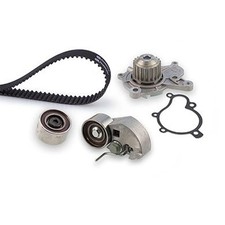 Gates Timing Belt & Water Pump Kit fits Hyundai Tucson 2004-2010 2.0
GBP 131.99
Gates Timing Belt & Water Pump Kit fits Hyundai Tucson 2004-2010 2.0
GBP 131.99
 Timing Belt Oil Pump Fits Hyundai TUCSON Opt1/2 Oil Pump 1.6 D4FE BOH473T
GBP 19.52
Timing Belt Oil Pump Fits Hyundai TUCSON Opt1/2 Oil Pump 1.6 D4FE BOH473T
GBP 19.52
 Timing Belt Kit fits HYUNDAI TUCSON NX4, TL 1.6D 18 to 22 D4FE Set Gates Quality
GBP 67.84
Timing Belt Kit fits HYUNDAI TUCSON NX4, TL 1.6D 18 to 22 D4FE Set Gates Quality
GBP 67.84
 Timing Belt Tensioner Pulley Fits HYUNDAI TUCSON I 2.0 128A
GBP 72.09
Timing Belt Tensioner Pulley Fits HYUNDAI TUCSON I 2.0 128A
GBP 72.09
 FITS HYUNDAI i30 i40 KONA TUCSON 1.6 CRDi DIESEL ENGINE TIMING BELT KIT D4FE
GBP 125.00
FITS HYUNDAI i30 i40 KONA TUCSON 1.6 CRDi DIESEL ENGINE TIMING BELT KIT D4FE
GBP 125.00
As an eBay Partner, Car United may earn commission from qualifying purchases shown above. Listings and pricing are pulled live from eBay and may vary.
Watch: Chain Tensioner Replacement (Not a Routine Job)
Since this is a chain, not a scheduled belt job, this video is only relevant if you're diagnosing or responding to symptoms of tensioner wear — commonly reported from around 130,000km on these engines.
Warning Signs, DIY Difficulty & Aftermarket Advice
These are the same regardless of make or model — see our full Timing Belt Guide for symptoms to watch for, confirming fitment against your VIN, and which aftermarket brands are worth trusting.
More Hyundai Timing Belt
The same part, covered across other Hyundai models.