
Mitsubishi ASX Radiator: Specs, Fitment & Common Faults
A genuinely useful, specific diagnostic clue on related models: solid radiator hoses, boiling in the header tank, and temperature dropping with the heater on full together point toward a stuck thermostat.
 Illustration for editorial purposes
OEM Part Numbers
The Part That Keeps Everything Else From Cooking
Nothing about this component is glamorous, but almost every serious engine failure that isn't wear-related traces back to a cooling system problem left unaddressed. Catching the early signs here is genuinely cheap insurance against a much bigger bill.
What It Does
The radiator transfers heat from the engine coolant to the surrounding air, keeping engine temperature within a safe operating range. On automatic versions, it often also cools transmission fluid through a separate internal circuit — one more reason the correct part number matters so much here.
Shop for This Part on eBay
 Radiator FOR MITSUBISHI ASX GA 2.0 2010 on 1350A297 MN156092 Quality
GBP 46.92
Radiator FOR MITSUBISHI ASX GA 2.0 2010 on 1350A297 MN156092 Quality
GBP 46.92
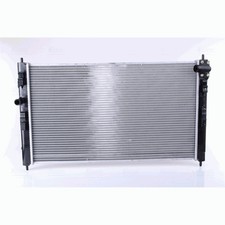 Radiator For Mitsubishi ASX 1.6 Di-D Nissens 1350A763 1611262980
GBP 112.33
Radiator For Mitsubishi ASX 1.6 Di-D Nissens 1350A763 1611262980
GBP 112.33
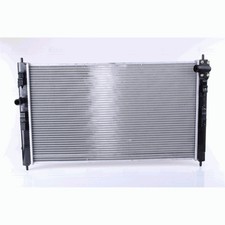 Radiator For Mitsubishi ASX 1.6 Di-D 4WD Nissens 1350A763 1611262980
GBP 112.33
Radiator For Mitsubishi ASX 1.6 Di-D 4WD Nissens 1350A763 1611262980
GBP 112.33
 Radiator FOR MITSUBISHI ASX GA 1.6 2010 on 4A92 1350A297 MN156092
GBP 46.62
Radiator FOR MITSUBISHI ASX GA 1.6 2010 on 4A92 1350A297 MN156092
GBP 46.62
 AVA Coolant Radiator MT2274 for MITSUBISHI ASX (2010) 1.8 DID etc
GBP 116.24
AVA Coolant Radiator MT2274 for MITSUBISHI ASX (2010) 1.8 DID etc
GBP 116.24
 AIR CONDITIONING CONDENSER / RADIATOR / FOR MITSUBISHI ASX 1.8 2010 ONWARDS
GBP 52.70
AIR CONDITIONING CONDENSER / RADIATOR / FOR MITSUBISHI ASX 1.8 2010 ONWARDS
GBP 52.70
 MITSUBISHI LANCER MK8 OUTLANDER ASX 1.5 1.6 1.8 2.0 MANUAL RADIATOR
GBP 74.95
MITSUBISHI LANCER MK8 OUTLANDER ASX 1.5 1.6 1.8 2.0 MANUAL RADIATOR
GBP 74.95
 Radiator fits MITSUBISHI ASX GA 1.6 2010 on 4A92 NRF 1350A297 MN156092 Quality
GBP 77.88
Radiator fits MITSUBISHI ASX GA 1.6 2010 on 4A92 NRF 1350A297 MN156092 Quality
GBP 77.88
As an eBay Partner, Car United may earn commission from qualifying purchases shown above. Listings and pricing are pulled live from eBay and may vary.
A Genuinely Useful, Specific Diagnostic Clue Worth Knowing
If you're facing overheating, this specific combination of symptoms, documented on related Mitsubishi models, is genuinely worth knowing about: both radiator hoses feeling solid rather than squishy, combined with visible boiling in the header tank, and the temperature temporarily dropping when the heater is switched on full, strongly points toward a stuck thermostat restricting coolant flow.
It's also genuinely worth knowing that if a cooling system has recently had a new radiator fitted, it's worth confirming a proper flush and bleed was actually carried out, since air trapped in the system can cause overheating unrelated to the new part itself.
Faults, DIY Difficulty & Aftermarket Advice
These are the same regardless of make or model — see our full Radiator Guide for the three common failure modes, confirming fitment against your VIN, and OEM vs aftermarket guidance.
More Mitsubishi Radiator
The same part, covered across other Mitsubishi models.