
Nissan Juke Timing Belt: Intervals, Fitment & Warning Signs
A genuinely severe, well-documented fault on the 1.2 DIG-T: catastrophic chain failure with no dashboard warning despite dramatic oil loss — confirmed by a real Nissan technical campaign.
 Illustration for editorial purposes
OEM Part Number: 13028-1KT0A
| 1.2/1.6 petrol (HR12DE/HR16DE), genuine timing chain kit | Nissan OEM: 13028-1KT0A (also referenced as 13028-1HC0A, 13028-9U50A, 13028-EE50A) — shared across Micra, Note, Juke, Pulsar, Qashqai |
|---|---|
| 1.5 dCi diesel (K9K), genuine timing belt | Renault/Nissan OEM: 8200366318 |
A Genuinely Severe, Well-Documented Fault on the 1.2 DIG-T — Nissan Juke Timing Belt
If your Juke has the 1.2 DIG-T turbo petrol engine, this is genuinely worth understanding given how consistently and severely it's documented: this engine has a well-known history of catastrophic timing chain failure, sometimes appearing as early as 2 years and under 10,000 miles into ownership, and confirmed by Nissan themselves through a real technical campaign (reference pg6bp) addressing exactly this issue. Genuinely alarming and worth knowing directly: documented cases show the dashboard's oil warning light failing to illuminate despite the oil level dropping dramatically — one owner's dipstick still showed oil present when only around a litre actually remained in the engine. This means you genuinely cannot rely on the dashboard alone to catch this developing fault; checking the oil level manually and listening for a change in engine note (described by multiple owners as sounding "like a tractor") is worth doing periodically rather than trusting warning lights to catch it.
This engine is completely distinct from the 1.6 DIG-T (which has its own, separate documented chain issue) — worth confirming which specific engine your Juke has, since the two are unrelated despite sharing a similar name and both being turbocharged DIG-T units.
Generations, Derivatives & Engines: Belt or Chain
| F15 (2010–2019), 1.6 petrol (HR16DE) & 1.2 DIG-T | Timing chain — see documented fault above |
|---|---|
| F15 Nismo/Nismo RS (2013–2019), 1.6 DIG-T turbo (MR16DDT) | Timing chain — 150,000km inspection point, no scheduled replacement |
| F16 (2019–present), 1.0 DIG-T (HR10DDT) | Timing chain — no scheduled replacement interval |
| Both generations, 1.5 dCi diesel (K9K) | Timing belt — see genuine reference above |
The Part Where Missing a Deadline Gets Expensive
Few maintenance items carry as much downside risk for skipping them. On the engines where this component fails, the consequences typically extend well beyond the part itself, which is exactly why sticking to the schedule matters more here than almost anywhere else on the car.
What It Does
The timing belt or chain keeps the engine's camshafts and crankshaft rotating in precise synchronisation, ensuring valves open and close at exactly the right moment relative to piston position. On many engines, this is what's known as an "interference" design — if the belt fails, the pistons and valves can collide, causing serious internal engine damage.
Shop for This Part on eBay
 Gates Timing Belt Cambelt 123 Teeth fits Nissan Juke 2010-2019 1.5
GBP 38.99
Gates Timing Belt Cambelt 123 Teeth fits Nissan Juke 2010-2019 1.5
GBP 38.99
 For Nissan - Juke F15 1.5D 2013-2019 Timing Belt Kit & Water Pump Gates
GBP 68.83
For Nissan - Juke F15 1.5D 2013-2019 Timing Belt Kit & Water Pump Gates
GBP 68.83
 Timing Belt & Water Pump Kit For Nissan Juke Qashqai Dacia Duster 1.5 dCi Diesel
GBP 44.64
Timing Belt & Water Pump Kit For Nissan Juke Qashqai Dacia Duster 1.5 dCi Diesel
GBP 44.64
 Timing Belt & Water Pump Kit fits NISSAN JUKE F15 1.5D 10 to 19 Set INA Quality
GBP 79.71
Timing Belt & Water Pump Kit fits NISSAN JUKE F15 1.5D 10 to 19 Set INA Quality
GBP 79.71
 Timing Belt & Water Pump Kit For Nissan Juke Qashqai Dacia Duster 1.5 dCi Diesel
GBP 38.36
Timing Belt & Water Pump Kit For Nissan Juke Qashqai Dacia Duster 1.5 dCi Diesel
GBP 38.36
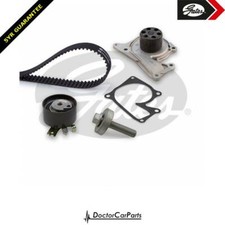 Gates Timing Cam Belt and Water Pump Kit for NISSAN JUKE 1.5 dCi K9K 636 110bhp
GBP 104.87
Gates Timing Cam Belt and Water Pump Kit for NISSAN JUKE 1.5 dCi K9K 636 110bhp
GBP 104.87
 For Nissan Qashqai Juke Note 1.5 dCi Timing Belt Water Pump Kit 119A02421R 06-13
GBP 32.99
For Nissan Qashqai Juke Note 1.5 dCi Timing Belt Water Pump Kit 119A02421R 06-13
GBP 32.99
 For Nissan Juke Qashqai Dacia Duster 1.5 dCi Diesel Timing Belt & Water Pump Kit
GBP 57.99
For Nissan Juke Qashqai Dacia Duster 1.5 dCi Diesel Timing Belt & Water Pump Kit
GBP 57.99
As an eBay Partner, CarUnited may earn commission from qualifying purchases shown above. Listings and pricing are pulled live from eBay and may vary.
Watch: Replacing It
This covers the belt-driven 1.5 dCi diesel. Chain-driven petrol engines don't need this procedure — see above.
Warning Signs, DIY Difficulty & Aftermarket Advice
These are the same regardless of make or model — see our full Timing Belt Guide for symptoms to watch for, confirming fitment against your VIN, and which aftermarket brands are worth trusting.
More Nissan Timing Belt
The same part, covered across other Nissan models.