
Suzuki Swift Fog Lights: Specs, Fitment & Common Faults
On the Swift, touching a tester directly to the switch's cables genuinely helps isolate a fog light fault to the switch itself rather than the wiring or relay.
 Illustration for editorial purposes
OEM Part Numbers
Rarely Used, Easy to Forget About Until Needed
Fog lights sit unused for most owners most of the year, which means a fault can go unnoticed for a long time — right up until a genuinely foggy morning makes the problem obvious at the worst possible moment.
What It Does
Front fog lights are angled and positioned to illuminate the road surface in low visibility conditions without creating the glare a standard headlight beam would in fog. Some higher trims of the Swift integrate fog lights into the same housing as cornering lights or daytime running lights, which affects both the part number and the complexity of any repair.
Fitment & Compatibility
Not every trim level of the Swift comes with fog lights fitted as standard, and the housing design often differs between trims that have them integrated with other lighting functions and those with a standalone unit. Always confirm your specific trim's fitment before ordering. Whether you're sourcing a replacement fog lights for your Suzuki Swift from a dealer, specialist, or online marketplace, always check compatibility against your registration or VIN before buying, and confirm you're ordering the correct side — driver's side (RH in the UK) or passenger side (LH in the UK) — since these are not interchangeable.
Shop for This Part on eBay
 Fits Suzuki Swift Vitara Alto Baleno Jimny SX4 Splash Fog Light Lamp Lh Or Rh
GBP 9.65
Fits Suzuki Swift Vitara Alto Baleno Jimny SX4 Splash Fog Light Lamp Lh Or Rh
GBP 9.65
 For Suzuki Swift / Sport 2005-2016 Front LED Fog Lights Lamps Left & Right Side
GBP 28.49
For Suzuki Swift / Sport 2005-2016 Front LED Fog Lights Lamps Left & Right Side
GBP 28.49
 For Suzuki Swift Front Fog Lights Lamps Pair Set Driver Passenger Left Right
GBP 34.90
For Suzuki Swift Front Fog Lights Lamps Pair Set Driver Passenger Left Right
GBP 34.90
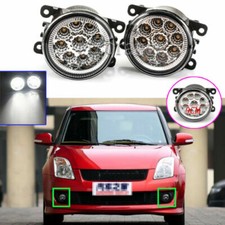 LED Left Right Side Front Bumper Fog Light Lamp Clear For Suzuki Swift 2005-2019
GBP 14.98
LED Left Right Side Front Bumper Fog Light Lamp Clear For Suzuki Swift 2005-2019
GBP 14.98
 Suzuki Swift 2008-2017 Front Fog Lights New Pair Driver Passenger Side
GBP 39.00
Suzuki Swift 2008-2017 Front Fog Lights New Pair Driver Passenger Side
GBP 39.00
 Fog Lights For Suzuki Swift 2005-2011 Front Spot Lamps Drivers & Passenger Pair
GBP 27.95
Fog Lights For Suzuki Swift 2005-2011 Front Spot Lamps Drivers & Passenger Pair
GBP 27.95
 Fits Suzuki Swift Vitara Alto Baleno Jimny SX4 Splash 2X Fog Light Lamp Lh Or Rh
GBP 12.79
Fits Suzuki Swift Vitara Alto Baleno Jimny SX4 Splash 2X Fog Light Lamp Lh Or Rh
GBP 12.79
 For Suzuki Swift LED Front Fog Light 10-16 Yellow Lamps Pair Left & Right Side
GBP 27.99
For Suzuki Swift LED Front Fog Light 10-16 Yellow Lamps Pair Left & Right Side
GBP 27.99
As an eBay Partner, Car United may earn commission from qualifying purchases shown above. Listings and pricing are pulled live from eBay and may vary.
A Genuinely Useful, Real Diagnostic Technique Worth Trying
If you're chasing a fog light electrical fault, this is genuinely worth trying: touching a multimeter or simple tester directly to the switch's own cables and finding the fog lights do work this way is a genuinely useful way to isolate the fault — it proves the wiring, relay, and lights themselves downstream of the switch are all fine, narrowing the genuine fault down to the switch itself or its connection to the car's control electronics.
It's also genuinely worth knowing that if a dealer attributes a fog light fault to an expensive component like the Body Control Module without a clear explanation of how they confirmed this, it's worth asking directly what testing was carried out, particularly if the car is still within its warranty period.
Common Faults, DIY Difficulty & Aftermarket Advice
These are the same regardless of make or model — see our full Fog Lights Guide for common faults to check for (including exactly what fails an MOT), how easy this job is to DIY, and aftermarket advice.
More Suzuki Fog Lights
The same part, covered across other Suzuki models.