
Vauxhall Corsa Radiator: Specs, Fitment & Common Faults
Many Corsas have no temperature gauge — just a warning light that comes on once it's already running hot. Here's why that makes cooling system vigilance genuinely more important.
 Illustration for editorial purposes
OEM Part Numbers
A Genuinely Important Design Choice: Many Corsas Have No Temperature Gauge
Worth knowing if you're not already aware: Vauxhall removed the conventional temperature gauge from the dashboard on many Corsa models, replacing it with a warning light that only illuminates once the engine is already running hot. This means there's genuinely no early warning of a developing cooling problem the way there is on a car with a proper gauge — by the time you see the light, the engine may already be at a temperature capable of causing damage, particularly warping the cylinder head, which these engines are documented as being prone to if run hot even briefly. This makes staying on top of coolant level checks and addressing any cooling system symptom promptly considerably more important on a Corsa than on a car where you'd see the temperature climbing gradually first.
The Part That Keeps Everything Else From Cooking
Nothing about this component is glamorous, but almost every serious engine failure that isn't wear-related traces back to a cooling system problem left unaddressed. Catching the early signs here is genuinely cheap insurance against a much bigger bill.

What It Does
The radiator transfers heat from the engine coolant to the surrounding air, keeping engine temperature within a safe operating range. On automatic versions, it often also cools transmission fluid through a separate internal circuit — one more reason the correct part number matters so much here.
Shop for This Part on eBay
 Vauxhall Corsa D 1.2 1.4 2009-2014 Engine Cooling Radiator
GBP 43.99
Vauxhall Corsa D 1.2 1.4 2009-2014 Engine Cooling Radiator
GBP 43.99
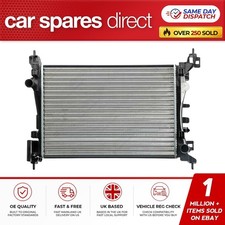 VAUXHALL CORSA D 1.2 1.4 2009-2014 ENGINE COOLING RADIATOR
GBP 45.50
VAUXHALL CORSA D 1.2 1.4 2009-2014 ENGINE COOLING RADIATOR
GBP 45.50
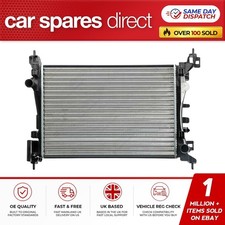 VAUXHALL CORSA E 1.2 1.4 2014-2019 ENGINE COOLING RADIATOR
GBP 45.50
VAUXHALL CORSA E 1.2 1.4 2014-2019 ENGINE COOLING RADIATOR
GBP 45.50
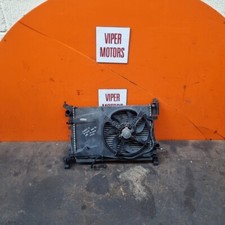 Vauxhall Corsa D Radiator Pack 1.2 1.4 Petrol Fan None Air Con A12XER 2010-2014
GBP 29.99
Vauxhall Corsa D Radiator Pack 1.2 1.4 Petrol Fan None Air Con A12XER 2010-2014
GBP 29.99
 VAUXHALL CORSA D 2006-2014 RADIATOR COOLANT EXPANSION HEADER TANK & CAP 13312277
GBP 15.95
VAUXHALL CORSA D 2006-2014 RADIATOR COOLANT EXPANSION HEADER TANK & CAP 13312277
GBP 15.95
 Vauxhall Corsa E 1.2 1.4 2014-2019 Engine Cooling Radiator
GBP 43.99
Vauxhall Corsa E 1.2 1.4 2014-2019 Engine Cooling Radiator
GBP 43.99
 Vauxhall Corsa D Radiator 1.0 1.2 1.4 Z12XEP Z14XEP Petrol Rad Fan AC pack 06-10
GBP 49.99
Vauxhall Corsa D Radiator 1.0 1.2 1.4 Z12XEP Z14XEP Petrol Rad Fan AC pack 06-10
GBP 49.99
 Vauxhall Corsa D 1.3 1.6 1.7 2006-Onwards Manual Engine Cooling Radiator
GBP 59.99
Vauxhall Corsa D 1.3 1.6 1.7 2006-Onwards Manual Engine Cooling Radiator
GBP 59.99
As an eBay Partner, Car United may earn commission from qualifying purchases shown above. Listings and pricing are pulled live from eBay and may vary.
Faults, DIY Difficulty & Aftermarket Advice
These are the same regardless of make or model — see our full Radiator Guide for the three common failure modes, confirming fitment against your VIN, and OEM vs aftermarket guidance.
More Vauxhall Radiator
The same part, covered across other Vauxhall models.