
Volkswagen Golf Brake Pads: Specs, Fitment & Wear Symptoms
A critical warning if your Golf has an electronic parking brake: DIY rear pad replacement without the right tool can genuinely leave the car immobilised — plus confirmed OEM part numbers.
 Illustration for editorial purposes
A Part Everyone Owns but Few Understand
Almost every driver knows brake pads wear out eventually. Fewer know what the early warning signs actually sound and feel like, which is exactly why so many pads get replaced only after they've already started damaging the disc underneath.
OEM Part Number: 5WA-698-451-G
| Rear brake pads, 1.0 TSI (2020 onwards) | VW OEM: 5WA-698-451-G |
|---|---|
| Front disc diameter, 1.4 TSI | 312mm |
| GTI / Golf R | Larger, high-performance brake package — not interchangeable with standard TSI pads |
The standard TSI petrol range shares broadly similar braking hardware across the smaller engines, but always confirm the exact reference for your specific engine and trim, since VW revised specifications more than once across the Mk8's production run.
A Genuinely Critical Warning If Your Golf Has an Electronic Parking Brake — Volkswagen Golf Brake Pads
Most current-generation Golfs use an Electronic Parking Brake (EPB) on the rear, which genuinely changes the pad replacement job — the caliper houses a small motor that must be put into a "service mode" using a diagnostic scan tool (VCDS or OBDeleven) before the piston can be safely retracted. Skipping this and simply forcing the piston back with a standard caliper tool risks genuinely serious damage: documented cases include a torn piston seal and the parking brake becoming permanently stuck engaged, leaving the car unable to move at all without recovery.
What They Do
Brake pads clamp against the discs to convert the car's momentum into heat, slowing it down. They're a deliberately wearing part — designed to sacrifice themselves gradually rather than let the far more expensive disc take the damage.
Common Sizes
| Standard TSI, front (272-288mm disc) | Front pad thickness: 14mm new, 2mm wear limit (without backing plate) |
|---|---|
| GTI, front (312mm disc) | Front pad thickness: 14mm new, 2mm wear limit — same pad thickness as standard TSI, but a genuinely larger caliper and pad footprint to match the bigger disc |
| GTI/standard, rear | Rear pad thickness: 11-12mm new, 2mm wear limit |
| Golf R, front (345mm Mk7 / 357mm Mk8) | Front pad thickness: 14mm new, 2mm wear limit, but on a genuinely larger 4-piston Brembo caliper — the pad itself is a completely different size and shape from the single-piston GTI unit, not just a thicker version of the same pad |
| Golf R, rear | Rear pad thickness: 11mm new, 2mm wear limit |
Shop for This Part on eBay
 Brembo OE Front and Rear Brake Pads Set for Volkswagen Golf MK7 MK7.5 GTI
GBP 89.99
Brembo OE Front and Rear Brake Pads Set for Volkswagen Golf MK7 MK7.5 GTI
GBP 89.99
 Pagid Brake Pads Set Front For VW Golf MK7 Brand New
GBP 49.99
Pagid Brake Pads Set Front For VW Golf MK7 Brand New
GBP 49.99
 Brake Pads Set fits VW GOLF Rear 91 to 16 1E0698451 JZW698451 1JD698451 Febi New
GBP 12.79
Brake Pads Set fits VW GOLF Rear 91 to 16 1E0698451 JZW698451 1JD698451 Febi New
GBP 12.79
 Volkswagen VW Golf MK7 R Dimpled & Grooved Brake Discs Brembo Pads Front & Rear
GBP 289.99
Volkswagen VW Golf MK7 R Dimpled & Grooved Brake Discs Brembo Pads Front & Rear
GBP 289.99
 Rear Brake Pads Fits Volkswagen Golf Plus MK 5 2004-2014
GBP 13.99
Rear Brake Pads Fits Volkswagen Golf Plus MK 5 2004-2014
GBP 13.99
 Autostar Germany Front Brake Pads for Audi A3 TT VW Golf Jetta 5K0698151
GBP 16.25
Autostar Germany Front Brake Pads for Audi A3 TT VW Golf Jetta 5K0698151
GBP 16.25
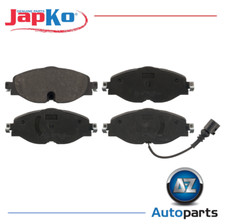 For VW - Golf MK7 2012-2020 Most Models Front Brake Pads Japko
GBP 20.87
For VW - Golf MK7 2012-2020 Most Models Front Brake Pads Japko
GBP 20.87
 Autostar Germany Rear Brake Pad Set 2K5698451B for Volkswagen Caddy Transporter
GBP 11.62
Autostar Germany Rear Brake Pad Set 2K5698451B for Volkswagen Caddy Transporter
GBP 11.62
As an eBay Partner, CarUnited may earn commission from qualifying purchases shown above. Listings and pricing are pulled live from eBay and may vary.
Wear Symptoms, DIY Difficulty & Aftermarket Advice
These are the same regardless of make or model — see our full Brake Pads Guide for warning signs to watch for, confirming fitment against your VIN, and R90-certified aftermarket brands worth trusting.
More Volkswagen Brake Pads
The same part, covered across other Volkswagen models.