
Volkswagen Golf Radiator: Specs, Fitment & Common Faults
VW has legally admitted to using "inferior thermoplastic materials" in the EA888's water pump housing — here's the real class-action settlement covering up to £3,300 in consequential damage.
 Illustration for editorial purposes
Confirmed: A Genuinely Serious, Class-Action-Level Design Flaw on EA888 Engines
If your Golf has a 1.8T or 2.0T EA888 petrol engine (roughly 2015 onward), this is genuinely the single most important thing to know before anything else on this page. The water pump and thermostat are combined into one integrated plastic housing, and this plastic becomes brittle and develops hairline cracks after thousands of ordinary heat cycles — leading to a coolant leak that's often difficult to spot at first. This isn't a minor manufacturing quirk: VW has confirmed through legal documents that "inferior thermoplastic materials were used" in these water pump components, and the issue has been the subject of multiple class-action lawsuits.
Watch for a low coolant warning, a sweet smell in the engine bay (especially noticeable after motorway driving), or fault codes P00B7, P2681, P1889, or P0128 — any of these are worth investigating immediately rather than topping up and continuing, since this failure can escalate from a slow leak to sudden, severe overheating capable of causing engine damage within minutes. A telltale sign during inspection: dried white or pink crystalline residue around the thermostat housing confirms an active or historic leak.
If this does need replacing, the entire water pump and thermostat housing assembly must be replaced together — never attempt to replace just one part of it. VW has released updated part number references over the years specifically to address this issue (the latest reference is 06L-121-111-P), so confirming you're getting the current revision rather than an older superseded part is worth doing when sourcing a replacement.
The Part That Keeps Everything Else From Cooking
Nothing about this component is glamorous, but almost every serious engine failure that isn't wear-related traces back to a cooling system problem left unaddressed. Catching the early signs here is genuinely cheap insurance against a much bigger bill.
OEM Part Numbers
Radiator specification on the Mk8 Golf varies by engine and, on eTSI mild hybrid versions, by the additional cooling requirements of the 48V system components. Confirm your exact engine and whether you have the eTSI mild hybrid system before ordering, since these use different cooling configurations to the standard 1.5 TSI.
What It Does
The radiator transfers heat from the engine coolant to the surrounding air, keeping engine temperature within a safe operating range. On automatic versions, it often also cools transmission fluid through a separate internal circuit — one more reason the correct part number matters so much here.
Shop for This Part on eBay
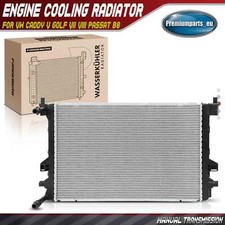 Engine Cooling Radiator for VW Caddy V Golf VII VIII Passat B8 12-On 5Q0121251EJ
GBP 66.99
Engine Cooling Radiator for VW Caddy V Golf VII VIII Passat B8 12-On 5Q0121251EJ
GBP 66.99
 VW GOLF MK7 MK8 / PASSAT B8 / CADDY MK5 / ARTEON 2012-ON ENGINE COOLING RADIATOR
GBP 63.25
VW GOLF MK7 MK8 / PASSAT B8 / CADDY MK5 / ARTEON 2012-ON ENGINE COOLING RADIATOR
GBP 63.25
 VW GOLF, BEETLE, PASSAT, CADDY, JETTA, EOS CC, SCIROCCO, TIGUAN, TOURAN RADIATOR
GBP 55.95
VW GOLF, BEETLE, PASSAT, CADDY, JETTA, EOS CC, SCIROCCO, TIGUAN, TOURAN RADIATOR
GBP 55.95
 2004 VOLKSWAGEN GOLF RADIATOR PACK 1K0 959 455 EA
GBP 179.95
2004 VOLKSWAGEN GOLF RADIATOR PACK 1K0 959 455 EA
GBP 179.95
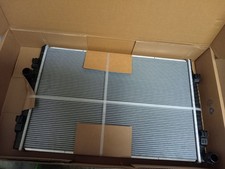 VW GOLF 1.5 TSI RADIATOR 22 TO 26 5WA121251E
GBP 120.30
VW GOLF 1.5 TSI RADIATOR 22 TO 26 5WA121251E
GBP 120.30
 Engine Cooling Radiator for Audi A3 Q2 Q3 Seat Leon Skoda Octavia VW Golf Passat
GBP 92.99
Engine Cooling Radiator for Audi A3 Q2 Q3 Seat Leon Skoda Octavia VW Golf Passat
GBP 92.99
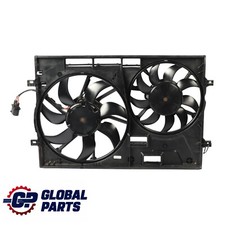 Audi A3 S3 8V VW Volkswagen Golf MK7 Radiator Fan Engine Motor Cooling 3Q0121205
GBP 119.95
Audi A3 S3 8V VW Volkswagen Golf MK7 Radiator Fan Engine Motor Cooling 3Q0121205
GBP 119.95
 Volkswagen Golf-MK6 Radiator Pack 1.4L Petrol Automatic (2009-2013) 1K0121253AB
GBP 159.99
Volkswagen Golf-MK6 Radiator Pack 1.4L Petrol Automatic (2009-2013) 1K0121253AB
GBP 159.99
As an eBay Partner, Car United may earn commission from qualifying purchases shown above. Listings and pricing are pulled live from eBay and may vary.
Faults, DIY Difficulty & Aftermarket Advice
These are the same regardless of make or model — see our full Radiator Guide for the three common failure modes, confirming fitment against your VIN, and OEM vs aftermarket guidance.
More Volkswagen Radiator
The same part, covered across other Volkswagen models.