
Volkswagen Polo Cabin Air Filter: Intervals, Fitment & Warning Signs
On the Polo, a genuinely useful preventive habit stops musty AC smell before it starts — plus a specific glovebox linkage step that's easy to miss.
 Illustration for editorial purposes
OEM Part Number: 6R0819653
| Standard particulate filter | VW OEM: 6R0819644 (also referenced as 6Q0819644B, JZW819644F) |
|---|---|
| Activated carbon/charcoal filter | VW OEM: 6R0819653 (also cross-referenced as 6Q0819653B, JZW819653F) — genuinely a different filter media from the standard version; this same platform-wide reference is shared with the Audi A1, Skoda Fabia, and Seat Ibiza of the same era, since all four share the same platform and HVAC housing |
A Genuine Prevention Habit, Plus a Glovebox Step Worth Knowing First — Volkswagen Polo Cabin Air Filter
A genuinely well-corroborated preventive habit worth adopting, confirmed repeatedly across owner forums: running the air conditioning year-round, rather than only in summer, measurably reduces musty smell developing in the first place. The mechanism is straightforward — regular AC use keeps the evaporator drying out properly between uses, while a system left dormant over autumn and winter gives moisture, and the mould that feeds on it, a genuine chance to establish itself before the following spring. A related, equally simple habit: a couple of minutes before finishing a journey, switch the AC compressor off but leave the blower fan running — this dries out the evaporator and ducting properly rather than leaving them damp when the car is switched off.
If a musty smell persists even after fitting a genuinely fresh filter, it's worth looking beyond the filter itself — a dirty or mould-affected evaporator coil, or a partially blocked condensate drain tube, are both common underlying causes that a filter change alone won't fix. A specialist AC clean and disinfection service addresses these directly if the smell doesn't clear with a fresh filter and the habits above.
Easy to Forget, Easy to Fix
Unlike most parts covered here, this one has no bearing on how the car drives or performs — its only job is air quality inside the cabin, which makes it very easy to forget about entirely until something forces the issue.
What It Does
The cabin air filter cleans incoming air before it reaches the car's ventilation system, trapping dust, pollen and, on activated-carbon versions, some airborne odours and pollutants. It has no connection to the engine air filter, which is a completely separate part serving the combustion process rather than the cabin.
Shop for This Part on eBay
 Cabin Air Filter Pollen Filter Fits VW Polo VI Audi A1 SEAT Ibiza VI- 2Q0819644
GBP 10.99
Cabin Air Filter Pollen Filter Fits VW Polo VI Audi A1 SEAT Ibiza VI- 2Q0819644
GBP 10.99
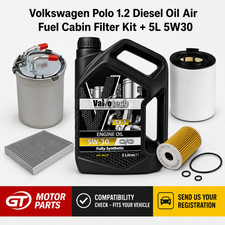 Volkswagen Polo 1.2 TDI 2010-2014 Diesel Oil Air Fuel Cabin Filter Kit + 5L 5W30
GBP 65.00
Volkswagen Polo 1.2 TDI 2010-2014 Diesel Oil Air Fuel Cabin Filter Kit + 5L 5W30
GBP 65.00
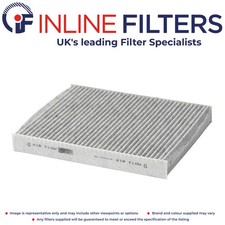 Cabin Air Filter for Volkswagen Polo 1.4 i Bi-Fuel w/1390 82P 4 Cyl Eng 2010/04-
GBP 25.06
Omnicraft Cabin Filter for VW POLO V 1.2 Petrol 2009 2135402
GBP 6.00
Cabin Air Filter for Volkswagen Polo 1.4 i Bi-Fuel w/1390 82P 4 Cyl Eng 2010/04-
GBP 25.06
Omnicraft Cabin Filter for VW POLO V 1.2 Petrol 2009 2135402
GBP 6.00
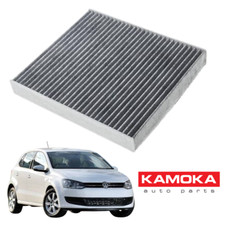 Pollen Cabin Filter For VW Polo 6R 2009-2014 Kamoka Quality 6R0819653
GBP 11.95
Pollen Cabin Filter For VW Polo 6R 2009-2014 Kamoka Quality 6R0819653
GBP 11.95
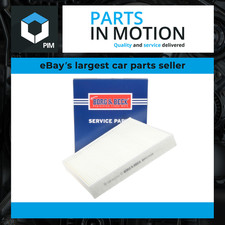 Pollen / Cabin Filter fits VW POLO 2010 on B&B 6R0820367 VOLKSWAGEN Quality New
GBP 8.00
Pollen / Cabin Filter fits VW POLO 2010 on B&B 6R0820367 VOLKSWAGEN Quality New
GBP 8.00
 Cabin Air Filter for Volkswagen Polo 1.0 AUC w/50hp Eng - Inline FA11881
GBP 16.87
Cabin Air Filter for Volkswagen Polo 1.0 AUC w/50hp Eng - Inline FA11881
GBP 16.87
As an eBay Partner, CarUnited may earn commission from qualifying purchases shown above. Listings and pricing are pulled live from eBay and may vary.
Warning Signs, DIY Difficulty & Aftermarket Advice
These are the same regardless of make or model — see our full Cabin Air Filter Guide for signs it needs changing, confirming fitment against your VIN, and choosing standard, carbon, or HEPA media.
More Volkswagen Cabin Air Filter
The same part, covered across other Volkswagen models.