
Audi A3 Brake Discs: Specs, Fitment & Wear Symptoms
On the A3, what's commonly called "warped discs" is genuinely almost always uneven pad deposits, not physical warping — plus a genuine hard-braking fix, and an alarming account of genuine replacement discs developing the same fault within 500 miles.
 Illustration for editorial purposes
OEM Part Number: 5Q0615301F
| Front disc, 8V generation (2012-2020), most common | Audi OEM: 5Q0615301F (also cross-referenced as 1K0615301AA, JZW615301H) — 276mm or 288mm depending on engine, vented |
|---|---|
| Rear disc, 8V generation, common reference | Audi OEM: 1K0615601AA — 272mm, solid |
| Rear disc, alternative sizes reported | 260mm, 282mm, or 286mm depending on exact PR code — this is genuinely the source of the common confusion, worth checking your door jamb sticker's brake PR code to confirm. |
The Part That Pads Depend On
Discs and pads work as a pair, and neglecting one tends to accelerate wear on the other — which is exactly why worn discs so often get discovered during what was meant to be a routine pad change.
What They Do
Brake discs provide the surface the brake pads clamp against to slow the car, converting momentum into heat through friction. Larger, sportier trims of the A3 typically use bigger discs than standard versions to handle the additional heat generated by more aggressive braking.
Shop for This Part on eBay
 345MM FRONT DRILLED GROOVED BRAKE DISCS FOR AUDI A3 S3 8P 2.5 3.2 V6 QUATTRO 03+
GBP 104.99
345MM FRONT DRILLED GROOVED BRAKE DISCS FOR AUDI A3 S3 8P 2.5 3.2 V6 QUATTRO 03+
GBP 104.99
 2x Solid Brake Discs and Pads fits AUDI A3 8P1, 8P7, 8PA Rear 03 to 13 253mm Set
GBP 32.76
2x Solid Brake Discs and Pads fits AUDI A3 8P1, 8P7, 8PA Rear 03 to 13 253mm Set
GBP 32.76
 2x Vented Brake Discs and Pads fits AUDI A3 8V 1.6D Front 12 to 20 288mm Set New
GBP 62.10
2x Vented Brake Discs and Pads fits AUDI A3 8V 1.6D Front 12 to 20 288mm Set New
GBP 62.10
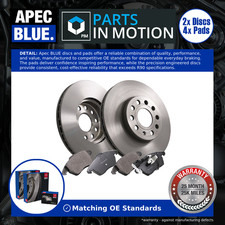 2x Vented Brake Discs and Pads fits AUDI A3 8P1, 8P7, 8PA Front 03 to 13 288mm
GBP 59.47
2x Vented Brake Discs and Pads fits AUDI A3 8P1, 8P7, 8PA Front 03 to 13 288mm
GBP 59.47
 Front Rear Brake Discs and Pads for Audi A3 2003-2013 1K0615301AC 1J0698151E
GBP 95.99
Front Rear Brake Discs and Pads for Audi A3 2003-2013 1K0615301AC 1J0698151E
GBP 95.99
 APEC Front & Rear Axle Brake Discs Set & Pads Fits Audi A3 Seat Leon VW Golf
GBP 114.99
APEC Front & Rear Axle Brake Discs Set & Pads Fits Audi A3 Seat Leon VW Golf
GBP 114.99
 2x Vented Brake Discs and Pads fits AUDI A3 8P1, 8PA 1.6 Front 03 to 13 280mm
GBP 52.22
2x Vented Brake Discs and Pads fits AUDI A3 8P1, 8PA 1.6 Front 03 to 13 280mm
GBP 52.22
 BREMBO Front 2x Brake Discs + Pad Set For Audi A3 Q2 TT Seat Ateca Leon Skoda VW
GBP 129.99
BREMBO Front 2x Brake Discs + Pad Set For Audi A3 Q2 TT Seat Ateca Leon Skoda VW
GBP 129.99
As an eBay Partner, Car United may earn commission from qualifying purchases shown above. Listings and pricing are pulled live from eBay and may vary.
A Genuinely Important, Honest Consensus Worth Knowing
If you're facing a vibration under braking that's been diagnosed as warped discs, this is genuinely worth knowing: among experienced owners, there's a widely repeated consensus that true disc warping is actually quite rare, and the vibration is almost always caused by uneven deposits of pad material building up on the disc surface. It's genuinely worth trying a specific technique first: braking firmly from around 70mph down to 10mph, repeated eight to ten times without letting ABS intervene, can remove this build-up without replacing anything.
It's also genuinely worth knowing an honest account about warranty cover: one documented UK case saw a dealer initially refuse warranty coverage for a brake disc issue, citing ordinary wear, despite the car having covered only 5,000 miles. Escalating directly to the manufacturer's UK customer service resulted in the dealer accepting a share of responsibility, with the owner ultimately paying only £200 of a bill exceeding £900.
Wear Symptoms, DIY Difficulty & Aftermarket Advice
These are the same regardless of make or model — see our full Brake Discs Guide for warning signs to watch for, confirming fitment against your VIN, and choosing a reliable aftermarket disc.
More Audi Brake Discs
The same part, covered across other Audi models.