
Renault Captur Front Suspension: Specs, Fitment & Common Faults
Confirmed by a dealer: the Captur shares the Clio's exact suspension on a heavier body, causing drop links to wear faster — plus a genuine technical detail about wishbone installation angle.
 Illustration for editorial purposes
OEM Part Numbers
Confirmed: The Captur Shares the Clio's Suspension — On a Heavier Body
This is genuinely important to understand if you're chasing recurring drop link failures on a Captur: a dealer directly confirmed to an owner that the Captur uses the exact same chassis and suspension components as the Clio, despite the Captur having a heavier body and frame — meaning the suspension components were never specifically uprated for the extra weight. In practice, this means drop links in particular wear out faster than you might expect on a car this size, with some owners needing replacement roughly every 20,000 miles. If you're facing repeat drop link failures, this genuinely isn't necessarily a sign of a specific fault or bad luck — it's a documented characteristic of this platform being shared across a lighter and heavier body.
It's also genuinely worth knowing that not every knocking noise traces back to suspension at all — several documented cases describe persistent front knocks eventually traced to a failing engine mount instead, even on brand-new cars, after anti-roll bar bushes and other suspension components had already been replaced without resolving the noise. If a proper suspension inspection hasn't found the cause, it's worth having the engine mounts checked too.
The System That Quietly Does All the Work
Every bump, pothole and corner passes through these components before you ever feel it in the cabin, which is exactly why wear here shows up as vague, hard-to-pin-down symptoms rather than one obvious failure. A methodical check usually finds the culprit faster than guesswork.
What It Does
The front suspension — springs, dampers, control arms and anti-roll bar links — manages how the front wheels respond to the road surface, keeping the tyres in consistent contact with the ground while controlling body movement under braking and cornering. Each component wears differently, so a full diagnosis usually involves checking several parts rather than assuming one is solely responsible.
Shop for This Part on eBay
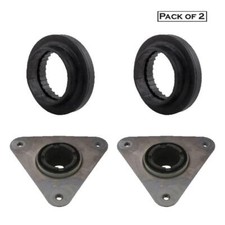 Renault Captur 2013-2019 Front Suspension Strut Top Mounts & Bearings
GBP 28.95
Renault Captur 2013-2019 Front Suspension Strut Top Mounts & Bearings
GBP 28.95
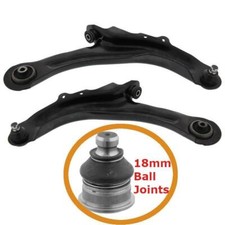 For Renault Captur Mk1 2013-2020 Lower Front Wishbone Suspension Arms Pair
GBP 42.90
For Renault Captur Mk1 2013-2020 Lower Front Wishbone Suspension Arms Pair
GBP 42.90
 RENAULT CAPTUR 2013-2019 FRONT SUSPENSION 2 SHOCK ABSORBERS SHOCKERS SHOCKS PAIR
GBP 79.95
RENAULT CAPTUR 2013-2019 FRONT SUSPENSION 2 SHOCK ABSORBERS SHOCKERS SHOCKS PAIR
GBP 79.95
 2024 RENAULT CAPTUR 1.6 Hybrid RIGHT Driver SIDE FRONT SUSPENSION LEG STRUT ARM
GBP 249.99
2024 RENAULT CAPTUR 1.6 Hybrid RIGHT Driver SIDE FRONT SUSPENSION LEG STRUT ARM
GBP 249.99
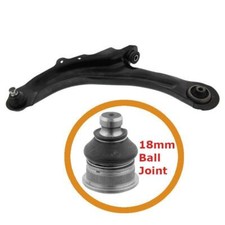 For Renault Captur Mk1 2013-2020 Lower Front Left Wishbone Suspension Arm
GBP 23.95
For Renault Captur Mk1 2013-2020 Lower Front Left Wishbone Suspension Arm
GBP 23.95
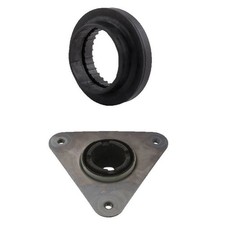 Renault Captur 2013-2019 Front Suspension Strut Top Mount & Bearing
GBP 19.95
Renault Captur 2013-2019 Front Suspension Strut Top Mount & Bearing
GBP 19.95
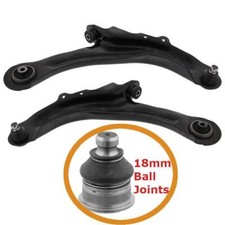 For Renault Captur Mk1 2013-2020 Lower Front Wishbone Suspension Arms Pair
GBP 42.90
For Renault Captur Mk1 2013-2020 Lower Front Wishbone Suspension Arms Pair
GBP 42.90
 RENAULT CAPTUR TCE MK1 13-17 Suspension Strut Shock Leg Front Right
GBP 130.90
RENAULT CAPTUR TCE MK1 13-17 Suspension Strut Shock Leg Front Right
GBP 130.90
As an eBay Partner, Car United may earn commission from qualifying purchases shown above. Listings and pricing are pulled live from eBay and may vary.
Warning Signs, DIY Difficulty & Aftermarket Advice
These are the same regardless of make or model — see our full Front Suspension Guide for symptoms of worn bushings and ball joints, confirming fitment against your VIN, and rubber vs polyurethane guidance.
More Renault Front Suspension
The same part, covered across other Renault models.