
Renault Twingo Front Suspension Strut: Specs, Fitment & Common Faults
On the Twingo, a genuine technical detail for DIY wishbone work: tightening angle matters critically to avoid a persistent creak returning.
 Illustration for editorial purposes
OEM Part Numbers
| Standard strut, right | Genuinely a different part number from the left-side strut — not a mirror-image of the same component |
|---|---|
| Standard strut, left | A genuinely different reference from the right-side strut above |
| Sport-trim strut (RS/GT-Line, where fitted) | A genuinely different, stiffer strut from standard trims — not interchangeable even though the mounting points look similar |
A Genuinely Important Technical Detail Worth Knowing for DIY Wishbone Work — Renault Twingo Front Suspension
If you're replacing a wishbone yourself, this is genuinely worth getting right: the angle of the wishbone matters critically when tightening its mounting bolt — one documented case saw a persistent creak return weeks after a wishbone replacement, eventually traced to the bolt having been tightened while the suspension was unweighted rather than at proper ride height. Tightening rubber bushes at the wrong angle pre-stresses the rubber, causing exactly this kind of slow-developing, hard-to-diagnose noise. Torquing the bolt with the car's full weight on the wheels rather than with the suspension hanging free is worth getting right.
The System That Quietly Does All the Work
Every bump, pothole and corner passes through these components before you ever feel it in the cabin, which is exactly why wear here shows up as vague, hard-to-pin-down symptoms rather than one obvious failure. A methodical check usually finds the culprit faster than guesswork.
What It Does
The front suspension strut combines a shock absorber with the coil spring mounting point in one assembly on most modern cars, controlling how quickly the suspension compresses and rebounds over bumps. A worn strut lets the car bounce excessively after a bump instead of settling quickly, and can accelerate uneven tyre wear if left unaddressed.
Shop for This Part on eBay
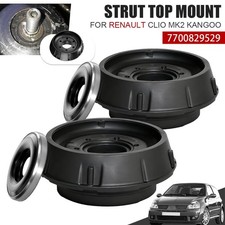 2x Front Suspension Strut Top Mounts & Bearings for Renault Thalia I Twingo MK2
GBP 18.99
2x Front Suspension Strut Top Mounts & Bearings for Renault Thalia I Twingo MK2
GBP 18.99
 2x FRONT SUSPENSION TOP STRUT MOUNTS & BEARINGS FOR RENAULT THALIA I TWINGO MK2
GBP 21.95
2x FRONT SUSPENSION TOP STRUT MOUNTS & BEARINGS FOR RENAULT THALIA I TWINGO MK2
GBP 21.95
 2x Front Shock Absorber for Renault Twingo 2014-2023 3338022 Sealed Design
GBP 63.50
2x Front Shock Absorber for Renault Twingo 2014-2023 3338022 Sealed Design
GBP 63.50
 FRONT SUSPENSION TOP STRUT MOUNT & BEARING FOR RENAULT THALIA MK1 TWINGO MK2
GBP 12.95
FRONT SUSPENSION TOP STRUT MOUNT & BEARING FOR RENAULT THALIA MK1 TWINGO MK2
GBP 12.95
 FOR RENAULT THALIA I TWINGO MK2 FRONT SUSPENSION TOP STRUT MOUNTS & BEARINGS X2
GBP 21.98
FOR RENAULT THALIA I TWINGO MK2 FRONT SUSPENSION TOP STRUT MOUNTS & BEARINGS X2
GBP 21.98
 Front Suspension Strut to Hub Pinch Bolts fits Renault Twingo
GBP 18.00
Front Suspension Strut to Hub Pinch Bolts fits Renault Twingo
GBP 18.00
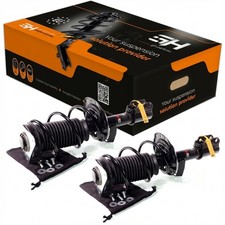 2x Complete Struts Assembly Front for Renault Twingo III 2014- 1.0SCE 70
GBP 713.49
2x Complete Struts Assembly Front for Renault Twingo III 2014- 1.0SCE 70
GBP 713.49
 2x Front Shock Absorber for Renault Twingo 2014-2023 3338022 3M Fatigue Test
GBP 48.62
2x Front Shock Absorber for Renault Twingo 2014-2023 3338022 3M Fatigue Test
GBP 48.62
As an eBay Partner, CarUnited may earn commission from qualifying purchases shown above. Listings and pricing are pulled live from eBay and may vary.
Warning Signs, DIY Difficulty & Aftermarket Advice
These are the same regardless of make or model — see our full Front Suspension Strut Guide for symptoms of worn bushings and ball joints, confirming fitment against your VIN, and rubber vs polyurethane guidance.
More Renault Front Suspension Strut
The same part, covered across other Renault models.