
Renault Clio Timing Belt: Intervals, Fitment & Warning Signs
Confirmed: a specific, genuine root cause explains why timing chain failures on the 1.2 TCe engine keep recurring even after a proper replacement — a clogged oil jet starving the chain of lubrication.
 Illustration for editorial purposes
OEM Part Number: 8200366318
| 1.5 dCi (K9K), genuine timing belt | Renault OEM: 8200366318 (also referenced as 8200039519, 8200537033, 8200508612) |
|---|
Confirmed: A Genuine, Specific Root Cause Behind Repeat Chain Failures — Renault Clio Timing Belt
If your Clio has the 1.2 TCe engine (introduced 2012, also shared with the Captur, Megane, and even the Nissan Qashqai/Juke and Dacia Duster/Sandero under the same Renault-Nissan alliance), this is genuinely worth understanding: this engine has a well-documented, recurring timing chain failure problem — one that persists even when a workshop has already fitted a genuine OEM or quality aftermarket replacement chain kit. The specific, confirmed root cause is a small oil jet responsible for lubricating the chain directly, which is highly susceptible to becoming clogged with soot contamination in the engine oil. Once this jet clogs, the chain simply doesn't receive enough lubrication, accelerating wear and leading to premature failure again — regardless of how good the replacement chain itself was.
A genuine cost benchmark worth knowing: aftermarket timing chain kits for this engine family are available from around £69, though labour to fit correctly (including addressing the oil jet) will be the larger part of the overall bill.
The Part Where Missing a Deadline Gets Expensive
Few maintenance items carry as much downside risk for skipping them. On the engines where this component fails, the consequences typically extend well beyond the part itself, which is exactly why sticking to the schedule matters more here than almost anywhere else on the car.
What It Does
The timing belt or chain keeps the engine's camshafts and crankshaft rotating in precise synchronisation, ensuring valves open and close at exactly the right moment relative to piston position. On many engines, this is what's known as an "interference" design — if the belt fails, the pistons and valves can collide, causing serious internal engine damage.
Generations, Derivatives & Engines: Belt or Chain
| Mk2 (1998–2005), K7M/K4M 1.6 petrol | Timing belt — conventional dry belt, with a documented tensioner weak point |
|---|---|
| Mk2 RS 172/182 (2000–2005), 2.0 F4R petrol | Timing belt — conventional dry belt |
| Mk3 (2005–2012), K4M 1.6 & D4F 1.2 petrol | Timing belt — conventional dry belt |
| Mk3 RS 197/200 (2006–2012), 2.0 F4R petrol | Timing belt — conventional dry belt |
| Mk2/Mk3, 1.5 dCi diesel (K9K) | Timing belt — see genuine reference above |
| Mk4 (2012–2019), Energy TCe 0.9/1.2 turbo petrol | Timing chain — see confirmed failure pattern above |
| Mk4 RS200 (2013–2019), 1.6 turbo (Nissan-sourced MR16DDT) | Timing chain — this engine is genuinely Nissan-designed, shared with the Juke Nismo, not a Renault unit |
| Mk5 (2019–present), TCe petrol | Timing chain — continuing the Mk4 pattern; no direct RS successor was launched for this generation |
The clear dividing line here is the move from the older K/D/F-series belt-driven engines to the Energy TCe chain-driven range from Mk4 onward — if your Clio has a "TCe" badge, it's almost certainly chain-driven, and the well-documented chain issue above is the more relevant concern than any scheduled belt interval.
Shop for This Part on eBay
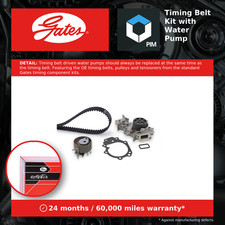 Timing Belt & Water Pump Kit fits RENAULT CLIO 1.2 2001 on Set Gates 119A01820R
GBP 73.06
Timing Belt & Water Pump Kit fits RENAULT CLIO 1.2 2001 on Set Gates 119A01820R
GBP 73.06
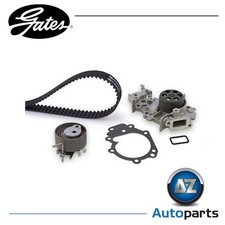 For Renault - Clio 1.2 2001-On Timing Belt Kit & Water Pump KP25577XS Gates
GBP 67.34
For Renault - Clio 1.2 2001-On Timing Belt Kit & Water Pump KP25577XS Gates
GBP 67.34
 For Renault - Clio 1.2 2001-On 130701564R Timing Belt Kit K015577XS Gates
GBP 39.49
For Renault - Clio 1.2 2001-On 130701564R Timing Belt Kit K015577XS Gates
GBP 39.49
 Timing Belt & Water Pump Kit Replaces For Renault Clio MK4 1.5 dCi 90 119A07049R
GBP 43.99
Timing Belt & Water Pump Kit Replaces For Renault Clio MK4 1.5 dCi 90 119A07049R
GBP 43.99
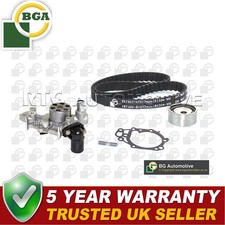 BGA Timing Belt & Water Pump Kit Fits Renault Clio Twingo 1.0 1.1 1.2
GBP 48.40
BGA Timing Belt & Water Pump Kit Fits Renault Clio Twingo 1.0 1.1 1.2
GBP 48.40
 FOR RENAULT Clio Megane Scenic II 1.5 dCi Gates Timing Belt Kit Water Pump
GBP 78.94
FOR RENAULT Clio Megane Scenic II 1.5 dCi Gates Timing Belt Kit Water Pump
GBP 78.94
 1SET Timing Cam Belt Kit + Water Pump Fits For Renault Nissan Dacia 119A02421R
GBP 32.99
1SET Timing Cam Belt Kit + Water Pump Fits For Renault Nissan Dacia 119A02421R
GBP 32.99
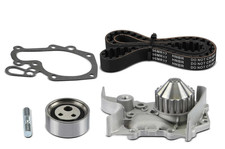 ⭐Timing Belt Kit +Water Pump for Renault Clio 1.4 1998-2005 KP25473XS ⭐
GBP 34.99
⭐Timing Belt Kit +Water Pump for Renault Clio 1.4 1998-2005 KP25473XS ⭐
GBP 34.99
As an eBay Partner, Car United may earn commission from qualifying purchases shown above. Listings and pricing are pulled live from eBay and may vary.
Watch: Replacing It
This covers the belt-driven 1.5 dCi diesel, shared across the Renault-Nissan alliance. Chain-driven petrol engines don't need this procedure — check which your car has above.
Warning Signs, DIY Difficulty & Aftermarket Advice
These are the same regardless of make or model — see our full Timing Belt Guide for symptoms to watch for, confirming fitment against your VIN, and which aftermarket brands are worth trusting.
More Renault Timing Belt
The same part, covered across other Renault models.