
Volkswagen Caddy Timing Belt: Intervals, Fitment & Warning Signs
If your Caddy has the 2.0 TSI, a genuine timing chain tensioner flaw affecting 2008-2015 engines is worth knowing about — including real specialist advice on the fix.
 Illustration for editorial purposes
OEM Part Number: 03L198119E
| 2.0 TDI common-rail (CJAA/CBEA), genuine kit — belt, tensioner, idler roller | Genuine VAG reference: 03L198119E (also referenced as 03L198119N) — 120,000 mile interval, shared across Golf, Jetta, A3, A4, Tiguan, Passat, Beetle |
|---|
Generations & Engines: Belt or Chain
| 2K (2004–2020), 1.4/2.0 TSI petrol | Timing chain — see documented tensioner flaw below |
|---|---|
| 2K/SB (2004–present), 1.6/2.0 TDI diesel | Timing belt — see genuine reference above |
| SB (2020–present), 2.0 TSI petrol | Timing chain — later Gen 3 EA888 design |
Confirmed: The 2.0 TSI's Timing Chain Tensioner Had a Genuine, Well-Documented Design Flaw — Volkswagen Caddy Timing Belt
If your car has the 2.0-litre TSI/TFSI petrol engine (engine codes including CCTA, CBFA, CAEB, and CPMA, built 2008-2015), it's genuinely worth knowing about a well-documented lower timing chain tensioner design flaw. An early version of this tensioner could lose hydraulic pressure, allowing the chain to run slack — in the worst cases, slack enough for the intake or exhaust valves to contact the pistons while the engine is running, requiring the cylinder head to come off entirely, the valves replaced, and the cylinder walls and pistons checked for further damage. Genuine reports show this can happen at surprisingly low mileage, in some cases as low as 30,000 miles.
The Part Where Missing a Deadline Gets Expensive
Few maintenance items carry as much downside risk for skipping them. On the engines where this component fails, the consequences typically extend well beyond the part itself, which is exactly why sticking to the schedule matters more here than almost anywhere else on the car.
What It Does
The timing belt or chain keeps the engine's camshafts and crankshaft rotating in precise synchronisation, ensuring valves open and close at exactly the right moment relative to piston position. On many engines, this is what's known as an "interference" design — if the belt fails, the pistons and valves can collide, causing serious internal engine damage.
Shop for This Part on eBay
 New 1Set For Volkswagen VW Caddy 1.9 Tdi Audi Timing Cam / Belt & Waterpump Kit
GBP 53.99
New 1Set For Volkswagen VW Caddy 1.9 Tdi Audi Timing Cam / Belt & Waterpump Kit
GBP 53.99
 1SET For Volkswagen Vw Caddy 1.9 Tdi Dayco Timing Cam/Belt Waterpump Kit NEW
GBP 56.99
1SET For Volkswagen Vw Caddy 1.9 Tdi Dayco Timing Cam/Belt Waterpump Kit NEW
GBP 56.99
 1Set For Volkswagen VW Caddy 1.9 Tdi Audi Timing Cam / Belt & Waterpump Kit New
GBP 54.14
1Set For Volkswagen VW Caddy 1.9 Tdi Audi Timing Cam / Belt & Waterpump Kit New
GBP 54.14
 For VW Caddy Timing Belt Kit Water Pump Kit 1.6 2.0 TDI Diesel 2010 On OEM
GBP 114.00
For VW Caddy Timing Belt Kit Water Pump Kit 1.6 2.0 TDI Diesel 2010 On OEM
GBP 114.00
 1Set For Volkswagen VW Caddy 1.9 Tdi Audi Timing Cam / Belt & Waterpump Kit New
GBP 53.99
1Set For Volkswagen VW Caddy 1.9 Tdi Audi Timing Cam / Belt & Waterpump Kit New
GBP 53.99
 Timing Belt & Water Pump Kit fits VW CADDY 1.6D 2.0D 10 to 20 Set Gates Quality
GBP 122.42
Timing Belt & Water Pump Kit fits VW CADDY 1.6D 2.0D 10 to 20 Set Gates Quality
GBP 122.42
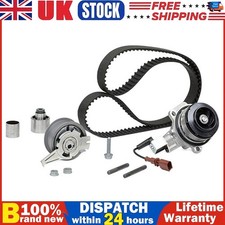 530065030 Timing Belt & Water Pump Kit For Audi 036109244K 038109244P 03L109244D
GBP 103.99
530065030 Timing Belt & Water Pump Kit For Audi 036109244K 038109244P 03L109244D
GBP 103.99
 Timing Belt & Water Pump Kit 530055032 INA Set 036109244K 038109244P 03L109119B
GBP 140.67
Timing Belt & Water Pump Kit 530055032 INA Set 036109244K 038109244P 03L109119B
GBP 140.67
As an eBay Partner, CarUnited may earn commission from qualifying purchases shown above. Listings and pricing are pulled live from eBay and may vary.
Watch: Replacing It
This covers the 2.0 TDI shared across several VAG models of this era. Petrol TSI engines are chain-driven (see above) and don't need this procedure.
Warning Signs, DIY Difficulty & Aftermarket Advice
These are the same regardless of make or model — see our full Timing Belt Guide for symptoms to watch for, confirming fitment against your VIN, and which aftermarket brands are worth trusting.
More Volkswagen Timing Belt
The same part, covered across other Volkswagen models.