
Volkswagen Up! Timing Belt: Intervals, Fitment & Warning Signs
Confirmed: the Up!'s engine uses a belt marketed as "lifetime" — but a documented service record for its badge-shared Skoda/SEAT twin suggests treating that claim cautiously.
 Illustration for editorial purposes
OEM Part Numbers
Confirmed: The Up!'s 1.0-Litre Engine Uses a Belt — But the "Lifetime" Interval Is Worth Treating Cautiously
VW's own factory guidance for this engine lists the first inspection at 240,000km, with replacement only if wear, cracking, or fraying is actually found — genuinely different from a fixed replacement schedule, and marketed at launch with language suggesting a "lifetime" belt. Worth knowing this claim hasn't gone entirely unchallenged: this exact engine is shared across the Up!, Skoda Citigo, and SEAT Mii, and at least one documented service record for a badge-shared example shows a standard AutoData service schedule recommending replacement at 5 years regardless of the factory-quoted mileage figure. Given most Up!s realistically won't cover anywhere near 240,000km in their lifetime, treating this as a sensible preventive job once the car passes 5-7 years old — rather than assuming it will genuinely never need doing — is the more cautious, specialist-endorsed approach.
The Part Where Missing a Deadline Gets Expensive
Few maintenance items carry as much downside risk for skipping them. On the engines where this component fails, the consequences typically extend well beyond the part itself, which is exactly why sticking to the schedule matters more here than almost anywhere else on the car.
What It Does
The timing belt or chain keeps the engine's camshafts and crankshaft rotating in precise synchronisation, ensuring valves open and close at exactly the right moment relative to piston position. On many engines, this is what's known as an "interference" design — if the belt fails, the pistons and valves can collide, causing serious internal engine damage.
Fitment & Compatibility
Belt versus chain, and the exact replacement interval, depends entirely on which specific engine is fitted to your Up! — this varies by both generation and engine size, not just model year. Always confirm your exact engine code before assuming a standard interval applies. Whether you're sourcing a replacement timing belt for your Volkswagen Up! from a dealer, specialist, or online marketplace, always check compatibility against your registration or VIN before buying.
Shop for This Part on eBay
 Timing Belt Kit fits VW UP GTi 1.0 2011 on Set Gates 04E198119 VOLKSWAGEN New
GBP 54.57
Timing Belt Kit fits VW UP GTi 1.0 2011 on Set Gates 04E198119 VOLKSWAGEN New
GBP 54.57
 Timing Belt Kit K075680XS Gates Set 04E198119 5680XS 788311674 SET171 T42317 New
GBP 54.66
Timing Belt Kit K075680XS Gates Set 04E198119 5680XS 788311674 SET171 T42317 New
GBP 54.66
 Premier Timing Belt & Water Pump Kit Fits Up! Polo Citigo Mii Ibiza
GBP 55.33
Premier Timing Belt & Water Pump Kit Fits Up! Polo Citigo Mii Ibiza
GBP 55.33
 Premier Timing Belt & Water Pump Kit Fits Up! Polo Citigo Fabia Mii 1.0
GBP 68.42
Premier Timing Belt & Water Pump Kit Fits Up! Polo Citigo Fabia Mii 1.0
GBP 68.42
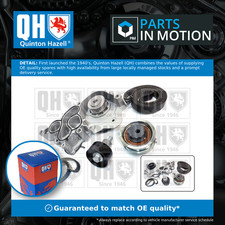 Timing Belt & Water Pump Kit fits VW UP GTi 1.0 2016 on Set QH VOLKSWAGEN New
GBP 88.64
Timing Belt & Water Pump Kit fits VW UP GTi 1.0 2016 on Set QH VOLKSWAGEN New
GBP 88.64
 Timing Belt & Water Pump Kit BGA Fits Up! Polo Citigo Mii Ibiza 1.0
GBP 50.36
Timing Belt & Water Pump Kit BGA Fits Up! Polo Citigo Mii Ibiza 1.0
GBP 50.36
 Timing Belt Kit fits VW POLO 6R, Mk5, Mk6 1.0 1.2 1.4 1.6 2012 on Set 04C109244B
GBP 33.49
Timing Belt Kit fits VW POLO 6R, Mk5, Mk6 1.0 1.2 1.4 1.6 2012 on Set 04C109244B
GBP 33.49
 BGA Timing Belt & Water Pump Kit Fits Up! Polo Citigo Fabia Mii 1.0
GBP 62.20
BGA Timing Belt & Water Pump Kit Fits Up! Polo Citigo Fabia Mii 1.0
GBP 62.20
As an eBay Partner, Car United may earn commission from qualifying purchases shown above. Listings and pricing are pulled live from eBay and may vary.
Warning Signs, DIY Difficulty & Aftermarket Advice
These are the same regardless of make or model — see our full Timing Belt Guide for symptoms to watch for, why this isn't a good DIY job, and which aftermarket brands are worth trusting.
More Volkswagen Timing Belt
The same part, covered across other Volkswagen models.