
Volkswagen Golf Front Suspension Strut: Specs, Fitment & Common Faults
On older Golfs, a knock over bumps is often blamed on the strut — but a genuinely well-documented weak point elsewhere is worth ruling out first.
 Illustration for editorial purposes
Confirmed: Two Genuinely Different Strut Diameters Across the Range
Genuinely worth knowing before ordering: the Golf uses two physically different front strut diameters depending on trim. Standard TSI/TDI cars use a 50mm strut, while GTI, Golf R, GTD, GTE and Alltrack variants use a larger 55mm strut — the diameter determines which replacement fits, and ordering the wrong one means it simply won't install. If you're unsure which your car has, the diameter is stamped on the existing strut body or listed in the vehicle's build specification.
The Part That Takes Every Bump Before You Feel It
The strut is doing continuous, unglamorous work every time a wheel meets an imperfection in the road — which is exactly why gradual wear is so easy to miss until the ride has noticeably degraded. Catching it early keeps the rest of the front end (tyres, bushes, steering components) from wearing prematurely too.
OEM Part Numbers
| Standard TSI/TDI, 50mm diameter, right | Genuinely a different reference from the left-side strut — VW does not sell these as a single interchangeable part for either side |
|---|---|
| Standard TSI/TDI, 50mm diameter, left | A genuinely different part number from the right-side strut above |
| GTI/Golf R/GTD/GTE/Alltrack, 55mm diameter | Genuinely a different, larger-diameter strut from the standard 50mm unit — not interchangeable even though the mounting points look similar; confirm left/right and manual/automatic before ordering |
| DCC adaptive damping strut, standard trim | VW OEM: 5WA413032AA (also referenced as 5WA413032T) — genuinely different construction from a non-DCC strut, with a built-in electrical connector and solenoid valve; not interchangeable with a standard strut in either direction |
| DCC adaptive damping strut, GTI/Golf R with Performance Package | A genuinely different DCC strut reference from the standard-trim DCC unit above, reflecting the stiffer tune fitted with this option |
Golf R models built without DCC still use the larger 55mm strut body, but the internal valving and spring rate genuinely differ from the GTI's equivalent non-DCC strut — the two aren't a like-for-like swap despite sharing the same physical diameter.
What It Does
The front suspension strut combines a shock absorber with the coil spring mounting point in one assembly on most modern cars, controlling how quickly the suspension compresses and rebounds over bumps. A worn strut lets the car bounce excessively after a bump instead of settling quickly, and can accelerate uneven tyre wear if left unaddressed.
Shop for This Part on eBay
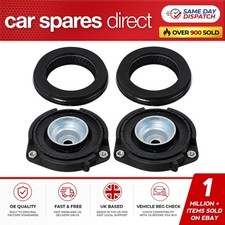 VW GOLF MK5 MK6/ VW CADDY/ AUDI A3 FRONT STRUT TOP MOUNT & BEARING SUSPENSION X2
GBP 27.95
VW GOLF MK5 MK6/ VW CADDY/ AUDI A3 FRONT STRUT TOP MOUNT & BEARING SUSPENSION X2
GBP 27.95
 Pair Front Suspension Strut Top Mounts & Bearings for VW Golf MK7 Tiguan Octavia
GBP 34.99
Pair Front Suspension Strut Top Mounts & Bearings for VW Golf MK7 Tiguan Octavia
GBP 34.99
 VW GOLF MK5 MK6 2003 2016 FRONT SUSPENSION SHOCK ABSORBERS SHOCKERS GAS X2 50MM
GBP 65.95
VW GOLF MK5 MK6 2003 2016 FRONT SUSPENSION SHOCK ABSORBERS SHOCKERS GAS X2 50MM
GBP 65.95
 2x FRONT SUSPENSION TOP STRUT MOUNTS & BEARINGS FOR VW GOLF MK7 TIGUAN OCTAVIA
GBP 49.95
2x FRONT SUSPENSION TOP STRUT MOUNTS & BEARINGS FOR VW GOLF MK7 TIGUAN OCTAVIA
GBP 49.95
 VW Golf MK7 2012-2019 Front Suspension Strut Top Mount & Bearing
GBP 22.95
VW Golf MK7 2012-2019 Front Suspension Strut Top Mount & Bearing
GBP 22.95
 Genuine VW Golf Mk4 Front Suspension Strut Hub Pinch Bolt Nut Beetle Audi A2 A3
GBP 9.95
Genuine VW Golf Mk4 Front Suspension Strut Hub Pinch Bolt Nut Beetle Audi A2 A3
GBP 9.95
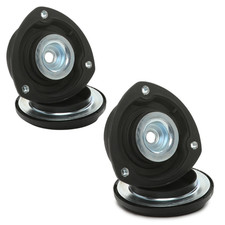 VW Golf MK7 2012-2019 Front Suspension Strut Top Mounts & Bearings
GBP 46.95
VW Golf MK7 2012-2019 Front Suspension Strut Top Mounts & Bearings
GBP 46.95
 2x Front Suspension Strut Top Mounts & Bearings For VW Golf MK7 12-19 5Q0412249E
GBP 34.99
2x Front Suspension Strut Top Mounts & Bearings For VW Golf MK7 12-19 5Q0412249E
GBP 34.99
As an eBay Partner, Car United may earn commission from qualifying purchases shown above. Listings and pricing are pulled live from eBay and may vary.
Warning Signs, DIY Difficulty & Aftermarket Advice
These are the same regardless of make or model — see our full Front Suspension Strut Guide for symptoms of a worn strut, confirming fitment against your VIN, and OEM vs aftermarket guidance.
More Volkswagen Front Suspension Strut
The same part, covered across other Volkswagen models.
- Volkswagen Caddy Front Suspension Strut
- Volkswagen Passat Front Suspension Strut
- Volkswagen Polo Front Suspension Strut
- Volkswagen Sharan Front Suspension Strut
- Volkswagen T-Roc Front Suspension Strut
- Volkswagen Tiguan Front Suspension Strut
- Volkswagen Touran Front Suspension Strut
- Volkswagen Up! Front Suspension Strut