
Volkswagen Tiguan Front Suspension Strut: Specs, Fitment & Common Faults
Front-end knocking often points to worn drop links — but on a nearly-new Tiguan, it can be something else entirely: leftover transport packing dealers forget to remove.
 Illustration for editorial purposes
OEM Part Numbers
| Standard petrol/diesel, right | Genuinely a different reference from the left-side strut — VW Group does not sell these as a single interchangeable part for either side |
|---|---|
| Standard petrol/diesel, left | A genuinely different part number from the right-side strut above |
| R-Line strut | Genuinely a different, typically larger-diameter strut from the standard unit — not interchangeable even though the mounting points look similar; confirm left/right and manual/automatic before ordering |
| Adaptive damping strut (where fitted) | A genuinely different construction from a non-adaptive strut, with a built-in electrical connector and solenoid valve — not interchangeable with a standard strut in either direction, and fitting the wrong type will trigger a persistent dashboard warning |
Confirmed: Drop Links Are a Genuine Weak Point — But Check This First on a Newer Car — Volkswagen Tiguan Front Suspension
Across VW owner forums, one specific weak point comes up consistently enough on older Golf-platform cars to be worth checking first: the anti-roll bar drop links, which wear and produce exactly the kind of knock or clunk heard over bumps and rough surfaces. A genuinely useful diagnostic method before replacing anything: since drop links sit under constant tension normally, disconnecting one end temporarily and taking the car for a short test drive is a reliable way to confirm whether it's genuinely the source of the noise — if the knock disappears with it disconnected, that confirms the drop link.
If drop links check out fine, the next most commonly reported cause is the strut top mount bearing, or — on higher-mileage examples — the lower control arm's rear bush, which can develop a "sloppy" fit even while the rubber itself still looks visually sound. Genuinely worth checking both before assuming a full strut or shock absorber replacement is needed, since these are considerably cheaper fixes if they turn out to be the actual cause.
The System That Quietly Does All the Work
Every bump, pothole and corner passes through these components before you ever feel it in the cabin, which is exactly why wear here shows up as vague, hard-to-pin-down symptoms rather than one obvious failure. A methodical check usually finds the culprit faster than guesswork.
What It Does
The front suspension strut combines a shock absorber with the coil spring mounting point in one assembly on most modern cars, controlling how quickly the suspension compresses and rebounds over bumps. A worn strut lets the car bounce excessively after a bump instead of settling quickly, and can accelerate uneven tyre wear if left unaddressed.
Shop for This Part on eBay
 VW Tiguan MK1 2007-2017 Front Suspension Strut Top Mount & Bearing
GBP 19.95
VW Tiguan MK1 2007-2017 Front Suspension Strut Top Mount & Bearing
GBP 19.95
 2016-2024 VOLKSWAGEN TIGUAN MK2 Suspension Strut Shock Front Right 5QF412021HA
GBP 146.99
2016-2024 VOLKSWAGEN TIGUAN MK2 Suspension Strut Shock Front Right 5QF412021HA
GBP 146.99
 2016-2024 VOLKSWAGEN TIGUAN MK2 Suspension Strut Shock Front Left 5QF412021HA
GBP 146.90
2016-2024 VOLKSWAGEN TIGUAN MK2 Suspension Strut Shock Front Left 5QF412021HA
GBP 146.90
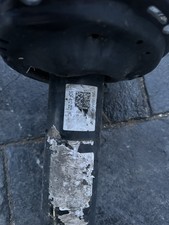 2016-2024 VOLKSWAGEN TIGUAN MK2 Suspension Strut Shock Front Left 5QF412021HA
GBP 104.70
2016-2024 VOLKSWAGEN TIGUAN MK2 Suspension Strut Shock Front Left 5QF412021HA
GBP 104.70
 FRONT SUSPENSION TOP STRUT MOUNT & BEARING FOR VW PASSAT (2005-2014) TIGUAN
GBP 18.95
FRONT SUSPENSION TOP STRUT MOUNT & BEARING FOR VW PASSAT (2005-2014) TIGUAN
GBP 18.95
 VW Tiguan (5N) 2008> FRONT SUSPENSION STRUT TOP MOUNTS & BEARINGS X 2
GBP 27.79
VW Tiguan (5N) 2008> FRONT SUSPENSION STRUT TOP MOUNTS & BEARINGS X 2
GBP 27.79
 Pair Front Suspension Strut Top Mounts & Bearings for VW Golf MK7 Tiguan Octavia
GBP 34.99
Pair Front Suspension Strut Top Mounts & Bearings for VW Golf MK7 Tiguan Octavia
GBP 34.99
 VW TIGUAN 2016on - FRONT SUSPENSION STRUT TOP MOUNTS & BEARINGS X 2 - LH & RH
GBP 39.98
VW TIGUAN 2016on - FRONT SUSPENSION STRUT TOP MOUNTS & BEARINGS X 2 - LH & RH
GBP 39.98
As an eBay Partner, CarUnited may earn commission from qualifying purchases shown above. Listings and pricing are pulled live from eBay and may vary.
Warning Signs, DIY Difficulty & Aftermarket Advice
These are the same regardless of make or model — see our full Front Suspension Strut Guide for symptoms of worn bushings and ball joints, confirming fitment against your VIN, and rubber vs polyurethane guidance.
More Volkswagen Front Suspension Strut
The same part, covered across other Volkswagen models.
- Volkswagen Caddy Front Suspension Strut
- Volkswagen Golf Front Suspension Strut
- Volkswagen Passat Front Suspension Strut
- Volkswagen Polo Front Suspension Strut
- Volkswagen Sharan Front Suspension Strut
- Volkswagen T-Roc Front Suspension Strut
- Volkswagen Touran Front Suspension Strut
- Volkswagen Up! Front Suspension Strut