
Volkswagen Golf Fuel Pump: Specs, Fitment & Common Faults
If your Golf is a diesel, a genuine metal contamination issue in the high-pressure pump can require full fuel system replacement — plus an important FSI vs TSI distinction for petrol owners.
 Illustration for editorial purposes
Two Pumps, Two Very Different Failure Patterns — And a Genuine FSI vs TSI Distinction
Modern VW petrol and diesel engines with direct injection use two separate fuel pumps working together: a low-pressure pump inside the tank (accessed from under the rear seat), and a high-pressure pump mounted on the engine itself. A whining noise specifically from the rear seat area points to the in-tank low-pressure pump; hesitation, loss of power, or hard starting points more toward the engine-mounted high-pressure pump instead — correctly identifying which one is at fault matters, since the high-pressure pump is considerably more expensive to replace.
If your car is diesel-engined, it's worth knowing about a genuinely serious, documented issue: metal filings (swarf) generated internally within a failing high-pressure pump can contaminate the entire fuel system — injectors, fuel lines, and the tank itself — turning what looks like a straightforward pump replacement into a full fuel system rebuild. Real cases have seen this escalate to repair bills in the thousands once contamination is confirmed throughout the system. If a high-pressure pump has failed on a diesel, insisting on a proper check of the injectors and fuel lines for metal contamination — rather than simply fitting a new pump and hoping for the best — is a genuinely worthwhile precaution, even though it adds to the initial cost.
A Part That Fails at the Worst Possible Moments
Few component failures are as inconveniently timed as this one — it has a habit of stranding drivers mid-journey rather than giving a clean warning while the car is safely parked. Knowing the early signs buys valuable time to get it sorted before that happens.
OEM Part Numbers
The Mk8 Golf's TSI engines use direct injection, meaning the fuel system includes both a lower-pressure in-tank pump and a separate high-pressure pump mounted on the engine itself — these are two distinct parts with different failure symptoms and different part numbers, so confirm which one is actually causing your issue before ordering.
What It Does
The fuel pump draws fuel from the tank and delivers it to the engine at the pressure required for proper combustion. Almost all modern versions sit inside the fuel tank itself, submerged in fuel, which is partly why access for replacement is more involved than the part's small size might suggest.
Generations & Engines: Fuel Pump Type
| Mk5 (2003–2008), 1.4/1.6 FSI & 3.2 R32 petrol | Petrol: typically a single in-tank low-pressure pump; some later or higher-output variants may add a separate engine-mounted high-pressure pump for direct injection — confirm your exact engine |
|---|---|
| Mk5 (2003–2008), 1.4/1.6 non-FSI petrol | Petrol: typically a single in-tank low-pressure pump; some later or higher-output variants may add a separate engine-mounted high-pressure pump for direct injection — confirm your exact engine |
| Mk5 GTI (2004–2008), 2.0 TFSI (EA113) | Petrol (direct injection): in-tank low-pressure pump plus a separate engine-mounted high-pressure pump |
| Mk5 (2003–2008), 2.0 TDI diesel | Diesel: in-tank lift pump feeds a separate engine-mounted high-pressure injection pump (common rail) — never interchangeable with the petrol pump |
| Mk6 (2008–2013), 1.2/1.4 TSI petrol | Petrol (direct injection): in-tank low-pressure pump plus a separate engine-mounted high-pressure pump |
| Mk6 GTI/R (2009–2013), 2.0 TSI (EA888 Gen 1/2) | Petrol (direct injection): in-tank low-pressure pump plus a separate engine-mounted high-pressure pump |
| Mk6 R only (2010–2013), 2.0 TFSI (EA113) | Petrol (direct injection): in-tank low-pressure pump plus a separate engine-mounted high-pressure pump |
| Mk6 (2008–2013), 2.0 TDI diesel | Diesel: in-tank lift pump feeds a separate engine-mounted high-pressure injection pump (common rail) — never interchangeable with the petrol pump |
| Mk7/Mk7.5 (2013–2019), nearly all TSI petrol (EA888 Gen 3) | Petrol (direct injection): in-tank low-pressure pump plus a separate engine-mounted high-pressure pump |
| Mk7/Mk7.5 (2013–2019), 2.0 TDI diesel | Diesel: in-tank lift pump feeds a separate engine-mounted high-pressure injection pump (common rail) — never interchangeable with the petrol pump |
| Mk8 (2019–present), 1.0 TSI petrol | Petrol (direct injection): in-tank low-pressure pump plus a separate engine-mounted high-pressure pump |
| Mk8 (2019–present), 1.5 TSI/eTSI petrol | Petrol (direct injection): in-tank low-pressure pump plus a separate engine-mounted high-pressure pump |
| Mk8 GTI/R (2019–present), 2.0 TSI | Petrol (direct injection): in-tank low-pressure pump plus a separate engine-mounted high-pressure pump |
| Mk8 (2019–present), 2.0 TDI diesel | Diesel: in-tank lift pump feeds a separate engine-mounted high-pressure injection pump (common rail) — never interchangeable with the petrol pump |
Shop for This Part on eBay
 FOR VW GOLF MK5 GOLF PLUS JETTA MK3 1.9 2.0 TDI IN TANK FUEL PUMP & SENDER UNIT
GBP 45.95
FOR VW GOLF MK5 GOLF PLUS JETTA MK3 1.9 2.0 TDI IN TANK FUEL PUMP & SENDER UNIT
GBP 45.95
 Fuel Pump for Volkswagen Golf 1998 1999 2000 2001 2002 2003 2004 2005 2006
GBP 47.98
Fuel Pump for Volkswagen Golf 1998 1999 2000 2001 2002 2003 2004 2005 2006
GBP 47.98
 03C127026C For VW Jetta GOLF AUDI A1 A3 1.2TSI 1.4TSI High Pressure Fuel Pump UK
GBP 59.99
03C127026C For VW Jetta GOLF AUDI A1 A3 1.2TSI 1.4TSI High Pressure Fuel Pump UK
GBP 59.99
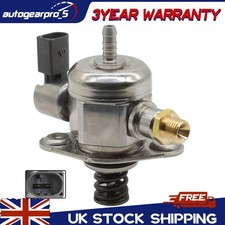 High Pressure Fuel Pump for Audi A3 A4 Seat Altea Exeo VW Golf Passat 1.8 2.0
GBP 63.50
High Pressure Fuel Pump for Audi A3 A4 Seat Altea Exeo VW Golf Passat 1.8 2.0
GBP 63.50
 VOLKSWAGEN GOLF MK6 5K (08 > 12) IN TANK FUEL PUMP 1K0919050J
GBP 24.99
VOLKSWAGEN GOLF MK6 5K (08 > 12) IN TANK FUEL PUMP 1K0919050J
GBP 24.99
![VW Golf MK5 [2003-2009] In Tank Fuel Pump Assembly 1K0919050J](https://i.ebayimg.com/images/g/iecAAOSw4B9ex2Ou/s-l225.jpg) VW Golf MK5 [2003-2009] In Tank Fuel Pump Assembly 1K0919050J
GBP 45.96
VW Golf MK5 [2003-2009] In Tank Fuel Pump Assembly 1K0919050J
GBP 45.96
 Volkswagen Golf Fuel Pump Sender Unit 1K0919050D
GBP 14.01
Volkswagen Golf Fuel Pump Sender Unit 1K0919050D
GBP 14.01
 High Pressure Fuel Pump For 2004-2008 VW Golf Passat Audi A3 1.6L 03C127025R
GBP 66.56
High Pressure Fuel Pump For 2004-2008 VW Golf Passat Audi A3 1.6L 03C127025R
GBP 66.56
As an eBay Partner, Car United may earn commission from qualifying purchases shown above. Listings and pricing are pulled live from eBay and may vary.
Warning Signs, DIY Difficulty & Aftermarket Advice
These are the same regardless of make or model — see our full Fuel Pump Guide for symptoms to watch for (including the low-pressure vs high-pressure distinction on direct-injection engines), confirming fitment against your VIN, and OE suppliers worth knowing.
More Volkswagen Fuel Pump
The same part, covered across other Volkswagen models.