
BMW 3 Series Battery: Specs, Fitment & Common Faults
A genuinely important, BMW-specific finding: a new battery genuinely needs to be registered with the car's computer, and coded first if the type or capacity differs — plus an honest account of a fitter claiming registration was done when it genuinely wasn't.
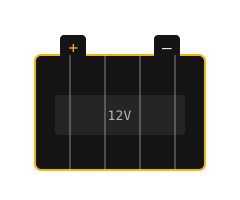 Illustration for editorial purposes
Opens live listings in a new tab.
OEM Part Number: 61216806755
| 92Ah AGM (E90/F20/F30/G20 shared reference) | BMW OEM: 61216806755 |
|---|---|
| 90Ah AGM | BMW OEM: 61216924023 |
| 80Ah AGM (M135i, M2, M3, M5 and similar performance trims) | BMW OEM: 61217555719 |
| Note | Genuine BMW batteries use black casing for AGM and white casing for standard lead-acid — check which type is currently fitted before assuming, and have any replacement registered (coded) to the car's charging system regardless of brand. |
BMW 3 Series Battery: The Part Everyone Blames First, Not Always Correctly
On the BMW 3 Series, no single component gets blamed for a no-start more than the battery, and often that blame is justified, making it a sensible first check. But it isn't the whole story every time, so it's worth confirming before spending on a replacement that might not actually fix anything.
The IBS Sensor Matters as Much as the Battery Itself
| Intelligent Battery Sensor (IBS) cable, shared across G-platform BMWs (2019–2023) | BMW OEM: 61-21-9-855-909 |
|---|---|
| Main battery | Varies by trim and electrical spec — confirm via VIN |
The G20's battery isn't a simple lead-acid unit you can swap without a second thought — it's monitored by an Intelligent Battery Sensor (IBS) fitted to the negative terminal, which tracks the battery's condition and tells the car's electrical system how to manage charging. A faulty IBS can cause battery drain and electrical gremlins that look like a battery fault but aren't, and simply fitting a new battery without registering it to the car via BMW's coding software can leave the charging system misconfigured. This is a genuine reason to use a specialist for this specific job rather than a straightforward DIY swap.
BMW 3 Series Battery: What It Does
Whenever the BMW 3 Series's engine isn't turning, the 12V battery is what keeps electrical systems running and handles the next start. That workload is much higher on stop-start versions, given how often the engine switches off and restarts, which is exactly why they call for an AGM or EFB battery rather than a standard type.
Opens live listings in a new tab.
A Genuinely Important, BMW-Specific Finding Worth Knowing — BMW 3 Series Battery
This is genuinely important to know before replacing this battery yourself or through a garage: if your car is fitted with an intelligent battery sensor, a new battery genuinely needs to be registered with the car's computer afterward, since this system tracks the battery's condition over time and the car needs to know a fresh unit has been fitted. If the replacement battery differs in type or capacity from the original, such as switching to an AGM battery or a different amp-hour rating, it will also need to be coded first, before being registered. It's genuinely worth knowing that failing to do this properly can affect the car's charging behaviour, since the system won't apply the correct charging parameters for a battery type it doesn't recognise.
It's also genuinely worth knowing that this specific battery management system was introduced gradually across the range, so not every car of this model necessarily has it — worth checking the negative battery terminal directly for a small sensor module clipped to the cable, since if there's nothing else connected there, your car likely doesn't have this system and no registration is needed at all.
BMW 3 Series Battery: Warning Signs, DIY Difficulty & Aftermarket Advice
These are the same regardless of make or model — see our full Battery Guide for warning signs to watch for, confirming fitment against your VIN, and matching the right technology (standard, EFB, AGM) when buying aftermarket.
More BMW Battery
The same part, covered across other BMW models.