
Ford S-Max Radiator: Specs, Fitment & Common Faults
Like the Galaxy, the S-Max's larger engines mostly avoid the 1.0 EcoBoost's documented cooling issue — but ageing plastic components are still worth checking.
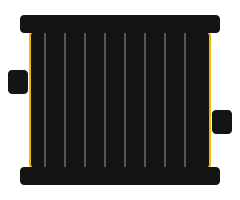 Illustration for editorial purposes
Opens live listings in a new tab.
Ford S-Max Radiator: OEM Part Number
| Manual gearbox, all engines | Standard radiator with no transmission cooling circuit |
|---|---|
| 4/6-speed automatic (torque converter) | Radiator includes a built-in internal transmission fluid cooler as a separate circuit within the same tank — if this internal cooler fails, coolant and transmission fluid mix into a pink, milky fluid nicknamed the "strawberry milkshake of death," which can destroy the transmission if not caught quickly |
| Powershift (dual-clutch automatic, where fitted) | Uses a separate standalone transmission oil cooler rather than one integrated into the radiator tank — confirmed as a genuinely different cooling architecture from the older automatic's built-in design |
The S-Max's Larger Engines Mostly Sidestep the 1.0 EcoBoost's Specific Cooling Issue
Like its Galaxy sibling, the S-Max has mainly been sold with larger 1.5 and 2.0-litre EcoBoost engines, or with a diesel — so the well-documented degas bottle (coolant reservoir) cracking issue affecting the smaller 1.0 EcoBoost across much of Ford's range generally doesn't apply here. Plastic cooling system components can still age and develop leaks over time regardless of engine size, so a thermostat housing or water pump leak is still worth checking on any higher-mileage S-Max.
Ford S-Max Radiator: The Part That Keeps Everything Else From Cooking
This isn't a part anyone gets excited about, but on the Ford S-Max, overlooked cooling problems are responsible for most serious engine failures that aren't simple wear-and-tear. Catching the early symptoms is about the cheapest insurance available against a major bill later.

Ford S-Max Radiator: What It Does
Keeping the Ford S-Max's engine temperature within safe limits comes down to the radiator's job of transferring heat from the coolant into the surrounding air. Automatic-gearbox versions often build in a second circuit for transmission fluid cooling too, which is exactly why fitting the wrong part number can cause two problems, not one.
Opens live listings in a new tab.
Ford S-Max Radiator: Faults, DIY Difficulty & Aftermarket Advice
These are the same regardless of make or model — see our full Radiator Guide for the three common failure modes, confirming fitment against your VIN, and OEM vs aftermarket guidance.
More Ford Radiator
The same part, covered across other Ford models.