
Honda CR-V Cabin Air Filter: Intervals, Fitment & Warning Signs
On the CR-V, a dead rodent inside the filter housing itself has genuinely been the actual cause of a persistent bad smell.
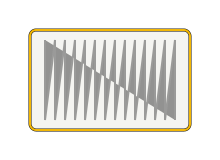 Illustration for editorial purposes
Opens live listings in a new tab.
OEM Part Number: 80292-SDA-407
| Current superseded reference (spans 2003-2022 across Accord, Civic, CR-V, Odyssey, Pilot, Ridgeline) | Honda OEM: 80292-SDA-407 — replaces 80292-SDA-406, 80292-SDA-A01, 80292-SDC-A01, 80292-SEC-A01, 80292-SWA-A01, 80292-T0G-A01, 80292-TV1-E01, 80292-TZ5-A41 |
|---|---|
| Activated carbon variant | Genuine Honda dealer stock is standard particulate media, but a genuinely different activated-carbon equivalent using the same fitment is widely available (including from Honda's own OEM-adjacent range) for those wanting odour/gas filtration on top of particulate protection |
A Genuinely Distinctive, Real Thing Worth Checking — Honda CR-V Cabin Air Filter
If a genuinely toxic or overwhelming smell persists even after replacing the cabin filter, this is worth knowing: multiple independent, documented cases have found the actual cause to be a dead rodent, or droppings left behind by one, inside the filter housing itself, rather than the filter or wider ventilation system. It's worth removing the filter again and thoroughly checking and cleaning the housing itself.
It's also worth knowing a genuinely practical, real preventative tip: keeping some air moving through the ventilation system regularly, rather than leaving it switched off entirely between uses, has been recommended by dealer service departments as a way to help prevent musty smells developing in the first place.
Honda CR-V Cabin Air Filter: Easy to Forget, Easy to Fix
There's no performance downside to a neglected Honda CR-V cabin filter, which is precisely the problem: nothing about how the car drives will tell you it needs changing, so it often gets forgotten until a musty smell or weak airflow forces the issue.
Honda CR-V Cabin Air Filter: What It Does
Don't confuse this with the Honda CR-V's engine air filter — they're unrelated parts. The cabin filter's job is cleaning air before it reaches the ventilation system, catching dust and pollen, with activated-carbon versions also filtering some airborne odours.
Opens live listings in a new tab.
Honda CR-V Cabin Air Filter: Warning Signs, DIY Difficulty & Aftermarket Advice
These are the same regardless of make or model — see our full Cabin Air Filter Guide for signs it needs changing, confirming fitment against your VIN, and choosing standard, carbon, or HEPA media.
More Honda Cabin Air Filter
The same part, covered across other Honda models.