
Hyundai i10 Engine Mount: Specs, Fitment & Common Faults
On the i10, a case on a related model saw a dealer declare vibration "normal" despite the owner's car previously running smooth.
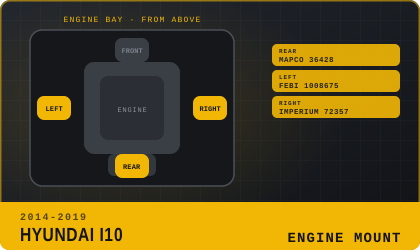 Illustration for editorial purposes
Opens live listings in a new tab.
OEM Part Number: confirm via VIN
Aftermarket mountings: Febi 197541 / Swag 33115723
| Engine Mount — Rear (aftermarket) | Mapco 36428, Febi 197541 |
|---|---|
| Engine Mount — Left (aftermarket) | Febi 1008675, Swag 33115723 |
| Engine Mount — Right front upper (aftermarket) | Original Imperium 72357 |
| Genuine (OE) number | Not quoted in the catalogue listings — mounts differ by engine and gearbox, so order the genuine ones against your VIN |
| Fitment notes | The listing above shows examples for the engines checked; petrol, diesel, manual and automatic versions often use different mounts, and cars usually have more than one mount. |
Don't accept a 'normal' verdict too quickly
One case on a related Hyundai hybrid model saw a technician test drive the car, compare it against another vehicle with the identical engine combination, and conclude that vibration felt at a specific RPM range was simply "a normal characteristic of model vehicle with engine combination" — despite the owner remaining skeptical, having noted the car ran smooth for the first 25,000km before this vibration developed. If you're told something is simply "how they all are" despite your own car previously feeling different, it's worth continuing to document the issue and pursuing it through Hyundai's consumer affairs channels.
Bear in mind that a proper diagnosis for vibration should involve inspecting all engine mounts, the belt tensioner assembly, the drive train, and exhaust mountings together — worth asking whether all of these were checked.
Watch: replacing itThis video shows a closely related car on the same platform, so the mount positions and fixings can differ slightly on yours.

Keeping engine shake out of the i10's cabin
Engine mounts secure the engine and transmission to the chassis while absorbing vibration and movement, preventing that vibration from transferring directly into the cabin. Most versions of the i10 use several mounts working together — typically at least one on each side of the engine plus a torque mount — and a single failed mount can throw off the whole assembly's balance.
Opens live listings in a new tab.
Symptoms on the i10, DIY difficulty and brands worth buying
These are the same regardless of make or model — see our full Engine Mount Guide for warning signs to watch for (including some make-specific quirks in how they show up), confirming fitment against your VIN, and which aftermarket approach is worth trusting.
The same part on other modelsThe same part, covered across other Hyundai models.