
Land Rover Discovery Sport Grille: Fitment, Sensors & Common Damage
Confirmed: a genuine Technical Service Bulletin explains a "Radar Sensor Blocked" message can appear even when adaptive cruise control isn't in use — plus a distinctive finding that a bent mounting bracket from an invisible minor bumper impact is a very common cause.
 Illustration for editorial purposes
OEM Part Numbers
Cosmetic on the Surface, Functional Underneath
The front grille does more than shape a car's face — it manages airflow to the radiator and, on many modern cars, houses or surrounds sensors for adaptive cruise control or parking assistance, meaning the correct part depends on more than just how it looks.
What It Does
Beyond styling, the grille on the Discovery Sport directs airflow to the radiator and, on trims equipped with adaptive cruise control, may house or sit directly in front of the radar sensor used for that system. A grille that looks compatible but lacks the correct sensor cutout can interfere with these systems even if it fits physically.
Fitment & Compatibility
Grille design differs between trims and across facelifts of the Discovery Sport, with sportier trims often using a more aggressive mesh design that isn't interchangeable with standard trim grilles. Always confirm the exact part for your specific trim and equipment level before ordering. Whether you're sourcing a replacement grille for your Land Rover Discovery Sport from a dealer, specialist, or online marketplace, always check compatibility against your registration or VIN before buying.
Shop for This Part on eBay
 Front Grille for Land Rover Discovery Sport 2015-19 Gloss Black L550 Design Pack
GBP 61.99
Front Grille for Land Rover Discovery Sport 2015-19 Gloss Black L550 Design Pack
GBP 61.99
 FOR LAND ROVER DISCOVERY SPORT L550 2015-2019 LR066143 GLOSS BLACK FRONT GRILLE
GBP 62.98
FOR LAND ROVER DISCOVERY SPORT L550 2015-2019 LR066143 GLOSS BLACK FRONT GRILLE
GBP 62.98
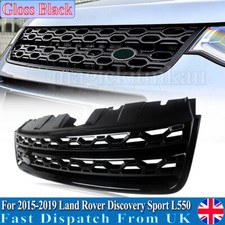 Front Bumper Grille For Land Rover Discovery Sport L550 Gloss Black 2015-2019
GBP 65.88
Front Bumper Grille For Land Rover Discovery Sport L550 Gloss Black 2015-2019
GBP 65.88
 Discovery Sport Grille Front in Black Grey L550 Land Rover 2014 to 2019 L12086
GBP 49.95
Discovery Sport Grille Front in Black Grey L550 Land Rover 2014 to 2019 L12086
GBP 49.95
 Black Dynamic Gloss Front Grille Upgrade Fit Land Rover Discovery Sport 2014-19
GBP 116.00
Black Dynamic Gloss Front Grille Upgrade Fit Land Rover Discovery Sport 2014-19
GBP 116.00
 FOR LAND ROVER DISCOVERY SPORT GLOSS BLACK 2020 LOOK FRONT GRILLE 2015-2019 UK
GBP 75.99
FOR LAND ROVER DISCOVERY SPORT GLOSS BLACK 2020 LOOK FRONT GRILLE 2015-2019 UK
GBP 75.99
 Front Bumper Grille For Land Rover Discovery Sport L550 2015-2019 Gloss Black UK
GBP 62.95
Front Bumper Grille For Land Rover Discovery Sport L550 2015-2019 Gloss Black UK
GBP 62.95
 Land Rover Discovery Sport Radiator Grille Gloss BlackSilver 2016-2019
GBP 153.72
Land Rover Discovery Sport Radiator Grille Gloss BlackSilver 2016-2019
GBP 153.72
As an eBay Partner, Car United may earn commission from qualifying purchases shown above. Listings and pricing are pulled live from eBay and may vary.
Confirmed: A Genuine Technical Service Bulletin Worth Knowing About
If a "Radar Sensor Blocked" message appears on the instrument cluster, this is genuinely worth knowing: a confirmed technical service bulletin explains that this message can genuinely appear even when adaptive cruise control isn't actively being used, since the radar system continually scans for objects ahead, such as vehicles, road signs, lamp posts, or guard rails, and will flag a blockage if it simply doesn't detect anything for a period, rather than this always indicating a genuine obstruction or fault. It's worth knowing this specific message doesn't automatically mean the sensor or grille is physically blocked, worth checking the area is genuinely clear before assuming a hardware problem.
It's genuinely worth knowing that the car remains safe to drive with this fault present, though adaptive cruise control and related safety features like forward alert and automatic emergency braking will be disabled until it's resolved. Replacing this sensor isn't a simple plug-and-play job, since it requires professional electronic calibration using specialist tools afterward.
Common Damage, DIY Difficulty & Aftermarket Advice
These are the same regardless of make or model — see our full Grille Guide for common damage types, how difficult this job is to DIY, and the ADAS calibration risk with sensor-equipped grilles.
More Land Rover Grille
The same part, covered across other Land Rover models.