
Nissan Leaf Cabin Air Filter: Intervals, Fitment & Warning Signs
On the Leaf, UK guides for accessing this filter can genuinely differ completely from US ones.
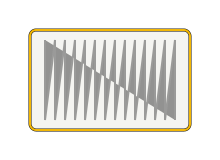 Illustration for editorial purposes
Opens live listings in a new tab.
Nissan Leaf Cabin Air Filter: OEM Part Number
| Standard particulate filter | Nissan OEM part, specific to generation — confirm via VIN |
|---|---|
| Activated carbon/charcoal alternative | A genuinely different filter media exists as an alternative to the standard particulate filter, confirmed available across the wider Nissan/Renault shared platform range using the same physical fitment |
A Genuinely Important Warning Worth Knowing: UK Guides Can Differ From US Ones — Nissan Leaf Cabin Air Filter
This is genuinely worth knowing before following any online video: US and other left-hand-drive guides can show a completely different access location from what a UK right-hand-drive car actually has. If you're following a video that doesn't match what you're seeing in your car, a left-hand-drive versus right-hand-drive difference is worth considering before assuming you're doing something wrong.
It's also worth knowing a genuinely practical fitting detail: the replacement filter can be noticeably larger than the opening it needs to pass through — you'll typically need to gently pinch and guide it past the edges of the opening rather than expecting it to slide straight in.
Nissan Leaf Cabin Air Filter: Easy to Forget, Easy to Fix
Of everything covered for the Nissan Leaf, this is about as low-stakes mechanically as it gets — it doesn't touch how the car drives at all. Its only job is cabin air quality, which is exactly why owners tend to ignore it until something makes that hard to do.
Nissan Leaf Cabin Air Filter: What It Does
On the Nissan Leaf, this filter sits in the ventilation intake, not the engine bay, and cleans the air reaching the cabin — trapping dust, pollen, and on carbon-activated versions, some odours and pollutants too. The engine air filter is a completely different part, serving combustion rather than the cabin.
Opens live listings in a new tab.
Nissan Leaf Cabin Air Filter: Warning Signs, DIY Difficulty & Aftermarket Advice
These are the same regardless of make or model — see our full Cabin Air Filter Guide for signs it needs changing, confirming fitment against your VIN, and choosing standard, carbon, or HEPA media.
More Nissan Cabin Air Filter
The same part, covered across other Nissan models.