
Nissan Qashqai Exhaust System: Specs, Fitment & Common Faults
A genuinely important warning: the DPF light going off after a short drive doesn't mean it's fixed — each incomplete regeneration cycle loads more soot until even a motorway run won't clear it.
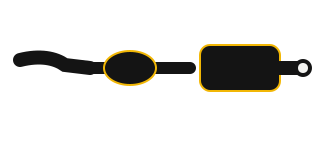 Illustration for editorial purposes
Opens live listings in a new tab.
OEM Part Number: confirm via VIN — Rear silencer (aftermarket) Bosal 145-125 / Walker 22624
| Rear silencer (back box) — aftermarket | Bosal 145-125, 145-289; Walker 22624, 23464, 24178 (code 52); Asmet 14.050; MTS 01.60412, 01.60555, 01.60657, 01.68560, 01.92170; Vegaz DS-330, DS-364, DS-237; Polmo 15.18, 15.74; Izawit 33.052, 33.060. |
|---|---|
| Centre / intermediate silencer — aftermarket | Bosal 145-001; Ernst 048002; Vegaz DS-216, DS-293, DS-150, FS-341, FS-376; Polmo 15.21, 15.205. |
| Front pipe / catalytic converter (DPF on diesels) — aftermarket | Bosal 090-304 (Euro 6); Walker 28879 (code 91); Ernst 840118 (with petrol particulate filter, Euro 6); Vegaz DK-812, RK-368, RK-330; BM Catalysts BM92271H; JMJ 1091756 (PPF type, 355 mm). |
| Genuine (OE) numbers quoted | None quoted in catalogue listings — order genuine parts against your VIN |
| Fitment notes | Petrol 1.2/1.3 DIG-T and diesel 1.5/1.6/1.7 dCi listed; no body style; no per-part engine mapping (diesel DPF is separate category). |
A Genuinely Important Warning: The Light Going Off Doesn't Mean It's Fixed — Nissan Qashqai Exhaust System
This is genuinely worth understanding if you've seen the amber DPF warning light appear, then go off again after a shorter drive: this doesn't necessarily mean the problem is solved. Clearing the light typically requires sustained driving at speeds above 40mph for at least 20-30 minutes to properly regenerate the filter — a shorter drive that clears the light temporarily may only be achieving a partial, incomplete regeneration, meaning some soot remains and accumulates further with each incomplete cycle. If the underlying cause (typically short-journey driving) doesn't change, the light will keep returning, and each partial cycle loads a little more unburned soot until eventually even a proper motorway run can't clear the filter — worth taking the light seriously with a genuine, sustained drive the first time, rather than accepting a quick clear as evidence the issue has resolved.
It's also worth knowing that early models (broadly pre-2013/14) don't have the same self-regenerating capability that later generations do — meaning owners of older examples can't necessarily "drive out" a blocking DPF the same way owners of newer cars might expect, and a proper, forced regeneration or manual clean may be needed sooner.
Nissan Qashqai Exhaust System: The Part That Announces Its Own Problems
On the Nissan Qashqai, this is one part where you'll usually hear the fault before you see it — a rattle, a drone, a sudden increase in noise that wasn't there last week. That's actually useful, since it gives you a head start on catching problems early.
Nissan Qashqai Exhaust System: Watch: Replacing It
J11 exhaust-side repair, not a silencer job; alt DPF removed/cleaned https://www.youtube.com/watch?v=xKeubk5yuxE
Nissan Qashqai Exhaust System: What It Does
The Nissan Qashqai's exhaust system channels burnt gases away from the engine, reduces noise through the silencer, and treats emissions through a catalytic converter and particulate filter before gases exit the tailpipe. Petrol and diesel versions often use entirely different systems due to different emissions treatment requirements.
Opens live listings in a new tab.
Nissan Qashqai Exhaust System: Warning Signs, DIY Difficulty & Aftermarket Advice
These are the same regardless of make or model — see our full Exhaust System Guide for warning signs and fault codes to watch for, confirming fitment against your VIN, and which aftermarket brands are worth trusting.
More Nissan Exhaust System
The same part, covered across other Nissan models.