
Nissan X-Trail Fuel Pump: Specs, Fitment & Common Faults
An exceptionally valuable, real cost-saving story: a €2,000 dealer quote for a full pump replacement was solved for just €118 by identifying the actual small failed component.
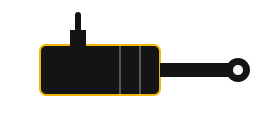 Illustration for editorial purposes
Opens live listings in a new tab.
Nissan X-Trail Fuel Pump: OEM Part Number
An Exceptionally Valuable, Real Cost-Saving Story Worth Knowing
If your diesel X-Trail is going into limp mode intermittently, clearing temporarily when the ignition is switched off and back on, this is genuinely worth knowing before paying for a full pump replacement: one documented owner, quoted around €2,000 by a dealer for a complete high-pressure pump replacement, investigated the pump themselves and found the actual cause was a small, silver, barrel-shaped fuel pressure switch mounted on the side of the pump, held on by just two small bolts. A replacement switch cost around €93, with a further €25 to have it programmed via Nissan's diagnostic computer — a total of around €118 instead of €2,000, and the fix was reported as permanently resolving the fault entirely. If you're facing this exact symptom pattern, it's genuinely worth having a specialist investigate whether this specific, cheaper component is the actual cause before authorising a full pump replacement.
It's also worth knowing that some model years use a single valve while others use two, distinguished by different coloured caps — a genuine, documented fitment trap where ordering the wrong single valve for a car that actually needs two (or vice versa) has caused confusion and wasted orders. Confirming the exact configuration for your specific car before ordering is worth doing rather than assuming a generic listing is correct.
Nissan X-Trail Fuel Pump: A Part That Fails at the Worst Possible Moments
On the Nissan X-Trail, this particular failure has a knack for terrible timing, stranding drivers mid-journey instead of giving fair warning while the car's parked up safely. Spotting the early signs early enough is what stands between a routine fix and a roadside breakdown.

Nissan X-Trail Fuel Pump: What It Does
Getting fuel from tank to engine at the correct combustion pressure is down to the fuel pump, and on the Nissan X-Trail that pump sits inside the tank, submerged in fuel. That location is exactly why swapping out such a small part is rarely a quick job.
Nissan X-Trail Fuel Pump: Generations & Engines: Fuel Pump Type
| T30 (2001–2007), 2.0/2.5 petrol (QR20DE/QR25DE) | Petrol: typically a single in-tank low-pressure pump; some later or higher-output variants may add a separate engine-mounted high-pressure pump for direct injection — confirm your exact engine |
|---|---|
| T31 (2007–2014), 2.0/2.5 petrol (MR20DE/QR25DE) | Petrol: typically a single in-tank low-pressure pump; some later or higher-output variants may add a separate engine-mounted high-pressure pump for direct injection — confirm your exact engine |
| T32 (2013–2022), 1.3/1.6 DIG-T petrol | Petrol: typically a single in-tank low-pressure pump; some later or higher-output variants may add a separate engine-mounted high-pressure pump for direct injection — confirm your exact engine |
Opens live listings in a new tab.
Nissan X-Trail Fuel Pump: Warning Signs, DIY Difficulty & Aftermarket Advice
These are the same regardless of make or model — see our full Fuel Pump Guide for symptoms to watch for (including the low-pressure vs high-pressure distinction on direct-injection engines), confirming fitment against your VIN, and OE suppliers worth knowing.
More Nissan Fuel Pump
The same part, covered across other Nissan models.