
Peugeot 208 Grille: Fitment, Sensors & Common Damage
A genuine, reassuring real case: a dealer confirmed a faulty radar sensor was a known Peugeot issue and replaced it under warranty — plus a distinct fault worth knowing after any battery work.
 Illustration for editorial purposes
OEM Part Numbers
A Genuine, Reassuring Real Case Worth Knowing About
If your adaptive cruise control or collision warning system shows a persistent fault even after cleaning the sensor thoroughly, this is genuinely worth knowing: one documented case saw a dealer (Minstergate Peugeot) investigate a persistent radar fault and confirm it was a genuinely faulty sensor behind the radar grille panel on the front bumper — described directly to the owner as a known issue to Peugeot, and covered under warranty with no charge for the replacement part. If cleaning the sensor and grille area thoroughly hasn't resolved a persistent fault, it's genuinely worth pursuing a proper dealer investigation rather than assuming you'll need to pay, particularly if the car is still within its warranty period.
It's also worth understanding a genuine technical distinction: automatic emergency braking for pedestrians specifically relies on the optical camera near the rear-view mirror rather than the radar behind the grille, since pedestrians don't reflect radar signals as reliably as metal vehicles do. This means a radar fault and a camera-related fault are genuinely different problems affecting different safety functions — worth knowing which system is actually implicated by your specific warning message before assuming cleaning the grille radar alone will resolve everything.
Cosmetic on the Surface, Functional Underneath
The front grille does more than shape a car's face — it manages airflow to the radiator and, on many modern cars, houses or surrounds sensors for adaptive cruise control or parking assistance, meaning the correct part depends on more than just how it looks.
What It Does
Beyond styling, the grille on the 208 directs airflow to the radiator and, on trims equipped with adaptive cruise control, may house or sit directly in front of the radar sensor used for that system. A grille that looks compatible but lacks the correct sensor cutout can interfere with these systems even if it fits physically.
Fitment & Compatibility
Grille design differs between trims and across facelifts of the 208, with sportier trims often using a more aggressive mesh design that isn't interchangeable with standard trim grilles. Always confirm the exact part for your specific trim and equipment level before ordering. Whether you're sourcing a replacement grille for your Peugeot 208 from a dealer, specialist, or online marketplace, always check compatibility against your registration or VIN before buying.
Shop for This Part on eBay
 PEUGEOT 208 2015 - 2018 OE ALLURE/ACTIVE FRONT CENTER RADIATOR GRILL + CHROME
GBP 58.45
PEUGEOT 208 2015 - 2018 OE ALLURE/ACTIVE FRONT CENTER RADIATOR GRILL + CHROME
GBP 58.45
 2023 - 2026 PEUGEOT 208 MK2 FACELIFT FRONT MAIN RADIATOR GRILLE (BLACK PACK)
GBP 134.95
2023 - 2026 PEUGEOT 208 MK2 FACELIFT FRONT MAIN RADIATOR GRILLE (BLACK PACK)
GBP 134.95
 Peugeot 208 2020-2023 Front Main Grille Radiator Front Grill Without Bagde Logo
GBP 99.00
Peugeot 208 2020-2023 Front Main Grille Radiator Front Grill Without Bagde Logo
GBP 99.00
 Fits Peugeot 208 2012-2015 Front Grille Frame Moulding Chrome EXCEPT GTI & XY
GBP 33.49
Fits Peugeot 208 2012-2015 Front Grille Frame Moulding Chrome EXCEPT GTI & XY
GBP 33.49
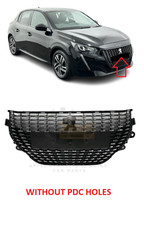 NEW FOR PEUGEOT 208 2019-2023 FRONT RADIATOR CENTER GRILLE BLACK/CHROME NO PDC
GBP 94.59
NEW FOR PEUGEOT 208 2019-2023 FRONT RADIATOR CENTER GRILLE BLACK/CHROME NO PDC
GBP 94.59
 Front Grille Surround Chrome Moulding for Peugeot 208 2012 to 2015 OE 1608112180
GBP 44.95
Front Grille Surround Chrome Moulding for Peugeot 208 2012 to 2015 OE 1608112180
GBP 44.95
 FOR PEUGEOT 208 20 - 23 FRONT BUMPER CENTER GRILLE BLACK / CHROME 9823210080
GBP 119.89
FOR PEUGEOT 208 20 - 23 FRONT BUMPER CENTER GRILLE BLACK / CHROME 9823210080
GBP 119.89
 2023 - 2026 PEUGEOT 208 MK2 FACELIFT FRONT MAIN RADIATOR GRILLE (BLACK PACK)
GBP 139.95
2023 - 2026 PEUGEOT 208 MK2 FACELIFT FRONT MAIN RADIATOR GRILLE (BLACK PACK)
GBP 139.95
As an eBay Partner, Car United may earn commission from qualifying purchases shown above. Listings and pricing are pulled live from eBay and may vary.
Common Damage, DIY Difficulty & Aftermarket Advice
These are the same regardless of make or model — see our full Grille Guide for common damage types, how difficult this job is to DIY, and the ADAS calibration risk with sensor-equipped grilles.
More Peugeot Grille
The same part, covered across other Peugeot models.