
Skoda Fabia Fuel Pump: Specs, Fitment & Common Faults
On the Fabia, hesitancy specifically when the fuel level drops below a quarter tank is a genuine, documented clue pointing to the in-tank pump — worth knowing before assuming a bigger fault.
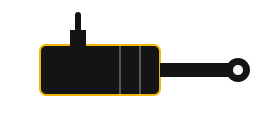 Illustration for editorial purposes
Opens live listings in a new tab.
Skoda Fabia Fuel Pump: OEM Part Number
A Genuine Diagnostic Clue: Does It Happen Only With a Low Tank? — Skoda Fabia Fuel Pump
A genuinely useful diagnostic clue reported consistently by owners: hesitancy or a longer crank specifically when the fuel level drops below around a quarter tank, that clears up once refuelled, points toward a struggling in-tank low-pressure pump rather than a completely failed unit — the pump can still work adequately with a fuller tank but struggles to pick up fuel efficiently as the level gets low, particularly if there's any sediment or debris settled at the bottom of the tank. This pattern is worth mentioning specifically to whoever is diagnosing the car, since it points toward the in-tank pump rather than the separate, more expensive high-pressure pump mounted on the engine.
Skoda Fabia Fuel Pump: A Part That Fails at the Worst Possible Moments
On the Skoda Fabia, few faults pick a worse moment to happen than this one, which has a habit of leaving drivers stranded mid-journey rather than failing safely at home. Catching the early signs gives you a genuine head start before that happens to you.
Skoda Fabia Fuel Pump: What It Does
On the Skoda Fabia, fuel reaches the engine at the pressure combustion needs thanks to the fuel pump, which draws it straight from the tank. It sits submerged inside the tank itself, and that positioning is a big part of why replacement takes more effort than the part's size would suggest.
Skoda Fabia Fuel Pump: Generations & Engines: Fuel Pump Type
| Mk1/6Y (2000–2007), 1.4/1.9 TDI diesel | Diesel: in-tank lift pump feeds a separate engine-mounted high-pressure injection pump (common rail) — never interchangeable with the petrol pump |
|---|---|
| Mk1 vRS (2003–2007), 1.9 TDI diesel (130PS) | Diesel: in-tank lift pump feeds a separate engine-mounted high-pressure injection pump (common rail) — never interchangeable with the petrol pump |
| Mk2/5J (2007–2014), 1.4/1.6 TDI diesel | Diesel: in-tank lift pump feeds a separate engine-mounted high-pressure injection pump (common rail) — never interchangeable with the petrol pump |
| Mk2 vRS (2010–2014), 1.4 TSI twincharger petrol | Petrol (direct injection): in-tank low-pressure pump plus a separate engine-mounted high-pressure pump |
| Mk3/Mk4 (2014–present), 1.0/1.2 TSI petrol | Petrol (direct injection): in-tank low-pressure pump plus a separate engine-mounted high-pressure pump |
Opens live listings in a new tab.
Skoda Fabia Fuel Pump: Warning Signs, DIY Difficulty & Aftermarket Advice
These are the same regardless of make or model — see our full Fuel Pump Guide for symptoms to watch for (including the low-pressure vs high-pressure distinction on direct-injection engines), confirming fitment against your VIN, and OE suppliers worth knowing.
More Skoda Fuel Pump
The same part, covered across other Skoda models.