
Subaru Crosstrek Front Suspension Strut: Specs, Fitment & Common Faults
A genuinely significant, real finding on related models: a persistent knock surviving several dealer visits was eventually resolved by replacing the rack and pinion.
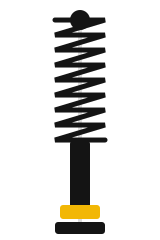 Illustration for editorial purposes
Opens live listings in a new tab.
Subaru Crosstrek Front Suspension Strut: OEM Part Number
| Standard, right | Genuine Subaru reference confirms this as a different part from the left-side strut — not a mirror-image of the same component |
|---|---|
| Standard, left | A genuinely different reference from the right-side strut above |
| Sport/STI/XT strut, where fitted | Confirmed by Subaru's own parts catalogue as a genuinely different reference from standard trims — not interchangeable even though the mounting points look similar |
Subaru Crosstrek Front Suspension Strut: The System That Quietly Does All the Work
Everything the road throws at the Subaru Crosstrek — bumps, potholes, cornering loads — passes through these components before it reaches the cabin, so wear here tends to show up as vague symptoms rather than one clear failure point. A systematic check beats guesswork every time.
Subaru Crosstrek Front Suspension Strut: What It Does
On the Subaru Crosstrek, the front suspension strut combines a shock absorber and the coil spring's mounting point into a single assembly, controlling how the suspension compresses and rebounds. Once it wears, the car keeps bouncing after a bump instead of settling quickly, and tyre wear often becomes uneven if it's left unresolved.
Opens live listings in a new tab.
A Genuinely Significant, Real Finding Worth Knowing About a Persistent Knock — Subaru Crosstrek Front Suspension
If you're facing a front knock that survives multiple repair attempts, this is genuinely worth knowing: documented cases on related Subaru models describe a persistent front knock surviving several dealer visits before finally being resolved by replacing the rack and pinion, a component not always considered a typical suspect for a knock like this — with one case finding an identical fault on a separate, near-new loaner car, suggesting a genuine, wider quality concern with this specific part.
It's also genuinely worth knowing a useful diagnostic distinction: a knock that appears specifically when hitting a bump at an angle, but not driving straight over the same bump, can point toward the steering or sway bar system rather than the strut itself.
Subaru Crosstrek Front Suspension Strut: Warning Signs, DIY Difficulty & Aftermarket Advice
These are the same regardless of make or model — see our full Front Suspension Strut Guide for symptoms of worn bushings and ball joints, confirming fitment against your VIN, and rubber vs polyurethane guidance.
More Subaru Front Suspension Strut
The same part, covered across other Subaru models.