
Toyota Aygo Cabin Air Filter: Intervals, Fitment & Warning Signs
On the Aygo, a genuinely useful diagnostic technique tests fresh air vs recirculate settings to isolate a musty smell's source.
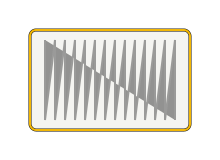 Illustration for editorial purposes
Opens live listings in a new tab.
OEM Part Number: 88508-0H010
| First generation (2005-2014) | Toyota OEM: 88508-0H010 (also referenced as 88508-YZZ01) — shared across Aygo, Citroen C1, Peugeot 107 |
|---|---|
| Second generation (2014 onwards) | Toyota OEM: 17801-21060 (also cross-referenced as 17801-0M040, Citroen/Peugeot 1612496780) — shared across Aygo, C1, Peugeot 108 |
A Genuinely Useful Diagnostic Technique Worth Trying First — Toyota Aygo Cabin Air Filter
If you're chasing a musty or damp smell and have already changed the cabin filter without success, this is genuinely worth trying: switch specifically between "fresh air" and "recirculate" settings and see if the smell only appears on fresh air. If so, this points toward the external air intake area (the scuttle, at the base of the windscreen) as the genuine source rather than the filter itself. Debris can accumulate in this intake and block the drain, allowing standing water and decaying organic matter to develop a genuine, persistent musty smell that a filter change alone won't resolve.
It's also worth knowing that a genuine, documented Technical Service Bulletin has covered cases where the metal used within the air conditioning condenser itself can generate a distinctive musty smell, with affected cars under warranty qualifying for a condenser replacement rather than simply another filter change.
Toyota Aygo Cabin Air Filter: Easy to Forget, Easy to Fix
There's no performance downside to a neglected Toyota Aygo cabin filter, which is precisely the problem: nothing about how the car drives will tell you it needs changing, so it often gets forgotten until a musty smell or weak airflow forces the issue.
Toyota Aygo Cabin Air Filter: What It Does
Don't confuse this with the Toyota Aygo's engine air filter — they're unrelated parts. The cabin filter's job is cleaning air before it reaches the ventilation system, catching dust and pollen, with activated-carbon versions also filtering some airborne odours.
Opens live listings in a new tab.
Toyota Aygo Cabin Air Filter: Warning Signs, DIY Difficulty & Aftermarket Advice
These are the same regardless of make or model — see our full Cabin Air Filter Guide for signs it needs changing, confirming fitment against your VIN, and choosing standard, carbon, or HEPA media.
More Toyota Cabin Air Filter
The same part, covered across other Toyota models.