
Vauxhall Meriva Tail Lights: Specs, Fitment & Common Faults
On the Meriva, multiple rear lights failing together on one side points to a shared connector or earth fault, not three coincidentally blown bulbs.
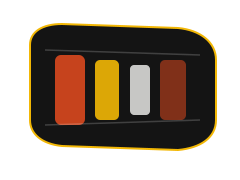 Illustration for editorial purposes
OEM Part Numbers
A Genuine Diagnostic Shortcut Worth Knowing First
If the tail light, indicator, and brake light on one side of the car fail all at once, this is a genuinely useful diagnostic pattern worth recognising rather than assuming three separate bulbs happened to fail simultaneously. These functions typically share a common earth connection through the rear light cluster's connector, and a fault here — often from moisture getting into the connector and corroding or burning out the shared earth pin — takes out multiple functions together. This pattern is well-documented enough across several Vauxhall models that dedicated replacement connector and bulb holder repair kits are specifically sold for exactly this fault.
More Wiring Behind There Than Most People Assume
A tail light unit typically bundles several functions into one housing — brake light, indicator, reversing light and rear fog light — which means a single electrical fault can affect more than one function at once, and a "faulty tail light" can mean several genuinely different things.
What It Does
Beyond basic rear visibility, tail light units on the Meriva typically integrate brake lights, indicators, reversing lights and rear fog lights into a single housing. Higher trims may use LED units with a distinct light signature, which are not interchangeable with standard halogen units even if the physical mounting looks similar.
Fitment & Compatibility
Tail light design changed between generations of the Meriva, and facelifted versions within the same generation often use a revised light signature that isn't interchangeable with pre-facelift units. Always confirm the exact part for your specific model year before ordering. Whether you're sourcing a replacement tail lights for your Vauxhall Meriva from a dealer, specialist, or online marketplace, always check compatibility against your registration or VIN before buying, and confirm you're ordering the correct side — driver's side (RH in the UK) or passenger side (LH in the UK) — since these are not interchangeable.
Common Faults
What to Look For
- One function out but others working — often a single blown bulb rather than a wiring fault, since multiple bulbs typically share one housing.
- Condensation inside the lens — points to a failed seal, which can damage electrics if left untreated.
- Flickering brake light — can indicate a failing bulb holder or a wiring connection issue.
- Cracked lens from impact — usually straightforward to replace like-for-like, though LED units cost considerably more than halogen equivalents.
DIY Replacement Difficulty
Bulb replacement is usually an easy DIY job, typically accessed from inside the boot without needing tools. Full unit replacement is slightly more involved but still manageable at home on most versions, generally requiring removal of a few boot trim fasteners. Expect 10–20 minutes for a bulb swap, or up to 45 minutes for a full unit.
OEM vs. Aftermarket
For basic halogen units, reputable aftermarket tail lights are a reliable, cheaper alternative to OEM. For LED units with a distinctive light signature, OEM or high-quality aftermarket replicas are worth the extra cost to avoid a mismatched look between the two rear light clusters.
More Vauxhall Tail Lights Guides
The same part, covered across other Vauxhall models.
- Vauxhall Adam Tail Lights Guide
- Vauxhall Astra Tail Lights Guide
- Vauxhall Corsa Tail Lights Guide
- Vauxhall Crossland X Tail Lights Guide
- Vauxhall Grandland X Tail Lights Guide
- Vauxhall Insignia Tail Lights Guide
- Vauxhall Mokka Tail Lights Guide
- Vauxhall Viva Tail Lights Guide
- Vauxhall Zafira Tourer Tail Lights Guide