
Volvo S60 Radiator: Specs, Fitment & Common Faults
Confirmed: a genuine UK safety recall covered a corroding cooling unit cover that could let moisture reach electrical parts and cause a malfunction or fire — worth checking your specific VIN directly.
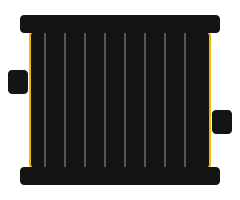 Illustration for editorial purposes
Opens live listings in a new tab.
Volvo S60 Radiator: OEM Part Number
| Manual gearbox, all engines | Standard radiator with no transmission cooling circuit — manual gearboxes genuinely don't generate enough heat to need one |
|---|---|
| Geartronic (Aisin automatic), all engines | A transmission oil cooler is built directly into the main radiator's tank as an internal circuit, sharing the same housing rather than being a separate standalone unit — if this internal cooler fails, coolant and transmission fluid can cross-contaminate into a pink, milkshake-like fluid that requires full radiator replacement, not just a coolant flush |
| Higher-power/turbo engines | Larger-capacity radiator core to handle the increased heat load, not a straightforward swap from the standard-output engine's radiator despite similar mounting points |
Volvo S60 Radiator: The Part That Keeps Everything Else From Cooking
Nothing about this component is glamorous, but on the Volvo S60, almost every serious engine failure that isn't wear-related traces back to a cooling system problem left unaddressed. Catching the early signs here is genuinely cheap insurance against a much bigger bill.
Volvo S60 Radiator: What It Does
The Volvo S60's radiator transfers heat from the engine coolant to the surrounding air, keeping engine temperature within a safe operating range. On automatic versions, it often also cools transmission fluid through a separate internal circuit — one more reason the correct part number matters so much here.
Opens live listings in a new tab.
Confirmed: A Genuine UK Safety Recall Worth Checking Your Car Against — Volvo S60 Radiator
This is genuinely worth checking directly: a confirmed UK-specific recall covered certain S60, XC90, V70, and XC70 models for a lack of corrosion protection on a cooling unit cover, with the concern being that moisture could seep through to electrical parts underneath and cause a malfunction or fire. It's genuinely worth checking your specific VIN against this recall directly with Volvo, particularly on an older car where you can't be certain a previous owner had this action carried out.
It's also genuinely worth knowing an honest account worth bearing in mind: documented cases describe a car repeatedly displaying an overheating warning at seemingly random intervals, with the garage eventually concluding the car wasn't actually overheating, just incorrectly displaying the warning code — worth having the actual temperature properly verified rather than assuming the warning is always accurate.
Volvo S60 Radiator: Faults, DIY Difficulty & Aftermarket Advice
These are the same regardless of make or model — see our full Radiator Guide for the three common failure modes, confirming fitment against your VIN, and OEM vs aftermarket guidance.
More Volvo Radiator
The same part, covered across other Volvo models.