
Nissan Leaf Brake Discs: Specs, Fitment & Wear Symptoms
A genuinely important EV-specific consideration: regenerative braking means discs work less overall, so a normal amount of surface rust can look more pronounced simply from less everyday use.
 Illustration for editorial purposes
OEM Part Number: 40206-4BA0A
| 24kWh Leaf (2010-2017), front disc, genuine reference | Nissan OEM: 40206-4BA0A — 283mm diameter, vented |
|---|---|
| Alternative front size, confirmed by owners | 296mm diameter, vented, 26mm thickness — check by measuring or your VIN rather than assuming |
| Rear disc, genuine reference (shared across generations) | Nissan OEM: 43200-016R (also cross-referenced as 432003112R, 432063NL0A) — 292mm diameter, vented |
A Genuinely Important EV-Specific Consideration Worth Knowing — Nissan Leaf Brake Discs
It's genuinely worth understanding how regenerative braking changes disc wear patterns on the Leaf compared with a combustion-engined car: since the electric motor handles the majority of everyday deceleration, the friction discs and pads see considerably less use overall. While this sounds like good news for longevity, it has a genuine downside — discs that go through fewer normal braking cycles have less opportunity to naturally clear light surface rust through everyday use, meaning a genuinely normal amount of cosmetic surface corrosion can look more pronounced or persistent than on a comparable combustion-engined car simply because the discs aren't being worked as often.
It's also worth knowing that because the discs work less overall, they can occasionally develop light corrosion or scale on the unused portions of the braking surface — worth having them inspected periodically even if the car feels like it's stopping perfectly normally, since visual inspection catches this in a way that everyday driving feel doesn't.
The Part That Pads Depend On
Discs and pads work as a pair, and neglecting one tends to accelerate wear on the other — which is exactly why worn discs so often get discovered during what was meant to be a routine pad change.
What They Do
Brake discs provide the surface the brake pads clamp against to slow the car, converting momentum into heat through friction. Larger, sportier trims of the Leaf typically use bigger discs than standard versions to handle the additional heat generated by more aggressive braking.
Shop for This Part on eBay
 2x Vented Brake Discs and Pads fits NISSAN LEAF ZE0, ZE1 Rear 2010 on 292mm Set
GBP 45.38
2x Vented Brake Discs and Pads fits NISSAN LEAF ZE0, ZE1 Rear 2010 on 292mm Set
GBP 45.38
 2x Vented Brake Discs and Pads fits NISSAN LEAF ZE0 Front 14 to 17 296mm Set New
GBP 80.42
2x Vented Brake Discs and Pads fits NISSAN LEAF ZE0 Front 14 to 17 296mm Set New
GBP 80.42
 2x Magma Brake Disc Front Vented Fits Nissan Leaf Qashqai X-Trail Renault
GBP 46.99
2x Magma Brake Disc Front Vented Fits Nissan Leaf Qashqai X-Trail Renault
GBP 46.99
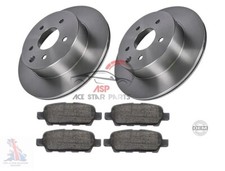 For Nissan Leaf 2010-2017 Rear Brake Discs (292mm) And Pads Set - OE APPROVED
GBP 59.50
For Nissan Leaf 2010-2017 Rear Brake Discs (292mm) And Pads Set - OE APPROVED
GBP 59.50
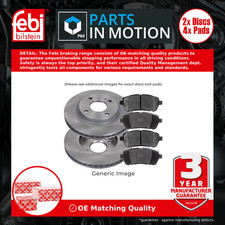 Brake Discs and Pads Vented fits NISSAN LEAF ZE0 Front 2010 on 295.3mm Set Febi
GBP 81.03
Brake Discs and Pads Vented fits NISSAN LEAF ZE0 Front 2010 on 295.3mm Set Febi
GBP 81.03
 2x DriveTec DM4770C Brake Discs Front Fits Nissan Leaf Qashqai X-Trail Renault
GBP 53.99
2x DriveTec DM4770C Brake Discs Front Fits Nissan Leaf Qashqai X-Trail Renault
GBP 53.99
 2x Vented Brake Discs and Pads fits NISSAN LEAF ZE0, ZE1 Rear 2010 on 292mm Set
GBP 52.26
2x Vented Brake Discs and Pads fits NISSAN LEAF ZE0, ZE1 Rear 2010 on 292mm Set
GBP 52.26
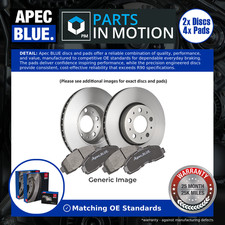 Vented Brake Discs and Pads Front Apec Blue SDK6793+PD3851 fits NISSAN LEAF
GBP 80.45
Vented Brake Discs and Pads Front Apec Blue SDK6793+PD3851 fits NISSAN LEAF
GBP 80.45
As an eBay Partner, CarUnited may earn commission from qualifying purchases shown above. Listings and pricing are pulled live from eBay and may vary.
Wear Symptoms, DIY Difficulty & Aftermarket Advice
These are the same regardless of make or model — see our full Brake Discs Guide for warning signs to watch for, confirming fitment against your VIN, and choosing a reliable aftermarket disc.
More Nissan Brake Discs
The same part, covered across other Nissan models.