
BMW X3 Radiator: Specs, Fitment & Common Faults
On the X3, the water pump is genuinely often the first cooling component to fail on related models, typically costing £300-£500 to replace.
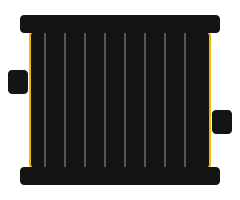 Illustration for editorial purposes
Opens live listings in a new tab.
BMW X3 Radiator: OEM Part Number
| Manual gearbox (older generations, where fitted) | No transmission oil cooler fitted at all on most manual BMWs — genuinely simpler cooling system than the automatic equivalent |
|---|---|
| Automatic (torque converter), standard trims | Transmission oil is cooled via a heat exchanger connected into the main coolant circuit, sharing coolant with the engine radiator — confirmed as a genuinely different radiator/hose configuration from the manual version |
| M Sport/M models (DCT/M Steptronic) | Genuinely uses a completely separate, dedicated oil-only transmission cooler mounted independently of the main radiator, with no coolant shared between the two circuits — a distinctly different setup from the standard automatic's coolant-shared heat exchanger |
BMW X3 Radiator: The Part That Keeps Everything Else From Cooking
There's nothing exciting about this component, yet on the BMW X3, most catastrophic engine failures that aren't simply down to wear trace back to a cooling problem someone ignored too long. Catching it early is cheap; catching it late usually isn't.
BMW X3 Radiator: What It Does
The BMW X3 radiator's core job is moving heat out of the engine coolant and into the passing air, holding engine temperature within safe limits. Automatic versions frequently add a second internal circuit for transmission fluid cooling, which is exactly why the correct part number carries extra weight on this component.
Opens live listings in a new tab.
A Genuinely Honest, Real Cost Finding Worth Knowing — BMW X3 Radiator
This is genuinely worth knowing about the water pump specifically: it's often the first cooling system component to fail on related BMW models, typically lasting around 60,000 to 80,000 miles, with a replacement typically costing around £300 to £500 in the UK including parts and labour.
It's also genuinely worth knowing that BMW engines are generally designed to run hotter than many other brands, accelerating wear on plastic cooling components, worth considering preventative replacement around the 80,000 mile mark.
BMW X3 Radiator: Faults, DIY Difficulty & Aftermarket Advice
These are the same regardless of make or model — see our full Radiator Guide for the three common failure modes, confirming fitment against your VIN, and OEM vs aftermarket guidance.
More BMW Radiator
The same part, covered across other BMW models.