
Dacia Sandero Front Suspension Strut: Specs, Fitment & Common Faults
A genuinely honest design trade-off: suspension tuned for off-road capability wears shock mounts and drop links faster from as early as 15,000km — plus a real drive shaft safety case.
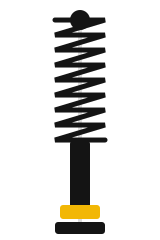 Illustration for editorial purposes
Opens live listings in a new tab.
A Genuinely Honest Design Trade-Off Worth Understanding
It's genuinely worth understanding why front-end knocking is such a widely reported complaint on this platform: the suspension is deliberately tuned for genuine off-road capability, with generous wheel travel — and the trade-off is faster wear of the upper shock absorber mounts, anti-roll bar drop links, and suspension bushes, sometimes appearing as early as 15,000km. This isn't a design flaw exactly, but a genuine engineering trade-off, and knowing this helps explain why these specific components wear faster here than on a comparable road-focused hatchback.
A genuinely useful, systematic diagnostic method worth trying if a knock is felt through the steering column: the front subframe is held to the body by four bolts, with the strut tops secured to the inner wings by one nut each side — six fixing points in total, all straightforward to check for looseness.
Dacia Sandero Front Suspension Strut: The System That Quietly Does All the Work
On the Dacia Sandero, every bump, pothole and corner passes through these components before you ever feel it in the cabin, which is exactly why wear here shows up as vague, hard-to-pin-down symptoms rather than one obvious failure. A methodical check usually finds the culprit faster than guesswork.

Dacia Sandero Front Suspension Strut: OEM Part Number
| Standard strut, right | Genuinely a different part number from the left-side strut — not a mirror-image of the same component |
|---|---|
| Standard strut, left | A genuinely different reference from the right-side strut above |
| Sport-trim strut (RS/GT-Line, where fitted) | A genuinely different, stiffer strut from standard trims — not interchangeable even though the mounting points look similar |
The Sandero shares its CMF-B platform with the Renault Clio, so it's worth checking parts listings under both car names — but always confirm generation match given the two Sandero generations use different suspension geometry.
Dacia Sandero Front Suspension Strut: What It Does
The Dacia Sandero's front suspension strut combines a shock absorber with the coil spring mounting point in one assembly, controlling how quickly the suspension compresses and rebounds over bumps. A worn strut lets the car bounce excessively after a bump instead of settling quickly, and can accelerate uneven tyre wear if left unaddressed.
Opens live listings in a new tab.
Dacia Sandero Front Suspension Strut: Warning Signs, DIY Difficulty & Aftermarket Advice
These are the same regardless of make or model — see our full Front Suspension Strut Guide for symptoms of worn bushings and ball joints, confirming fitment against your VIN, and rubber vs polyurethane guidance.
More Dacia Front Suspension Strut
The same part, covered across other Dacia models.