
Fiat Panda Radiator: Specs, Fitment & Common Faults
Confirmed: a cracking plastic thermostat housing spigot is the single most common cause of coolant leaks — with a genuine, rare case where the aftermarket metal replacement is actually better than OEM, plus a critical safety warning about head gasket failure.
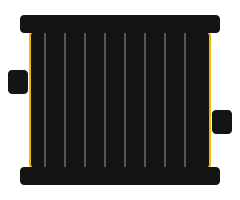 Illustration for editorial purposes
Opens live listings in a new tab.
Fiat Panda Radiator: OEM Part Number
| Manual gearbox, all engines | Standard radiator with no transmission cooling circuit |
|---|---|
| Dualogic (automated manual, where fitted) | Genuinely a robotised manual gearbox with an automated clutch rather than a true torque-converter automatic — it does not require the same dedicated transmission fluid cooling circuit as a genuine automatic, since mechanically it remains a manual gearbox underneath |
| 6-speed automatic (Aisin, where fitted) | A genuine torque-converter automatic that does need dedicated transmission fluid cooling, provided via the coolant circuit — confirmed as a completely different transmission from Dualogic, not just a different name for the same hardware |
Confirmed: The Single Most Common Cause of Coolant Leaks Worth Knowing — Fiat Panda Radiator
This is genuinely worth knowing before chasing coolant leaks in the wrong place: across numerous independently documented cases, the single most common cause on this engine range is a plastic spigot on the thermostat housing cracking with age and heat cycling. Genuinely worth knowing before it fails completely: a pink or white crusty residue building up around the housing and the hose connecting to it is the first visible warning sign, appearing well before an active drip or a noticeable drop in coolant level — worth checking for this specific residue proactively rather than waiting for a more obvious leak to develop.
It's also genuinely worth knowing a serious safety warning about this specific engine family: it's been described as very prone to head gasket failure if run with low coolant, and critically, this can happen before the overheat warning light illuminates, and may not even register clearly on the temperature gauge. A genuinely useful early warning sign worth listening for: a bubbling sound heard from inside the car, particularly around the glovebox area, has been reported as an early sign of a leaking thermostat housing, sometimes noticeable before any visible drop in coolant level — worth checking your coolant level promptly if you notice this specific sound, rather than waiting for a warning light that might come too late.
Fiat Panda Radiator: The Part That Keeps Everything Else From Cooking
Unglamorous as it is, the Fiat Panda's cooling system sits behind nearly every serious engine failure that isn't just ordinary wear — and one that went unaddressed for too long. Noticing early warning signs here is a small cost against a potentially very large one.
Fiat Panda Radiator: What It Does
On the Fiat Panda, engine coolant sheds its heat into the passing air via the radiator, which is what keeps engine temperature in a safe working range. On automatics, it frequently pulls double duty cooling the transmission fluid through its own internal circuit — a detail that makes getting the exact part number right especially important.
Opens live listings in a new tab.
Fiat Panda Radiator: Faults, DIY Difficulty & Aftermarket Advice
These are the same regardless of make or model — see our full Radiator Guide for the three common failure modes, confirming fitment against your VIN, and OEM vs aftermarket guidance.
More Fiat Radiator
The same part, covered across other Fiat models.