
Jaguar F-Pace Brake Pads: Specs, Fitment & Wear Symptoms
A genuinely useful diagnostic technique: check each wheel spins freely on a ramp after fitting, especially common in damp, cold conditions on this model — plus an honest account of a dealer omitting the anti-squeal shims entirely.
 Illustration for editorial purposes
OEM Part Numbers
Brake Pads Are One of the Few Truly Universal Parts
Every version of the F-Pace uses brake pads that wear down through normal use — the only real variable is how quickly, which depends on engine, trim, and (where fitted) whether the car has any form of regenerative braking to ease the load.
What They Do
Brake pads clamp against the discs to convert the car's momentum into heat, slowing it down. On any version of the F-Pace with hybrid assistance or regenerative braking, this system handles a meaningful share of everyday slowing, which can genuinely extend pad life compared with a purely petrol or diesel equivalent.
Common Sizes
| 325mm front pads, most common trims | Sized to match the 325mm disc/caliper on this tier. Pad size genuinely scales with engine output and trim on this model, not just the disc diameter — always confirm the exact pad against your VIN rather than assuming from generation alone. |
|---|---|
| 350mm front pads, higher-performance trims | Genuinely a different, larger pad to match the 350mm disc/caliper on this higher tier — not interchangeable with the standard-tier pad on the same axle. |
| 395mm front pads, SVR only | Genuinely a different, larger pad to match the 395mm disc/caliper on this higher tier — not interchangeable with the standard-tier pad on the same axle. |
| Confirmed genuine pad reference (2019-2025) | Genuinely a distinct part number from the row above on this same axle — trim or package differences like this typically mean a physically different pad, not just a relabelled one. |
Shop for This Part on eBay
 For Jaguar F Pace 2.0 3.0 2016-2021 Rear Brake Pads Set Of 4 + Sensor New
GBP 36.00
For Jaguar F Pace 2.0 3.0 2016-2021 Rear Brake Pads Set Of 4 + Sensor New
GBP 36.00
 2x Vented Brake Discs and Pads fits JAGUAR F-PACE X761 2.0D Rear 2015 on 325mm
GBP 79.63
2x Vented Brake Discs and Pads fits JAGUAR F-PACE X761 2.0D Rear 2015 on 325mm
GBP 79.63
 Original Jaguar F Pace Caliper Brake Pad Kit - T4A44837
GBP 100.00
Original Jaguar F Pace Caliper Brake Pad Kit - T4A44837
GBP 100.00
 Brembo Front Brake Pads Set Fits Jaguar XE F-Pace XF 2.0 D SD4 TD4 3.0
GBP 63.33
Brembo Front Brake Pads Set Fits Jaguar XE F-Pace XF 2.0 D SD4 TD4 3.0
GBP 63.33
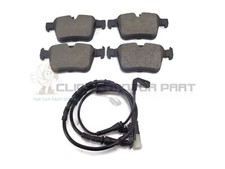 Rear Brake Pads Set Of 4 + Sensor New For Jaguar F Pace 2.0 3.0 2016-2021
GBP 39.95
Rear Brake Pads Set Of 4 + Sensor New For Jaguar F Pace 2.0 3.0 2016-2021
GBP 39.95
 Front And Rear Brake Pads For Jaguar F Pace 2.0 3.0 2016-2021 (Check Disc Size)
GBP 56.99
Front And Rear Brake Pads For Jaguar F Pace 2.0 3.0 2016-2021 (Check Disc Size)
GBP 56.99
 APEC Front & Rear Axle Brake Discs Set & Pads Braking Kit Fits Jaguar F-Pace
GBP 191.99
APEC Front & Rear Axle Brake Discs Set & Pads Braking Kit Fits Jaguar F-Pace
GBP 191.99
 2x Vented Brake Discs and Pads fits JAGUAR F-PACE X761 3.0D Rear 2015 on 325mm
GBP 79.61
2x Vented Brake Discs and Pads fits JAGUAR F-PACE X761 3.0D Rear 2015 on 325mm
GBP 79.61
As an eBay Partner, CarUnited may earn commission from qualifying purchases shown above. Listings and pricing are pulled live from eBay and may vary.
A Genuinely Useful, Real Diagnostic Technique Worth Knowing — Jaguar F-Pace Brake Pads
If new pads have just been fitted, this is genuinely worth checking straight away: with the car raised on a ramp and the wheels in free space, each wheel should spin completely freely by hand. If it doesn't, this points to a fitting problem, often pads that are too thick, and squeaking left unaddressed can escalate to disc glazing requiring a full braking system replacement costing around £1,000.
It's also genuinely worth knowing that copper grease applied to the rear surfaces of the pads has been documented resolving a persistent squeak in several cases.
Wear Symptoms, DIY Difficulty & Aftermarket Advice
These are the same regardless of make or model — see our full Brake Pads Guide for warning signs to watch for, confirming fitment against your VIN, and R90-certified aftermarket brands worth trusting.
More Jaguar Brake Pads
The same part, covered across other Jaguar models.