
Mazda 6 Timing Belt: Intervals, Fitment & Warning Signs
On the Mazda 6, Skyactiv-G timing chains are genuinely essentially "bulletproof" according to over a decade of Mazda forum discussion.
 Illustration for editorial purposes
OEM Part Number: SH01-11-314
| 2.2 SkyActiv-D diesel (SH/SHY), genuine timing chain kit | Genuine reference: SH01-11-314 (also referenced as SH01-11-730, SH02-11-316, SH02-11-760, SH01-12-500, SH02-12-201) |
|---|
A Genuinely Reassuring, Real Consensus Worth Knowing — Mazda 6 Timing Belt
If you're worried about timing chain reliability on a Skyactiv-G petrol engine, this is genuinely worth knowing: long-standing members of dedicated Mazda forums report essentially no genuine cases of timing chain or tensioner failure on these engines — one described them simply as "bulletproof" in this respect. If a mechanic suggests the chain needs replacing based on a vague noise alone, it's genuinely worth getting a second opinion.
It's also worth knowing that industry-wide reformulation of engine oils to reduce zinc content has been linked to accelerated timing chain wear across many manufacturers — newer oil formulations (look for Dexos1 Gen2 certification) are designed to address this.
Generations & Engines: All Chain-Driven
| GG/GY (2002–2008), older MZR petrol | Timing chain — well corroborated across multiple sources |
|---|---|
| GH (2007–2013), MZR petrol & older diesel | Timing chain — no scheduled replacement interval |
| GJ/GL (2012–present), SkyActiv-G petrol & SkyActiv-D diesel | Timing chain — see OEM confirmation above |
The Part Where Missing a Deadline Gets Expensive
Few maintenance items carry as much downside risk for skipping them. On the engines where this component fails, the consequences typically extend well beyond the part itself, which is exactly why sticking to the schedule matters more here than almost anywhere else on the car.

What It Does
The timing belt or chain keeps the engine's camshafts and crankshaft rotating in precise synchronisation, ensuring valves open and close at exactly the right moment relative to piston position. On many engines, this is what's known as an "interference" design — if the belt fails, the pistons and valves can collide, causing serious internal engine damage.
Shop for This Part on eBay
 Timing Belt Kit For Mazda 3 6 CX-5 2.2 D SH01-14-151 ADBP730087 178310
GBP 48.97
Timing Belt Kit For Mazda 3 6 CX-5 2.2 D SH01-14-151 ADBP730087 178310
GBP 48.97
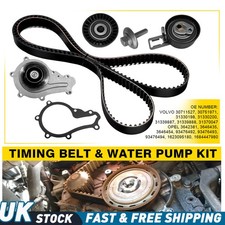 For Mazda 2 3 5 1.6 CD Timing Belt & Water Pump Kit Y65012770 Y650-12-730A New
GBP 51.29
For Mazda 2 3 5 1.6 CD Timing Belt & Water Pump Kit Y65012770 Y650-12-730A New
GBP 51.29
 Timing Belt Kit w/ Water Pump for 1993-2005 Mazda MX-5 NA NB 1.6L 1.8L GAS DOHC
GBP 69.80
Timing Belt Kit w/ Water Pump for 1993-2005 Mazda MX-5 NA NB 1.6L 1.8L GAS DOHC
GBP 69.80
 Premier Timing Cam Belt Kit + Water Pump Fits Mazda 6 5 MPV 3 2.0 D
GBP 133.80
Premier Timing Cam Belt Kit + Water Pump Fits Mazda 6 5 MPV 3 2.0 D
GBP 133.80
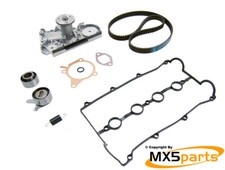 MX5 Timing Belt Cambelt Kit 6 Piece + Water Pump Mazda MX-5 1.8 Mk2.5 VVTI 00>05
GBP 71.95
MX5 Timing Belt Cambelt Kit 6 Piece + Water Pump Mazda MX-5 1.8 Mk2.5 VVTI 00>05
GBP 71.95
 MX5 Timing Belt Cambelt Kit 6 Piece Inc Water Pump Mazda MX-5 1.8 Mk1/2 1993 00
GBP 71.95
MX5 Timing Belt Cambelt Kit 6 Piece Inc Water Pump Mazda MX-5 1.8 Mk1/2 1993 00
GBP 71.95
 Dayco KTB537 Timing Belt Kit MAZDA 6/MPV II FL 2.0 DI DITD 1998cc 100KW 136HP
GBP 55.89
Dayco KTB537 Timing Belt Kit MAZDA 6/MPV II FL 2.0 DI DITD 1998cc 100KW 136HP
GBP 55.89
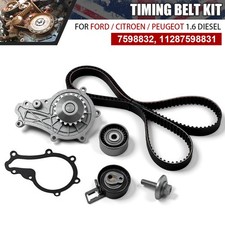 Timing Belt & Water Pump Kit For Ford Focus Mk3 1.6 TDCi 2011-20 1787859 1855729
GBP 51.29
Timing Belt & Water Pump Kit For Ford Focus Mk3 1.6 TDCi 2011-20 1787859 1855729
GBP 51.29
As an eBay Partner, CarUnited may earn commission from qualifying purchases shown above. Listings and pricing are pulled live from eBay and may vary.
Watch: Chain Replacement (Not a Routine Job)
Since this is a chain, not a scheduled belt job, this video is only relevant if you're diagnosing or responding to symptoms of chain wear — not a routine maintenance item.
Warning Signs, DIY Difficulty & Aftermarket Advice
These are the same regardless of make or model — see our full Timing Belt Guide for symptoms to watch for, confirming fitment against your VIN, and which aftermarket brands are worth trusting.
More Mazda Timing Belt
The same part, covered across other Mazda models.