
Mitsubishi ASX Rear Bumper: Fitment, Sensors & Common Damage
A genuinely useful piece of context worth knowing about Mitsubishi's sensor systems: reversing sensors on related models have failed to switch off with a trailer connected due to a mismatched towbar kit.
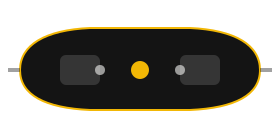 Illustration for editorial purposes
Opens live listings in a new tab.
Mitsubishi ASX Rear Bumper: OEM Part Number
Mitsubishi ASX Rear Bumper: More Than Just a Plastic Panel
Kerb damage to the Mitsubishi ASX's rear bumper is common, but the repair often isn't as simple as it looks: it houses parking sensors, a reversing camera, and sometimes exhaust trim finishers, all of which complicate what would otherwise be a straightforward panel replacement.
Mitsubishi ASX Rear Bumper: What It Does
Beyond absorbing minor impacts, the rear bumper on higher trims of the ASX often houses parking sensors, a reversing camera, and sometimes integrated exhaust finishers. A bumper that looks compatible can still be missing the correct cutouts or wiring provisions for your specific trim's equipment.
Mitsubishi ASX Rear Bumper: Generations & Colour
| All generations | White Diamond, Amethyst Black, Sunflower Yellow, Red Diamond |
|---|
Opens live listings in a new tab.
A Genuinely Useful Piece of Context Worth Knowing About Mitsubishi's Sensor Systems — Mitsubishi ASX Rear Bumper
If you're considering a towbar for this car, this is genuinely worth knowing: documented cases on related Mitsubishi models describe reversing sensors that couldn't automatically switch off when a trailer was connected, eventually traced to the towbar wiring kit being the wrong variant for that car's specific rear sensor configuration. It's genuinely worth confirming with whoever fits your towbar that the kit used matches your car's actual equipment, not just its general model and year.
It's also worth knowing that Japanese import models specifically may lack a pre-installed towbar harness connector, requiring wiring to be spliced in directly rather than simply plugged into an existing factory connector.
Mitsubishi ASX Rear Bumper: Common Damage, DIY Difficulty & Aftermarket Advice
These are the same regardless of make or model — see our full Rear Bumper Guide for common damage types, confirming fitment (body style and sensor equipment matter here), and OEM vs aftermarket guidance.
More Mitsubishi Rear Bumper
The same part, covered across other Mitsubishi models.