
Mitsubishi L200 Radiator: Specs, Fitment & Common Faults
A genuinely useful, specific diagnostic clue: solid radiator hoses, boiling in the header tank, and temperature dropping with the heater on full together point toward a stuck thermostat rather than a leak.
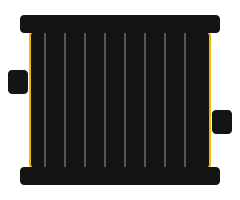 Illustration for editorial purposes
Opens live listings in a new tab.
Mitsubishi L200 Radiator: OEM Part Number
| Manual gearbox, all engines | Standard radiator with no transmission cooling circuit |
|---|---|
| Automatic/CVT, all engines | A dedicated transmission fluid cooler is fitted — either built into the radiator's tank or as a separate unit connected into the coolant circuit depending on exact model and generation — confirmed as a genuinely different radiator/cooling setup from the manual version, not interchangeable without the correct cooling circuit |
Mitsubishi L200 Radiator: The Part That Keeps Everything Else From Cooking
This isn't a part anyone gets excited about, but on the Mitsubishi L200, overlooked cooling problems are responsible for most serious engine failures that aren't simple wear-and-tear. Catching the early symptoms is about the cheapest insurance available against a major bill later.
Mitsubishi L200 Radiator: What It Does
Keeping the Mitsubishi L200's engine temperature within safe limits comes down to the radiator's job of transferring heat from the coolant into the surrounding air. Automatic-gearbox versions often build in a second circuit for transmission fluid cooling too, which is exactly why fitting the wrong part number can cause two problems, not one.
Opens live listings in a new tab.
A Genuinely Useful, Specific Diagnostic Clue Worth Knowing — Mitsubishi L200 Radiator
If you're facing overheating, this specific combination of symptoms is genuinely worth knowing about: both radiator hoses feeling solid to the touch rather than squishy, combined with visible boiling in the header tank, and the temperature temporarily dropping when the heater is switched on full, strongly points toward a stuck thermostat restricting coolant flow, rather than a leak or a more serious fault. It's worth checking the thermostat specifically if you're seeing this exact pattern, since it's a comparatively inexpensive part to replace compared with some of the more serious causes of overheating.
It's also genuinely worth knowing that if a cooling system has recently had a new radiator or other major component fitted, a proper flush and bleed of the system is worth confirming was actually carried out, since air trapped in the system or debris not fully flushed out can cause overheating that has nothing to do with the new part itself.
Mitsubishi L200 Radiator: Faults, DIY Difficulty & Aftermarket Advice
These are the same regardless of make or model — see our full Radiator Guide for the three common failure modes, confirming fitment against your VIN, and OEM vs aftermarket guidance.
More Mitsubishi Radiator
The same part, covered across other Mitsubishi models.