
Nissan Micra Front Bumper: Fitment, Sensors & Common Damage
On the Micra, a genuinely specific fault pattern on related models: a rear sensor fault can disable the front sensors too.
 Illustration for editorial purposes
OEM Part Numbers
A Genuinely Specific, Real Fault Pattern Worth Knowing — Nissan Micra Front Bumper
If both front and rear parking sensors have stopped working together, this is genuinely worth knowing: front and rear sensors are commonly linked through a shared Sonar Control Unit, meaning a fault genuinely originating in the rear sensors can disable the front sensors too. A genuinely useful, documented diagnostic workaround: going into the vehicle's settings menu and specifically disabling the rear sensors alone often restores front sensor function immediately.
It's also worth knowing that a genuinely thorough DIY repair is possible without removing the entire bumper in many cases — one documented owner used a proper scanner to identify exactly which sensors had failed, ordered just those specific replacement sensors, and fitted them with access described as fiddly but achievable.
More Than Just a Plastic Panel
Modern front bumpers routinely integrate parking sensors, adaptive cruise control radar, and fog light housings, which means replacing one after even minor impact damage often involves more than a straightforward swap.

What It Does
Beyond absorbing minor impacts, the front bumper on higher trims of the Micra often houses parking sensors, the radar sensor used for adaptive cruise control, and fog lights. A bumper that looks compatible can still be missing the correct cutouts or mounting provisions for your specific trim's equipment.
Generations & Colour
| K13 (2010–2017) & K14 (2017–2023) | Storm White, Onyx Black, Brick Red, Blade Silver, Turquoise Blue |
|---|
Shop for This Part on eBay
 2009 NISSAN MICRA K12 FRONT BUMPER SILVER
GBP 98.67
2009 NISSAN MICRA K12 FRONT BUMPER SILVER
GBP 98.67
 Fits Nissan Micra 2017> Front Bumper Matt Black Without Camera Hole 620225FA0E
GBP 120.66
Fits Nissan Micra 2017> Front Bumper Matt Black Without Camera Hole 620225FA0E
GBP 120.66
 NISSAN MICRA 2017 ON Hatchback FRONT BUMPER WE-183 62022 5FA0H
GBP 159.99
NISSAN MICRA 2017 ON Hatchback FRONT BUMPER WE-183 62022 5FA0H
GBP 159.99
 NISSAN MICRA K13 2010-2013 COMPLETE FRONT BUMPER FRONT RED AY4
GBP 180.00
NISSAN MICRA K13 2010-2013 COMPLETE FRONT BUMPER FRONT RED AY4
GBP 180.00
 FITS NISSAN MICRA K13 2013–2017 FRONT BUMPER SMOOTH BLACK NOT PRIMED 620223HN0H
GBP 114.99
FITS NISSAN MICRA K13 2013–2017 FRONT BUMPER SMOOTH BLACK NOT PRIMED 620223HN0H
GBP 114.99
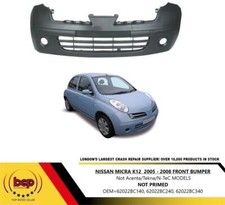 FITS NISSAN MICRA 2005 - 2008 FRONT BUMPER Not Acenta OR Tekna OR N-Tec Models
GBP 64.99
FITS NISSAN MICRA 2005 - 2008 FRONT BUMPER Not Acenta OR Tekna OR N-Tec Models
GBP 64.99
 Nissan Micra K14 17- Front Bumper Matt Black Without Camera Hole
GBP 121.16
Nissan Micra K14 17- Front Bumper Matt Black Without Camera Hole
GBP 121.16
 NISSAN MICRA 2017 ON Hatchback FRONT BUMPER WE-162 62022 5FA0H
GBP 189.99
NISSAN MICRA 2017 ON Hatchback FRONT BUMPER WE-162 62022 5FA0H
GBP 189.99
As an eBay Partner, Car United may earn commission from qualifying purchases shown above. Listings and pricing are pulled live from eBay and may vary.
Common Damage, DIY Difficulty & Aftermarket Advice
These are the same regardless of make or model — see our full Front Bumper Guide for common damage types to check for, confirming fitment against your VIN, and the sensor-calibration risk with cheap aftermarket covers.
More Nissan Front Bumper
The same part, covered across other Nissan models.