
Nissan Pulsar Rear Shock Absorber: Specs, Fitment & Common Faults
Worth confirming first: drivetrain and left/right side both affect which rear shock fits.
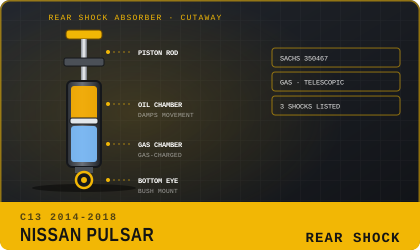 Illustration for editorial purposes
Opens live listings in a new tab.
OEM Part Number: confirm via VIN
Aftermarket rear dampers: Sachs 350467 / TRW JGT1536S
| Rear shock absorbers (aftermarket) | Sachs 350467 (gas, telescopic); TRW JGT1536S (gas, telescopic); Kamoka 2001220 (gas, telescopic) |
|---|---|
| Genuine (OE) numbers quoted | None quoted in the catalogue listings — the genuine damper varies by engine, suspension type and body style, so order it against your VIN |
| Front-wheel drive, right | a different part number from the left-side shock, and from the AWD version below |
| Front-wheel drive, left | A different reference from the right-side shock above |
| AWD, right/left | different references from the front-wheel-drive shocks, reflecting the different rear axle layout |
One-sided replacement can leave mismatched damping across the Nissan Pulsar's axle, which is why doing shock absorbers in pairs is the more consistent choice, even with just one visibly failed.
Three variables behind the right damper for the Pulsar
A detail worth getting right on the Nissan Pulsar: rear shocks differ by side (left and right are not mirror-image parts), and AWD models, where available, use an entirely different rear shock from front-wheel-drive versions to suit their different rear axle layout.
What the Pulsar feels like with tired dampers at the back
The Nissan Pulsar's front end tends to dominate suspension conversations since it steers the car, but rear shock wear happens at a comparable rate — just with subtler warning signs that often get blamed on road noise until they're too obvious to ignore.
This video is of an earlier generation of the same model; the job is similar but fixings can differ slightly.
The job of each shock
On the Nissan Pulsar, how quickly the rear suspension compresses and rebounds over bumps comes down to the shock absorber, a separate function from the coil spring. Wear here shows up as excessive bounce that doesn't settle quickly after a bump.
Opens live listings in a new tab.
These are the same regardless of make or model — see our full Rear Shock Absorber Guide for symptoms of a worn shock, confirming fitment against your VIN, and OEM vs aftermarket guidance.
The same part on other modelsThe same part, covered across other Nissan models.