
Subaru Crosstrek Radiator: Specs, Fitment & Common Faults
A genuinely useful piece of context worth knowing about Subaru's head gasket history: older EJ25-engined models had a well-documented issue with an extended warranty, plus a useful diagnostic technique for catching a leak a standard test might miss.
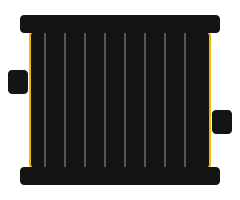 Illustration for editorial purposes
Opens live listings in a new tab.
Subaru Crosstrek Radiator: OEM Part Number
| Manual gearbox, all engines | Standard radiator with no transmission cooling circuit |
|---|---|
| Lineartronic CVT, standard engines | A genuine factory oil-to-water CVT fluid cooler is fitted as standard, using the same coolant that runs through the engine — confirmed by Subaru as functionally adequate for normal use, though the CVT's known heat-related reliability issues (which led Subaru to extend the powertrain warranty to 10 years/100,000 miles on many 2010-2018 vehicles) mean this cooler's condition and cleanliness genuinely matters |
| Turbo engines (XT/WRX and similar) | An additional auxiliary transmission cooler is fitted alongside the standard oil-to-water unit specifically because of the extra heat generated by the higher-output engine — not fitted on naturally aspirated variants |
Subaru Crosstrek Radiator: The Part That Keeps Everything Else From Cooking
This isn't a part anyone gets excited about, but on the Subaru Crosstrek, overlooked cooling problems are responsible for most serious engine failures that aren't simple wear-and-tear. Catching the early symptoms is about the cheapest insurance available against a major bill later.
Subaru Crosstrek Radiator: What It Does
Keeping the Subaru Crosstrek's engine temperature within safe limits comes down to the radiator's job of transferring heat from the coolant into the surrounding air. Automatic-gearbox versions often build in a second circuit for transmission fluid cooling too, which is exactly why fitting the wrong part number can cause two problems, not one.
Opens live listings in a new tab.
A Genuinely Useful Piece of Context Worth Knowing About Subaru's Head Gasket History — Subaru Crosstrek Radiator
If you're comparing against an older, EJ25-engined Subaru such as an older Forester or Outback, this is genuinely worth knowing: this older engine family has a well-documented history of head gasket seepage, with Subaru extending the warranty specifically covering this known issue on certain production dates, and documented cases seeing the gasket replaced completely free of charge. This doesn't directly affect this specific model, but is worth knowing as context on Subaru's broader engine history.
It's also worth knowing that the complete absence of visible exhaust smoke or a coolant smell doesn't reliably rule out a head gasket leak on Subaru engines generally, since seepage can occur gradually without those more obvious symptoms being present.
Subaru Crosstrek Radiator: Faults, DIY Difficulty & Aftermarket Advice
These are the same regardless of make or model — see our full Radiator Guide for the three common failure modes, confirming fitment against your VIN, and OEM vs aftermarket guidance.
More Subaru Radiator
The same part, covered across other Subaru models.