
Subaru Forester Radiator: Specs, Fitment & Common Faults
Confirmed: Subaru has extended the warranty for a known head gasket issue on certain production dates, with the gasket replaced completely free of charge — worth checking your car's manufacture date plate and this specific leak location first.
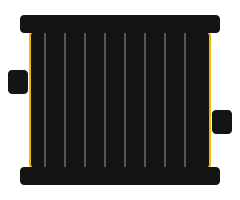 Illustration for editorial purposes
Opens live listings in a new tab.
Subaru Forester Radiator: OEM Part Number
| Manual gearbox, all engines | Standard radiator with no transmission cooling circuit |
|---|---|
| Lineartronic CVT, standard engines | A genuine factory oil-to-water CVT fluid cooler is fitted as standard, using the same coolant that runs through the engine — confirmed by Subaru as functionally adequate for normal use, though the CVT's known heat-related reliability issues (which led Subaru to extend the powertrain warranty to 10 years/100,000 miles on many 2010-2018 vehicles) mean this cooler's condition and cleanliness genuinely matters |
| Turbo engines (XT/WRX and similar) | An additional auxiliary transmission cooler is fitted alongside the standard oil-to-water unit specifically because of the extra heat generated by the higher-output engine — not fitted on naturally aspirated variants |
Subaru Forester Radiator: The Part That Keeps Everything Else From Cooking
Unglamorous as it is, the Subaru Forester's cooling system sits behind nearly every serious engine failure that isn't just ordinary wear — and one that went unaddressed for too long. Noticing early warning signs here is a small cost against a potentially very large one.
Subaru Forester Radiator: What It Does
On the Subaru Forester, engine coolant sheds its heat into the passing air via the radiator, which is what keeps engine temperature in a safe working range. On automatics, it frequently pulls double duty cooling the transmission fluid through its own internal circuit — a detail that makes getting the exact part number right especially important.
Opens live listings in a new tab.
Confirmed: A Genuine Extended Warranty Worth Checking Your Car Against — Subaru Forester Radiator
This is genuinely worth checking directly if you're finding unexplained coolant drips: head gasket seepage on these engines has a characteristic, specific location worth checking first — drips appearing on the crossmember that the engine mounts attach to, with the bottom of the head itself feeling damp, particularly toward the driver's side. This is a well-documented failure point rather than a random leak location. Genuinely important to know: Subaru has extended the warranty specifically covering this known head gasket issue on certain production dates, with documented cases seeing the gasket replaced completely free of charge under this extension. It's worth checking the manufacture date plate inside the driver's door frame and asking a dealer directly whether your specific car falls within the extended coverage window before assuming you'll need to pay for this repair.
It's also genuinely worth knowing that a Subaru-recommended coolant conditioner additive can delay or reduce head gasket seepage temporarily, but this is a delaying measure rather than a genuine fix — the underlying gasket still needs proper replacement eventually. Real repair costs for this job have been documented in the region of £1,950 to £2,750 or more, worth factoring in when deciding whether to pursue warranty coverage or budget for the repair directly.
Subaru Forester Radiator: Faults, DIY Difficulty & Aftermarket Advice
These are the same regardless of make or model — see our full Radiator Guide for the three common failure modes, confirming fitment against your VIN, and OEM vs aftermarket guidance.
More Subaru Radiator
The same part, covered across other Subaru models.