
Toyota Auris Radiator: Specs, Fitment & Common Faults
On the Auris, a genuinely useful diagnostic pattern: coolant loss specifically at higher speeds points toward a pressure or cap issue.
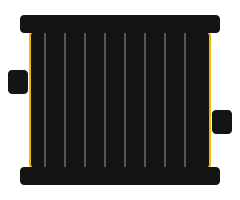 Illustration for editorial purposes
Opens live listings in a new tab.
Toyota Auris Radiator: OEM Part Number
| Manual gearbox, all engines | Standard radiator with no transmission cooling circuit |
|---|---|
| Automatic/CVT | Transmission oil cooler built into the radiator's tank as an internal circuit on most conventional automatics, or (on CVT/hybrid variants) via a genuinely different arrangement — confirm your exact transmission type before ordering, since fitting the wrong version omits necessary cooling |
A Genuinely Useful Diagnostic Pattern Worth Knowing About — Toyota Auris Radiator
If you're losing coolant specifically through the overflow or header tank pipe, and it seems to happen only at higher speeds, this is genuinely worth understanding: this specific pattern points toward excessive pressure building up in the cooling system, rather than a head gasket issue, particularly if a proper block test has already ruled the head gasket out. A radiator cap that's no longer holding pressure correctly, or a partial blockage somewhere in the system, are both worth checking.
It's also worth knowing that coolant leaking specifically from the water pump's shaft seal, visible as a small weep beneath the pump, is often one of the earliest signs of pump failure.
Toyota Auris Radiator: The Part That Keeps Everything Else From Cooking
It's an unglamorous part, but on the Toyota Auris, the cooling system is behind almost every serious non-wear engine failure that could have been prevented. Spotting trouble here early is about as cheap an insurance policy as exists against a genuinely expensive repair bill.
Toyota Auris Radiator: What It Does
On the Toyota Auris, heat from the engine coolant is shed to the surrounding air through the radiator, keeping engine temperature in a safe range. On automatic gearboxes, it often doubles up, cooling transmission fluid through a separate internal circuit too — which is why getting the exact part number right matters more here than on a simple heat exchanger.
Opens live listings in a new tab.
Toyota Auris Radiator: Faults, DIY Difficulty & Aftermarket Advice
These are the same regardless of make or model — see our full Radiator Guide for the three common failure modes, confirming fitment against your VIN, and OEM vs aftermarket guidance.
More Toyota Radiator
The same part, covered across other Toyota models.