
BMW 4 Series Timing Belt: Intervals, Fitment & Warning Signs
On the 4 Series, if you hear the well-documented cold-start rattle on related BMW engines, genuinely don't rev the engine — plus an honest £3,000-£5,000 cost gap between catching this early and waiting too long.
 Illustration for editorial purposes
OEM Part Numbers
The Part Where Missing a Deadline Gets Expensive
Few maintenance items carry as much downside risk for skipping them. On the engines where this component fails, the consequences typically extend well beyond the part itself, which is exactly why sticking to the schedule matters more here than almost anywhere else on the car.
What It Does
The timing belt or chain keeps the engine's camshafts and crankshaft rotating in precise synchronisation, ensuring valves open and close at exactly the right moment relative to piston position. On many engines, this is what's known as an "interference" design — if the belt fails, the pistons and valves can collide, causing serious internal engine damage.
Generations, M4 & Engines: All Chain-Driven
| F32/F33/F36 (2013–2020) & F82 M4 (2014–2020), all engines | Timing chain — no scheduled replacement interval |
|---|---|
| G22/G23/G26 (2020–present) & G82 M4 (2021–present), all engines | Timing chain — no scheduled replacement interval |
Shop for This Part on eBay
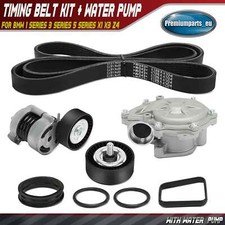 Timing Belt Kit + Water Pump for BMW 1 Series 3 Series 5 Series X1 X3 Z4 00-15
GBP 106.71
Timing Belt Kit + Water Pump for BMW 1 Series 3 Series 5 Series X1 X3 Z4 00-15
GBP 106.71
 11238512072 Crankshaft Pulley+4 bolts for BMW E81 E91 116D 118D 120D 316D X1 X3
GBP 62.99
11238512072 Crankshaft Pulley+4 bolts for BMW E81 E91 116D 118D 120D 316D X1 X3
GBP 62.99
 Crankshaft Pulley Belt +4 bolt for BMW X1 E84 X3 E83 1 E81 E82 E87 E88 3 E90 E91
GBP 58.00
Crankshaft Pulley Belt +4 bolt for BMW X1 E84 X3 E83 1 E81 E82 E87 E88 3 E90 E91
GBP 58.00
 For BMW - 1 3 5 7 Series X1 X3 1.6 2.0 Timing Chain Kit N47D20A N47D20C Dayco
GBP 135.79
For BMW - 1 3 5 7 Series X1 X3 1.6 2.0 Timing Chain Kit N47D20A N47D20C Dayco
GBP 135.79
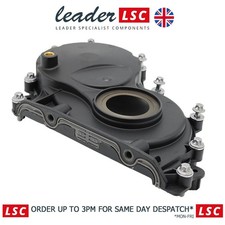 Timing Belt Cover Seal Screws BMW 1 2 3 4 Series X1 X2 11144751132 NEW
GBP 42.65
Timing Belt Cover Seal Screws BMW 1 2 3 4 Series X1 X2 11144751132 NEW
GBP 42.65
 V-Ribbed Belt Set SKF VKMA 38306 Fits BMW 1 Series 2 Series 3 Series 4 Series 5
GBP 63.00
V-Ribbed Belt Set SKF VKMA 38306 Fits BMW 1 Series 2 Series 3 Series 4 Series 5
GBP 63.00
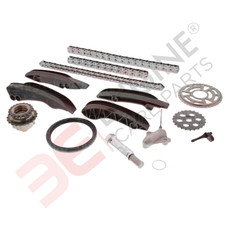 FOR BMW 320d F30 DIESEL UPPER LOWER TIMING CHAIN KIT B47D20A B47C20B B47D20B
GBP 105.00
FOR BMW 320d F30 DIESEL UPPER LOWER TIMING CHAIN KIT B47D20A B47C20B B47D20B
GBP 105.00
 BMW INA V-Ribbed Belt Set 529 0493 10 FOR 3 Series 1-5 & Z4 Genuine OEM Quality
GBP 10.79
BMW INA V-Ribbed Belt Set 529 0493 10 FOR 3 Series 1-5 & Z4 Genuine OEM Quality
GBP 10.79
As an eBay Partner, Car United may earn commission from qualifying purchases shown above. Listings and pricing are pulled live from eBay and may vary.
A Genuinely Important Safety Warning Worth Knowing — BMW 4 Series Timing Belt
If you're hearing a loud, metallic rattle from the engine on cold start-up, this is genuinely important to know: related BMW engines have a well-documented timing chain issue caused by substandard plastic guides and tensioners degrading over time. If you hear this rattle, you should not rev the engine, since doing so risks the chain jumping timing immediately, causing catastrophic engine damage.
It's also genuinely worth knowing a useful preventative tip: regular oil changes using the correct BMW-specified oil grade have been documented extending the life of the chain by as much as 50,000 to 100,000 miles.
Watch: Chain Replacement (Not a Routine Job)
Since this is a chain, not a scheduled belt job, this video is only relevant if you're diagnosing or responding to symptoms of chain wear — not a routine maintenance item.
Warning Signs, DIY Difficulty & Aftermarket Advice
These are the same regardless of make or model — see our full Timing Belt Guide for symptoms to watch for, confirming fitment against your VIN, and which aftermarket brands are worth trusting.
More BMW Timing Belt
The same part, covered across other BMW models.