
BMW X3 Timing Belt: Intervals, Fitment & Warning Signs
On the X3, if you hear the well-documented cold-start rattle, don't rev the engine — plus a useful preventative tip that regular oil changes with the correct grade can extend chain life by up to 100,000 miles.
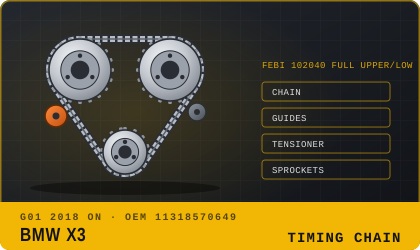 Illustration for editorial purposes
Opens live listings in a new tab.
OEM Part Number: 11318570649 (timing chain kit)
| N20 / B48 2.0 turbo petrol | Timing chain — no belt kit required |
|---|---|
| N47 2.0d (to around 2014) | Timing chain. Genuine BMW: 11318570649 base number (confirm via VIN). Aftermarket: Febi 102040 full upper/lower chain kit, Febi 11318570649S2. Early (2007–2011) engines are the ones to inspect for chain rattle |
| B47 2.0d (2014 on) | Timing chain. Aftermarket: Febi 49507 (OE 11 31 8 570 649 S2), Febi 30349, SWAG 99130349, Dayco KTC1194, iwis 59017Set |
| N57 / B57 3.0d six-cylinder | Timing chain. Aftermarket: Febi 11318570649S2 (listed for 535d, 540d, X5 35d) |
How a missed interval turns into a bigger bill on the X3
On the BMW X3, there's a shorter list of maintenance items where skipping the schedule is risky, and this is near the top of it. Failure here tends to cause damage well beyond the part itself on affected engines, which is why sticking to the interval matters more than it does elsewhere on the car.
Keeping valve timing perfectly matched to piston position is the BMW X3's timing belt or chain's job, synchronising the camshafts and crankshaft. On "interference" engines — a common design — a belt failure means pistons and valves can physically collide, causing serious damage inside the engine.
Engine by engine: what drives the cams
| E83 (2003–2010), all petrol & diesel | Timing chain — see N47 rear-position flaw above |
|---|---|
| F25 (2010–2017) & G01 (2017–present), incl. X3 M | Timing chain — no scheduled replacement interval |
Opens live listings in a new tab.
Why revving a rattling X3 diesel is the wrong move
If you're hearing a loud, metallic rattle from the engine on cold start-up, this engine family has a well-documented timing chain issue caused by substandard plastic guides and tensioners. If you hear this rattle, don't rev the engine, since doing so risks the chain jumping timing immediately.
Regular oil changes using the correct BMW-specified oil grade have been documented extending the life of the chain by as much as 50,000 to 100,000 miles.
Watch: Chain Replacement (Not a Routine Job)On the BMW X3, since this is a chain, not a scheduled belt job, this video is only relevant if you're diagnosing or responding to symptoms of chain wear — not a routine maintenance item.
Warning signs, DIY difficulty and aftermarket adviceThese are the same regardless of make or model — see our full Timing Belt Guide for symptoms to watch for, confirming fitment against your VIN, and which aftermarket brands are worth trusting.
The same part on other modelsThe same part, covered across other BMW models.