
Ford Kuga Battery: Specs, Fitment & Common Faults
Early Kuga PHEVs had a genuinely undersized 12V battery causing dead-battery lockouts — here's the fix Ford applied, and what to check either way.
 Illustration for editorial purposes
OEM Part Number: EFB100
| Common Stop-Start fitment | Type 100, EFB technology (e.g. Varta EFB100) |
|---|---|
| Higher-demand diesel variants | Type 110, EFB technology (e.g. Varta EFB110), roughly 75Ah |
| Case size guidance | Genuine Ford-fit batteries are typically 175mm high — some aftermarket AGM options run to 190mm and may not fit without adapting the tray, worth checking dimensions before buying |
Confirmed: The Kuga PHEV Specifically Had a Documented Battery Undersizing Issue — Ford Kuga Battery
If your Kuga is the plug-in hybrid (PHEV) variant, this is worth knowing directly: early examples were fitted with a standard EFB 12V battery that owners and Ford both found genuinely wasn't up to the demands the PHEV's electronics placed on it, leading to a well-documented pattern of dead 12V batteries and cars that wouldn't unlock or start despite the main high-voltage battery being fully charged. Ford's own response on some affected cars was to upgrade to an AGM battery, which handles the PHEV's higher standing electrical load considerably better. If you own a Kuga PHEV and have experienced repeated dead 12V battery issues, upgrading to AGM specifically (rather than replacing like-for-like with another EFB) is worth discussing with a specialist, even if your original battery was EFB from the factory.
Shop for This Part on eBay
 EFB Battery fits FORD KUGA 2008 on Stop Start 110 EFB 620A 75Ah 4Yr Warranty New
GBP 72.18
EFB Battery fits FORD KUGA 2008 on Stop Start 110 EFB 620A 75Ah 4Yr Warranty New
GBP 72.18
 Battery fits FORD KUGA 1.6 2.5 1.5D 2.0D 08 to 22 110 700A 80Ah 4Yr Warranty New
GBP 64.14
Battery fits FORD KUGA 1.6 2.5 1.5D 2.0D 08 to 22 110 700A 80Ah 4Yr Warranty New
GBP 64.14
 EFB Battery fits FORD KUGA 2008 on Stop Start Exide 110 EFB 730A 75Ah Quality
GBP 87.38
EFB Battery fits FORD KUGA 2008 on Stop Start Exide 110 EFB 730A 75Ah Quality
GBP 87.38
 EFB Car Battery fits FORD KA ECOSPORT FIESTA KUGA KA+ PUMA Stop Start
GBP 66.51
EFB Car Battery fits FORD KA ECOSPORT FIESTA KUGA KA+ PUMA Stop Start
GBP 66.51
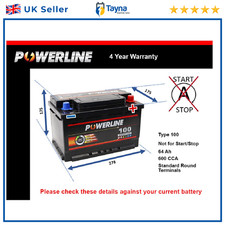 Battery fits FORD GRAND C-MAX FUSION KUGA C-MAX B-MAX ECOSPORT 100 600A
GBP 59.32
Battery fits FORD GRAND C-MAX FUSION KUGA C-MAX B-MAX ECOSPORT 100 600A
GBP 59.32
 Battery fits FORD FIESTA FUSION KUGA C-MAX TRANSIT GRAND C-MAX Exide 096
GBP 65.20
Battery fits FORD FIESTA FUSION KUGA C-MAX TRANSIT GRAND C-MAX Exide 096
GBP 65.20
 EFB Battery fits FORD KUGA 2008 on Stop Start Bosch 110 EFB 730A 75Ah Quality
GBP 107.91
EFB Battery fits FORD KUGA 2008 on Stop Start Bosch 110 EFB 730A 75Ah Quality
GBP 107.91
 VARTA Dynamic F17 110/115 type Battery Ford Kuga 2.0 TDCi 150 (2012-2020)
GBP 92.34
VARTA Dynamic F17 110/115 type Battery Ford Kuga 2.0 TDCi 150 (2012-2020)
GBP 92.34
As an eBay Partner, CarUnited may earn commission from qualifying purchases shown above. Listings and pricing are pulled live from eBay and may vary.
Ford Kuga Battery: Warning Signs, DIY Difficulty & Aftermarket Advice
These are the same regardless of make or model — see our full Battery Guide for warning signs to watch for, confirming fitment against your VIN, and matching the right technology (standard, EFB, AGM) when buying aftermarket.
More Ford Battery
The same part, covered across other Ford models.