
Mercedes-Benz CLA Exhaust System: Specs, Fitment & Common Faults
One case saw a DPF cleaned, a new pressure sensor, new thermostat, and updated software fitted, yet the same frequent regeneration issue persisted regardless — difficult to resolve even for specialists.
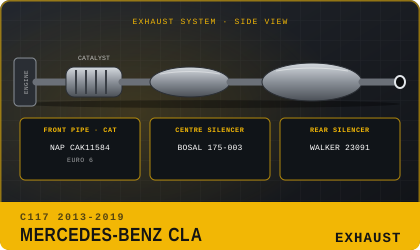 Illustration for editorial purposes
Opens live listings in a new tab.
OEM Part Number: confirm via VIN
Aftermarket rear silencers: Walker 23091 / MTS 01.92280
| Rear silencer (back box) — aftermarket | Walker 23091; Walker 24332; Vegaz MS-13IMA, MS-301, MS-340, MS-22, MS-2; Polmo 13.11; MTS 01.92280; Izawit 21.047; Hella 8LD 366 033-101 / -141 / -251 / -301 (sets) |
|---|---|
| Centre / intermediate silencer — aftermarket | Bosal 175-003 / 175-123 / 175-185 / 175-191 / 175-429 / 176-421 (accessories needed); Izawit 07.009; MTS 01.53450; Vegaz MS-302, MS-117, MS-145, MS-128; Polmo 13.07, 13.08 |
| Front pipe / catalytic converter (DPF on diesels) — aftermarket | NAP CAK11584 / CAK11533 (Euro 6); Vegaz MK-400 (Euro 6); Walker 28962, 28196; JMJ 1080386 (OM651), 1080330 (OM651.940); Quinton Hazell QCAT80180H; BM Catalysts BM80590H (Euro 5); Ernst 465175, HJS 83 00 8321 (front repair pipes) |
| Genuine (OE) numbers quoted | None quoted in catalogue listings — order genuine parts against your VIN |
| Fitment notes | petrol CLA 180-45 AMG, diesel CLA 180-220 CDI; not engine-specific. |
Noise, smell and smoke from the back of the CLA
On the Mercedes-Benz CLA, sound is usually the first clue here, ahead of any visual sign — a rattle, a drone, noise that's crept in gradually or arrived overnight. It's one of the more forgiving faults in that sense, since your ears will likely flag it before it becomes a bigger problem.
How back pressure and flow matter
The Mercedes-Benz CLA's exhaust system handles three things at once: clearing burnt gases from the engine, cutting noise via the silencer, and treating emissions through a catalytic converter and particulate filter. Because petrol and diesel emissions requirements differ, it often uses different exhaust systems depending on engine type.
Watch: replacing itA-Class W176 shares the MFA platform with CLA C117; no good CLA-specific fitting video found
Opens live listings in a new tab.
Frequent regeneration despite new parts
If frequent DPF regeneration continues despite parts already being replaced, one case on this engine saw the DPF cleaned, a new pressure sensor fitted, a new thermostat installed, and even the ECU software updated, yet the same frequent regeneration issue, occurring roughly every 60 to 70 miles, persisted regardless. The car ran perfectly otherwise, with no fault codes, and multiple specialist diagnostic sessions using proper equipment found nothing definitively wrong — worth knowing this specific pattern has proven difficult to resolve even for specialists in documented cases, rather than assuming a straightforward single-part fix will necessarily work.
Note too that a "DPF not working efficiently" fault code is most commonly caused by a failed, comparatively cheap pressure sensor rather than the expensive DPF itself, worth checking this first.
Warning signs, DIY difficulty and aftermarket adviceThese are the same regardless of make or model — see our full Exhaust System Guide for warning signs and fault codes to watch for, confirming fitment against your VIN, and which aftermarket brands are worth trusting.
The same part on other modelsThe same part, covered across other Mercedes-Benz models.